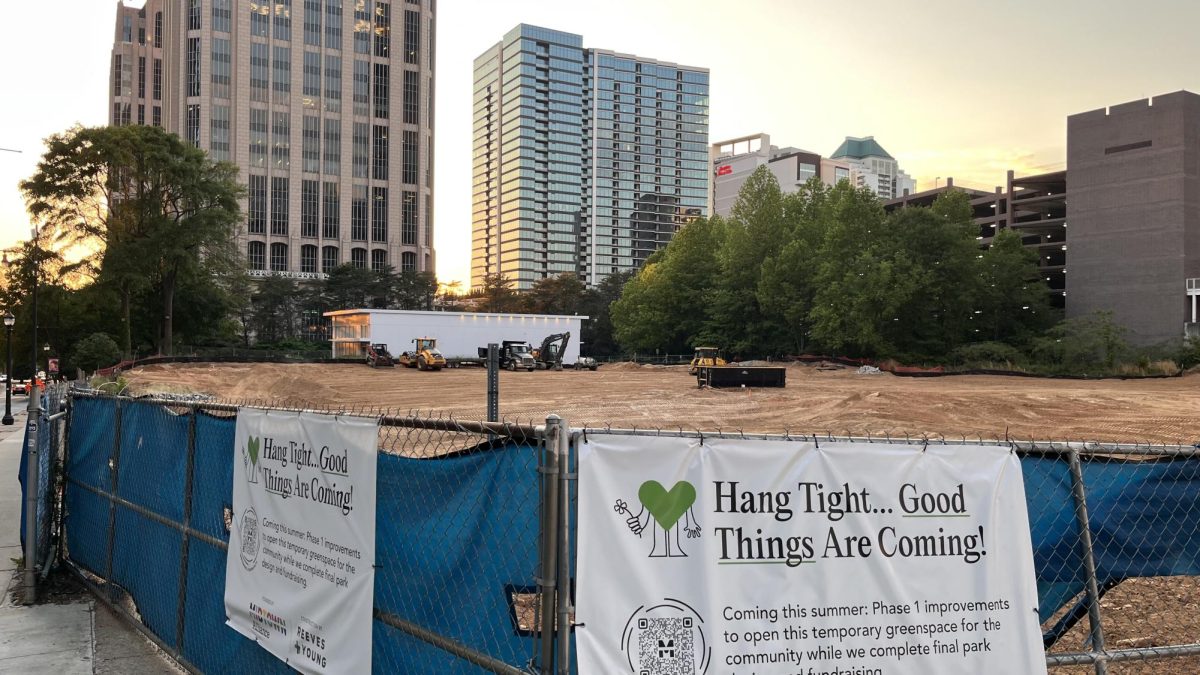
The Beltline, which began in 2005, has been growing each year throughout different areas in the city of Atlanta. Most recently, construction has begun to expand the trail in the Westside District.
While incomplete, the trail has already started to generate more foot traffic and bring customers to the area. Brittany McCall, a Senior Vice President of the SRS Real Estate Partners, said the Beltline builds community by connecting neighborhoods that were isolated in the past.
“The Beltline connects neighborhoods that were previously siloed,” McCall said. “So businesses and developments along it just gain more diverse customers and stronger community engagement. My favorite thing is how the Beltline turns businesses into neighborhood living rooms. People aren’t just shopping; they are lingering, they meet friends, they become regulars at businesses. And so businesses that offer those types of experiences along the Beltline, you know, we see them thrive.”
Joel Iverson, Co-Founder and CEO of Monday Night Brewery, which is located on the stretch of the expansion that has been completed, said in a few years when construction is completed, the Beltline will be able to connect key points of the city.
“They’re going to be building a massive pedestrian bridge over Northside Drive, construction for that starts in January 2026,” Iverson said. “In about two years, they’ll have it connected over to Huff Road and connected over to Bobby Jones [Golf Course]. That’s really when it’s going to be amazing because it’s going to allow people to get to West Midtown, essentially Buckhead and that whole Peachtree Corridor, which would be a game changer.”
Iverson said the nearby neighborhood, Loring Heights, has been anticipating the Beltline because of the access to the rest of Atlanta that it will bring them.
“The neighborhood Loring Heights is located right across from Northside,” Iverson said. “And they have been thrilled since we opened, because all of a sudden, they can kind of connect from Northside back to here on the trail. It used to be that they had to drive around and take an extra 10 minutes to get back to us, and creating that connectivity is just huge for this part of town.”
Geva Solomonovich, a property owner in the Westside, hopes that the trail will bring in a younger demographic and create more opportunities for retailers and property owners.
“I hope the trail brings a lot of businesses, foot traffic and a young demographic to the area,” Solomonovich said. “For people who want land and property owners specifically, it will be good for more dense redevelopment and high rises. For retailers, there will be more foot traffic, more shops and boutiques, and a younger audience.”
McCall said the Westside District, in particular, is full of longstanding businesses that contribute to the overall character of the area. While new companies are introduced, it’s important to honor those businesses that have held together the Westside District since the beginning.
“This particular portion of the trail has a lot more legacy businesses, and so it’s always important to keep in mind and continue to nod to legacy businesses and concepts that started the area,” McCall said. “The Westside right now is going through its own evolution in general, and it’s a real needle to thread to make sure that a neighborhood doesn’t lose its character, so having a healthy mix of local and regional operators helps prevent that.”
Michelle Larabee-Martin, owner of Kolo Collection outdoor furniture, said when they first moved into the property, they were told that the Beltline expansion would take years, but construction so far has been faster than anticipated.
“When we came out here, they told us the Beltline construction would be five to seven years,” Larabee-Martin said. “I’m like, ‘I’ll be gone by then.’ But they’ve moved way faster. It’s weird that they moved faster than they were supposed to, but it’s because they didn’t have to buy that property. It’s already city-owned. That’s why they’re starting it so soon.”
Larabee-Martin said while the Beltline helps bring more customers to certain businesses, the reality is that destination retailers will struggle as the trail expands into the area.
“From a business standpoint, the Beltline coming through is only gonna help the small businesses that have little grab-and-go items, like a juice or a soda or a protein bar or something similar,” Larabee-Martin said. “All of us who have furniture stores or pilates or bigger ticket items, it’s not our customer. They’re out exercising, they’re not out shopping. And all that’s going to do is take parking spots from us.”
Larabee-Martin said the popularity of new businesses takes up parking spots and slows down showroom businesses, leading them to close on weekends.
“There is absolutely no access,” Larabee-Martin said. “There’s nowhere for people to park their cars, like the Grove restaurant just opened, and on the weekends, there’s no parking. There’s double lane parking; there’s no parking on the other side, but people illegally park anyway. It’s taken the business down 30% for all the showrooms here, so we closed on the weekends now because of it.”
Larabee-Martin said landlords in the area have come together for a petition that would propose for a new parking garage for the Beltline and nearby retailers.
“There’s a space right next to where the Beltline is going to cross over the Northside,” Larabee-Martin said. “It’s city-owned, and right now there’s a bunch of trash bins and recycle bins all outside. Something should be there, and it’s empty. They should turn that into a parking garage, and there’s a petition going around right now with all of our landlords and everything.”
In addition to parking concerns, the Beltline expansion would also mean higher rent for tenants. Larabee-Martin said the Beltline will cause a rise in property value, which will drive older companies out.
“We all love the Beltline, but it’s not going to help businesses out here,” Larabee-Martin said. “The landlords, are going to go, ‘Oh my gosh, look at the Beltline right there. We can put a pizza joint in, or we can put something new in.’ So the rent will start going up, and it’ll become something that none of us will pay.”
Affordability is going to be an ongoing issue in any developing area, but it can still be monitored. McCall said that as the trail grows, it’s especially important to consider affordability and having a diverse set of tenants.
“Affordability and community input are all a part of the conversation now more than they ever have been,” McCall said. “The Eastside Trail was going through all of this eight to 10 years ago, and now we’re seeing this portion of the trail go through all of that. But affordability, safety, tenant mix, it’s all way more part of the conversation than it was around a decade ago during the first leg of the trail.”