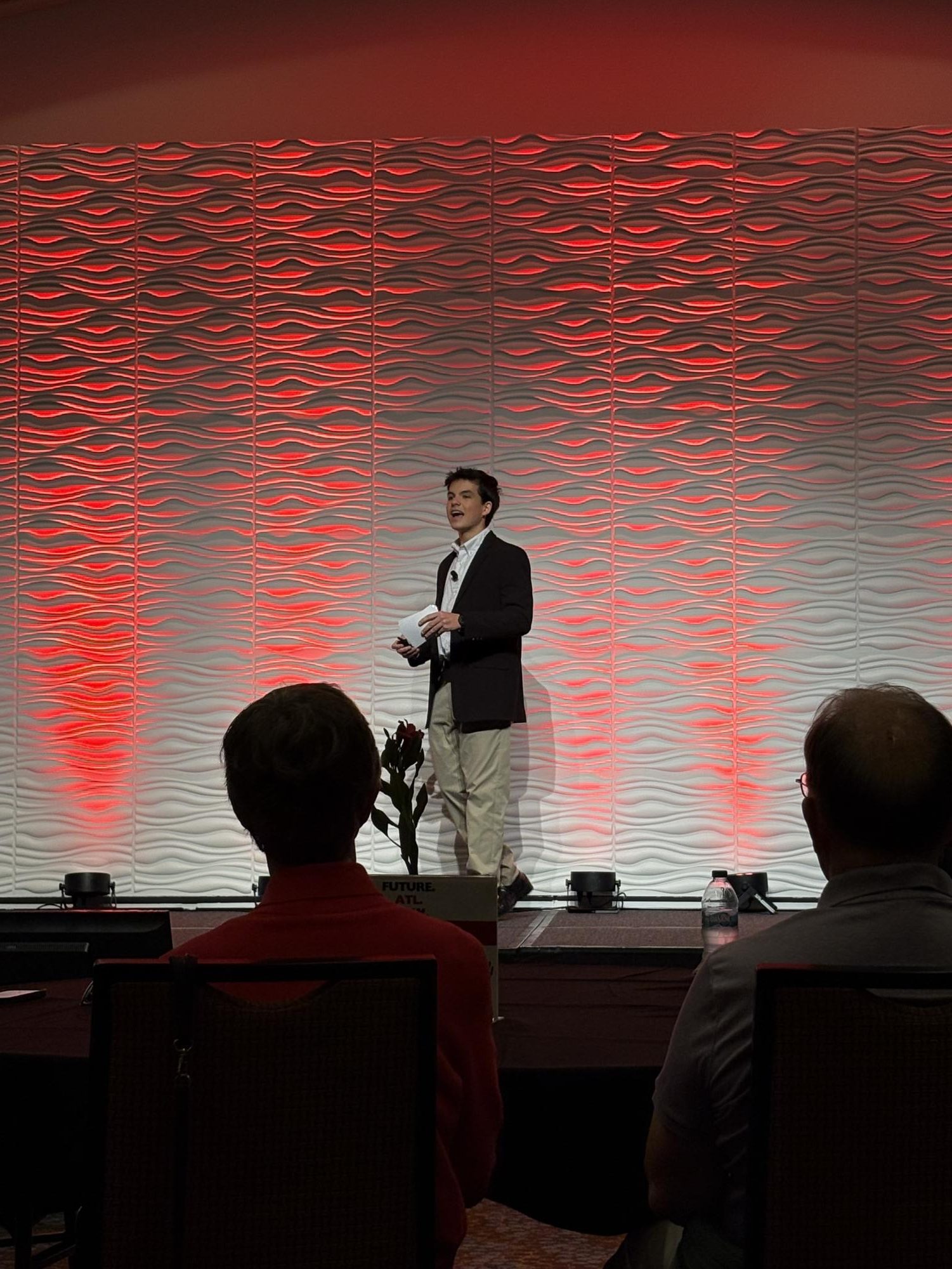
On Saturday, March 7, an Atlanta Public School student-led forum, Future ATL Now, was held at the Loudermilk Conference Center. The event showcased student speeches on topics such as sustainability and youth advocacy.
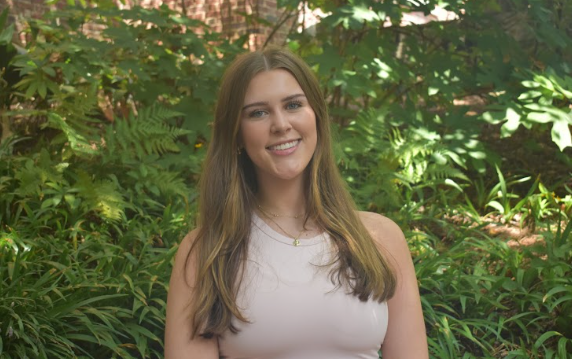
Among the attendees, there were five APS board members and representatives from Atlanta Mayor Andre Dickens’ office. Two APS student speakers, Devin Mitchell and Haile Irving, were awarded a $50,000 grant from the mayor’s office to develop their proposal to reimagine third spaces for teenagers in Atlanta. Midtown junior Samaya Agarwal was co-chair of the event and started the initiative.
“I wanted there to be a program where students were able to be heard and taken seriously and to be able to share their ideas on how to better the future of the city of Atlanta,” Agarwal said. “So, I met with one of our adult advisors on board about either giving a talk or setting up an initiative. With the help of a mutual connection, I reached out to my co-chair Sire Washington, who goes to KIPP Atlanta Collegiate, and asked if he would be interested in doing this initiative with me. From there, we started to develop the committees one by one.”
Agarwal hopes the program will become an annual event where students feel comfortable to express their opinions on societal issues in front of their peers, parents and administrators. She stressed the importance of mastering oneself in unpredictable situations and gave a speech on four critical skills people need to develop and utilize.
“When the work environment changes, we must change as well,” Agarwal said. “The first skill in my speech is the welcoming of different perspectives, and with it, unique and new ideas. Second, the ability to be flexible and adaptive. Third, the ability to work under pressure and in fast paced environments, coming out as a leader, and fourth is the ability to achieve big outcomes with small/limited resources and high expectations.”
Washington was proud of the event’s turnout and success, explaining it is a very good inaugural year. Washington believes youth perspectives being presented to public leaders is vital to make progress toward change in Atlanta and protecting its future.
“This is an opportunity for us to get our feet wet and to see what vocal activism looks like, but there’s a reason why we’re including city council members in this presentation,” Washington said. “This isn’t just about speaking on important issues, but creating the steps to actually solve them. Talking about them in front of legislators and people that actually matter is the first step to making sure that it gets on the floor to be heard.”
Though the mayor himself was unable to attend, Program Director for the city of Atlanta, Kenui Mitchell, was in attendance on Dickens’ behalf. Mitchell oversaw and helped student leaders with marketing and networking, while also amplifying their voices and messages for others to hear. Mitchell shared her hopes for the program and expressed the importance of youth advocacy.
“I honestly hope [the program] never ends,” Mitchell said. “I hope that we expand and get more students from all over Atlanta, all over APS, and I hope that every year people are looking forward to hearing from [the youth] and [their] ideas, because we need that. I think people will take away that [the youth] cares more than they think it cares, that the youth is really more invested in the future of this city as a whole, that they care about things like sustainability, and don’t want to see Atlanta just fall by the wayside.”
Dr. Caldwell-Templeton, the Program Director of Student Engagement and co-advisor of the APS Student Advisory Council, was on the adult advisory board of Future ATL Now. She worked to support the student committee and their aspirations. She explained that the program is student led but also adult guided so that people take the event seriously.
“The youth has something to say and offer, not just to Atlanta, but to the United States and the world,” Caldwell-Templeton said. “I want people to really listen to the ideas of our young people. They’re very innovative, they’re very creative, and if we give them an opportunity to rise to the occasion, to thrive, give them a seat at the table, they’ll take care of us in the future.”
Midtown Advanced Placement Research teacher Lisa Boyd helped get the program off the ground by connecting students with organizers as part of the adult advisory team. She mainly worked as a coach for speakers and member of the speaker selection committee. Boyd conducted student interviews during the selection process and then worked closely with chosen speakers to develop and refine their speeches and delivery. Boyd praised the students for their professionalism and ability to collaborate across schools.
“It was amazing what they’ve done and how they’ve worked across schools and how they’ve really been an incredibly cohesive and professional group,” Boyd said. “It has just amazed me what all they have been able to accomplish.”
North Atlanta High School sophomore John Henry Collins gave the opening speech of the program. He spoke on environmental issues causing problems in Atlanta. His main point was that continuous development is harmful with no direction, begging the question: ‘Who is Atlanta growing for?’
“I hope to see more youth input and decision making, because I think it’s so important, especially when we look at environmental sustainability,” Collins said. “We are the future of Atlanta, and I think that is important to consider when we look at how we are going to incorporate these green spaces, how we are going to be more sustainable, and how we are going to incorporate youth voices.”
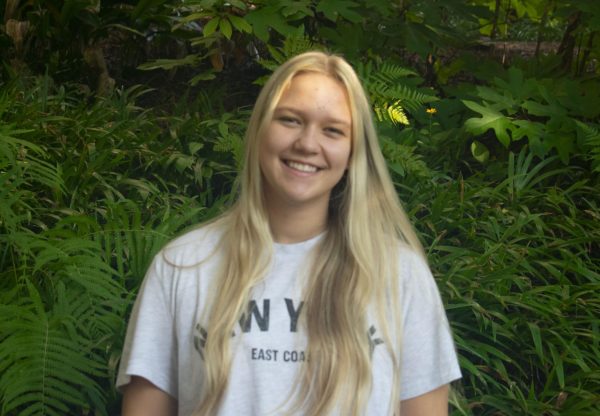
Also speaking on environmental initiatives was junior Lydia Berry. Berry joined the program after Agarwal visited her internship class and passed out a flyer that asked for student involvement. Berry hopes to bring awareness to under-represented issues of concern. She used examples in Atlanta such as the BeltLine to demonstrate her point of how projects similar to it have unequal costs that lead to gentrification and displacement.
“I decided to speak about this because I live really close to the BeltLine, and the [property prices] around my house have gone up a lot,” Berry said. “One of my neighbors was kicked out for not being able to pay his mortgage, so that’s one of the reasons I chose this topic. It also affects predominantly black individuals, and since I’m black, it is an issue that I value.”