Former Atlanta Mayor Bottoms launches campaign for governor
Keisha Lance Bottoms served as Atlanta’s 60th mayor from 2018-2022. Now she has launched her candidacy for governor of Georgia.
“I am a fifth-generation Georgian, able to trace my wounds back to a plantation in Crawfordville, Georgia,” Bottoms said. “I’m the only mayor in the history of Atlanta to serve in all three branches of government. I am running for governor of this state to make a difference in your lives.?We need to expand Medicaid. We need to eliminate state income taxes for our teachers. We need to address the affordability crisis in this state. We need to support our small businesses, and we need to create a pathway for free technical and community college in this state.”
Healthcare
Bottom’s main points of her campaign are healthcare, education and economics, something that many Democratic governor candidates are advocating for. In terms of healthcare, Bottoms highlights the importance of reproductive and prenatal care for women. Unlike other candidates, though, she has a personal connection to it.
“The Georgia Department of Health released the stats that say that nearly 90% of deaths from maternal deaths in Georgia are preventable,” Bottoms said. “I didn’t need to read that report to know that, as I know two women who died during childbirth, and I have two friends who almost died during childbirth. This is a crisis in urban and rural communities. There are nine rural hospitals that are closed in this state.”
Bottoms outlined her plan for expanding Medicaid, if elected, saying she would use her power as governor to communicate with the legislature on possible expansions.
“Even before the big, ugly bill, 300,000 Georgians were without healthcare coverage, because Georgia refused to expand Medicaid,” Bottoms said. “We left $700 million on the table. We created a disastrous program called Georgia Pathway that has failed miserably. Nine rural hospitals have closed in this state. On day one, I will sign an executive order to prepare our state agencies for Medicaid expansion. Also, there is a great amount of influence that comes from the office of the governor. The governor sets the priorities for this state. I will immediately ask the legislature to consider legislation to expand Medicaid in this state.”
Dr. Carrie Cwiak, professor of Gynecology and Obstetrics at Emory University, described the importance of Medicaid expansion.
“Medicaid allows low-income individuals and families, including children, pregnant people and people who are elderly or have certain disabilities to access affordable healthcare,” Cwiak said. “Since Georgia has not expanded this program, Medicaid in Georgia serves a younger average population, as compared to other states. This means older Georgians, who are more likely, because of age, to have medical conditions that require chronic care, have less access to the healthcare they need compared to other states.”
Cwaik also explains the importance of Medicaid, not just for elderly Georgians, but for those in more rural areas.
“The less populated and more rural counties of Georgia tend to have higher levels of poverty, and consequently, have higher percentages of their populations who rely on Medicaid,” Cwaik said. “If Georgia were to expand its Medicaid program, nearly 300,000 of currently uninsured Georgians aged 19 to 64 would gain health coverage, including people in our most vulnerable populations.”
Additionally, Bottoms plans to address closing healthcare facilities if she is elected.
“In addition to helping public healthcare centers that have closed, berthing centers have closed,” Bottoms said. “I had a conversation with a woman at the Georgia Hispanic Chamber of Commerce breakfast, who said that her federal funding had been cut through the CDC for her mobile health clinic, traveling around the state, in this case, providing mammograms to nearly 10,000 women a year. That money is gone. The state has to stand in the gap. The state can no longer put its head in the sand and act as if we don’t have a problem.”
Cwiak explained the need for intensive and comprehensive care, like what Bottoms describes.
“Primary preventative healthcare refers to screening for medical conditions to detect them early enough to prevent significant adverse health outcomes,” Cwiak said. “Screening with annual mammograms decreases the incidence of advanced breast cancer and death from breast cancer. Some of the most affordable sites for healthcare include federally qualified health centers and state-funded clinics that provide affordable healthcare services.”
Bottoms explained that if she becomes governor, she plans to instill in officials an understanding of the best way to address healthcare needs in Georgia and ensure funding is in place.
“The first thing that I will do as governor is reinstate that meeting, so that we can have professionals help us better understand how to address this crisis, putting funding in place, so another woman does not die in this state,” Bottoms said.

Bottoms wants to make changes to the Quality Basic Education formula in Georgia, which is used to calculate state funding for schools. Enacted in 1985, the formula is widely regarded as outdated, as it has not undergone revision to reflect the needs of a modern student body, technological advances or operational costs for schools.
“The QBE formula is an antiquated formula,” Bottoms said. “It’s difficult to understand unless you have a financial accounting background. The first step would be to make it a formula that allows school districts to be able to plan, accordingly, based upon the money that they are receiving. Fulton County is facing a $95 million school deficit in this budget. ?In DeKalb County, dozens of schools are scheduled to close. Meanwhile, the Department of Education is cutting funding.”
Bottoms describes the process she plans to take to rectify this issue to equalize the funding for districts, adjusting the weight of the formula to allow it to meet student needs and make the formula overall more accessible and comprehensive.
“The first thing that I will do is make sure that we equalize the funding back to the 90th percentile for districts,” Bottoms said. “It’s now at 75%. It began at 90%, and secondly, build in an opportunity weight into the formula so that the funding follows the students. We are in a crisis in school systems across this state. In urban communities, in rural communities, the federal government is feeling us, which means the state government must step up, [add a] $15 billion reserve, making sure that the formula is easy to understand and easy to plan for, and making sure that our teachers, our educators and our students have the funding that they need to be supported, and it begins by changing the QBE formula.”
Bottoms addressed concerns over voter security in the upcoming elections, saying she is distraught by the issue and believes everyone’s right to vote should be protected.
“My congressman, John Lewis, said that his greatest fear was that we would wake up one day and our democracy would be gone,” Bottoms said. “And someone who was born just after the Civil Rights Movement in America, I never thought that I would experience this moment in my lifetime. Every generation will have its battles to fight, and this is the battle of our generation. To protect the right to vote, which John Lewis described as precious, almost sacred. To make sure that our coworkers are protected, to make sure that their personal information is protected, so that people don’t have the fear for their lives just so that they can work, so that we can have the right to vote.”
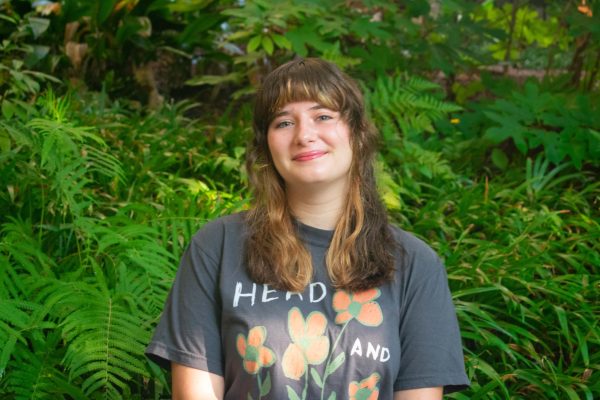
Midtown Votes president and senior Carmella Marra described the importance of the right to vote in a time when some fear that right will be revoked.
“Voting is how we can most directly impact legislation,” Marra said. “Protecting the right to vote is very important right now because of the recent overturning of Section 4 of the Voting Rights Act in Shelby County v. Holder. Previously Section 4 prevented districts with a history of disfranchisement from freely changing their voting laws without oversight, but now, we have lost that protection for all historically disenfranchised voters, especially people of color and voters from a lower socioeconomic status. In response, states like Georgia are passing new restrictions.”
Marrra explained how a governor could help combat this issue and work to protect voter anonymity and prevent fraud.
“I am glad that Bottoms is taking measures to prevent voter fraud because Georgians need to be able to trust that their vote is properly counted,” Marra said. “I hope she also looks into empowering voters themselves, too. The recent Election Integrity Act or Senate Bill 202 has put a lot of restrictions on voting, which makes it more inconvenient for voters to exercise their rights, so I would like to see work towards drawing people to the polls to counteract that effect.”
Bottoms expressed her plan for addressing this issue as similar to what Marra suggested, by implementing a backup plan and using the power of numbers in voters to ensure the security of voting.
“[I will] prepare backup plans for our polling places,” Bottoms said. “In the event of disruption, I will make sure that we have backup plans in place so that people can exercise their right to vote. And then lastly, the [I will use the] power of the courts. It doesn’t always look like it’s gonna be easy or even possible, but we have to do all that we can do to protect that sacred [voting] right. That means taking Donald Trump to court every single opportunity that we have, and showing up in record numbers [to polls] so that there will be no question of the election.”
During her time as mayor, Bottoms signed an executive order “directing the chief of the city Department of Corrections to stop accepting immigration and customs enforcement detainees.” It also “instructed the corrections chief to formally request that the U.S. Immigration and Customs Enforcement (ICE) transfer detainees out of Atlanta as soon as possible.”
“As Atlanta mayor, I closed [Georgia’s] gel to ICE during the sick family separation crisis, ending a multi-year contract,” Bottoms said.
Additionally, Bottoms also spent time working on public safety during her term. One aspect of public safety she focused on was correcting orders Trump had put in place.
“We pulled our officers from a federal task force because Trump would not allow them to wear body cameras,” Bottoms said. “It ended up resulting in a policy change across this country.”
Another focus of Bottom’s as mayor was pay raises for public safety officials.
“We have to invest in public safety,” Bottoms said. “That is a reality of our communities. As a mayor of Atlanta, I had given our police officers the largest pay increase in the history of Atlanta. Our firefighters, the largest [pay] increase in 50 years. [For Georgia’s] workers, I brought them up to $15 an hour, living wage. We have to make the investment if we want the return.”
During her time as mayor, she made changes to public safety through the environmental standpoint, explaining there is a lack of federal funding across Georgia that helps to alleviate environmental dangers. During this time, she gave testimonies about building climate resistant communities, spearheaded a plan to make Georgia use 100% clean energy and more.
“There is a lack of investment from the state and infrastructure across the state, not just in southern counties, but also in coastal Georgia, where the federal government committed money to help mitigate flooding, the city of Savannah committed money to help mitigate flooding and the federal government removed that money,” Bottoms said. “[Georiga] will have to stand in the gap until we get a reasonable person in the White House to believe that climate change is not on hold, who believes that pollution is not on hold, who believes that affordability across this state is not a hold.”
Bottoms explained her desire to run for governor sparked from the 2024 presidential election results. She said she wanted to fight against Trump, like she did during her time as mayor, and create a better Georgia for all.
“For me, [the reason I’m running] was waking up the day after the last presidential election, praying about what it meant to me, my community, to my family, to our state, as a whole,” Bottoms said. “As I prayed with my husband, and talked about it with my four children, three of the four agreed that I should offer myself as a candidate for governor. This is the fight of our lives. I fought against Donald Trump, and I won. I don’t have to talk about dreaming about fighting against Donald Trump. I’ve done it, and I have won, and that is what I will do as governor.?I will fight on behalf of all of you. I’m proud of my time as mayor, my service as a judge, my service as a member of Atlanta City Council, and I would be honored to serve as your next governor.”