Atlanta neighborhoods gear up for 2026 World Cup


Atlanta is bracing for the world’s biggest sporting stage as the 2026 FIFA World Cup approaches, setting the city up for one of its most high-profile summers in history. Mercedes-Benz Stadium – renamed Atlanta Stadium for the summer in accordance with FIFA rules – will host multiple matches, including a semifinal, drawing tens of thousands of visitors to the city.
The tournament’s preparations have dated back several years, with extensive planning across infrastructure, transportation, public safety and hospitality.
“Hosting the event here really puts Atlanta on the map for people across the world,” said Dr. Jerry Parrish, chief economist of the Metro Atlanta Chamber of Commerce. “It really gives us a great economic boost.”
Atlanta’s readiness strategy has involved coordination across several sectors, from MARTA and Hartsfield-Jackson International Airport to the Atlanta Police Department and the newly-expanded Special Events Division, an extension APD enacted specially for World Cup operations.
Federal funding has also played a major role, with more than $52 million awarded through FEMA’s FIFA World Cup Grant Program to support staffing, communications systems, inspections and emergency equipment. Jon Birdsong, CEO of South Downtown Atlanta, emphasized the extensive efforts and investments toward improving and readying the city.
“There’s been hundreds of millions of dollars invested in our downtown core,” Birdsong said. “This includes 10 city blocks, 16 acres and 50 historic buildings, all of which kiss the Five Points MARTA Station. This has been an area that has been forgotten for a while and hasn’t had investment in 30 years. So, what better event than the World Cup, to not only prepare, but to set the stage for local Atlantans for generations after us.”
Atlanta was initially selected as a host city on June 16, 2022, following a collaborative bid led by Atlanta Sports Council and local government. Mayor Andre Dickens said Atlanta serves as the soccer capital of the nation, explaining that the World Cup will happen with Atlanta rather than to it.
“We are excited to be on the world stage again,” Dickens said. “When it comes to soccer in the United States, the South’s got something to say. We’re special y’all, and we’re going to make sure the world knows it. Atlanta is ready to welcome the world.”
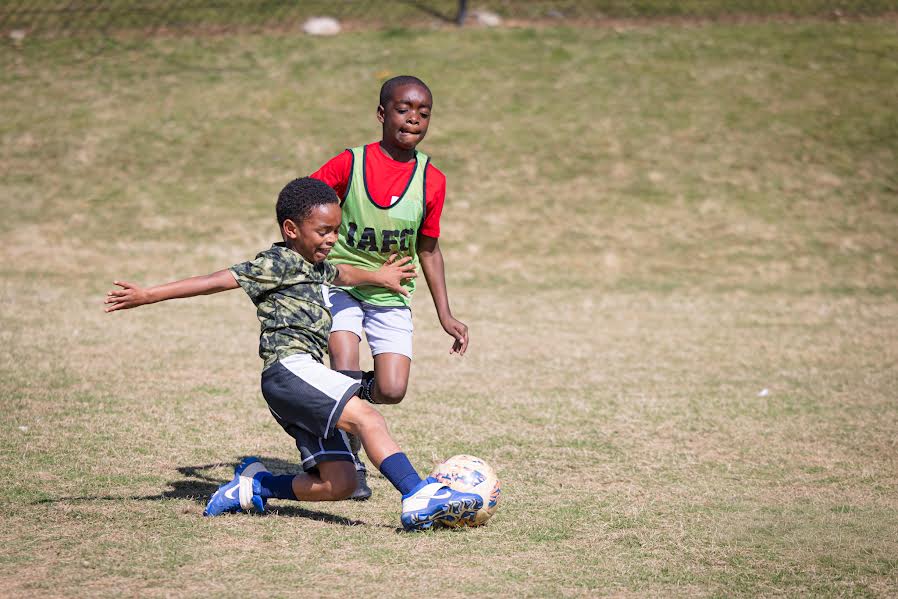
The Old Fourth Ward Kickoff Festival will host World Cup-related events June 11-13 in Historic Fourth Ward Park with between 5,000 and 10,000 expected attendees.
Old Fourth Ward Community Care Leader Dean Morris said he hopes to use the festival to launch a youth soccer program focusing especially on underserved kids.
“I don’t want this to be a one-and-done event,” Morris said. “Atlanta is one of the best places in the world for sporting events. A lot of times, though, there’s not any residual benefit after the event is completed … I want this World Cup to be something where we can say, ‘We launched the Old Fourth Ward Neighborhood Soccer Association, and it was able to sustain itself for years and years and years.’”
On June 13, the festival will kick off the O4W Kids Soccer Program. Morris said soccer clinics and volunteer recruitment have already begun.
“They always say it takes a village,” Morris said. “Sometimes, it takes a city. We’re the best city in the world … If we all get together, there’s nothing we can’t do.
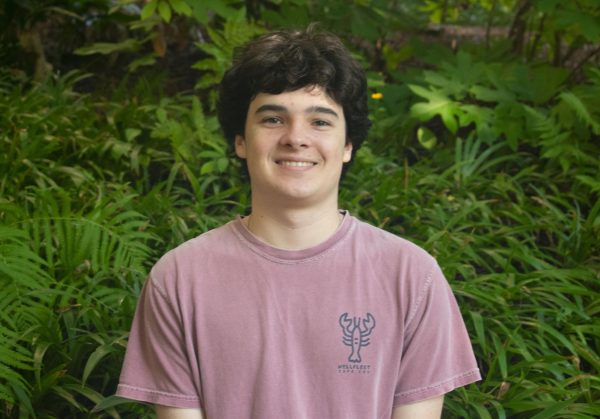
Sophomore Max Brown, who lives in the Boulevard corridor — the area most directly targeted by the youth soccer initiative — believes the program could offer kids a healthier outlet.
“I think one reason for [the kids] doing all that is there’s nothing else to do,” Brown said. “That’s kind of all us Boulevard kids really know, so I think by putting in a youth soccer team, it will help redirect kids to the right path and put their anger, frustration [and] their emotions into something that can be productive and healthy for them.”
Tom Boyle is the president of the Old Fourth Ward Neighborhood Association. He explained the plan to have different businesses represent different countries on June 11 and provided a theoretical example.
“Imagine that one restaurant is in Spain, and when you go to Spain, you get a little tapas, or maybe you’ll see a flamenco dancer,” Boyle said. “You’ll go in, you’ll check in there and you’ll enjoy something from that restaurant. It’s a great way for us to drive business to those restaurants and bars on the BeltLine in the Edgewood corridor.”
Morris noted the importance of exposing kids to this cultural diversity.
“These kids need to understand when they see these people, with different outfits and different approaches and languages and all that, that it’s part of a much bigger world than just them,” Morris said. “Anything that we can do to expose these kids to make them understand that the world is not Boulevard and the Old Fourth Ward, it’s a lot bigger than that – that’s the goal we have.”
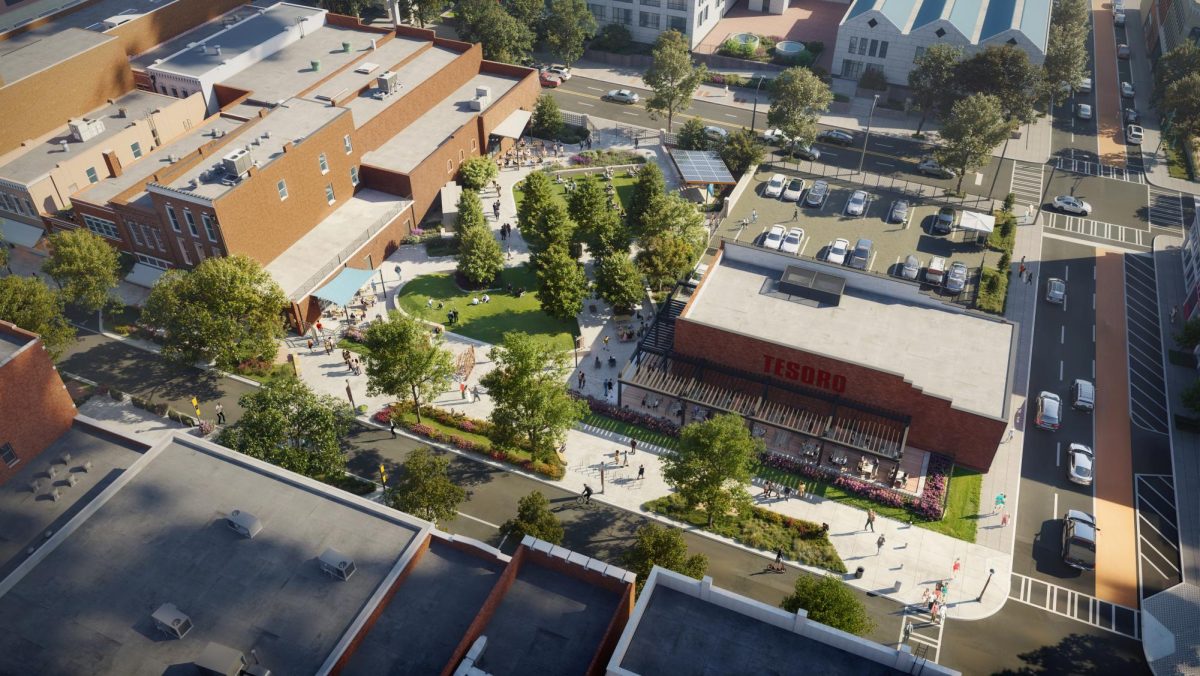
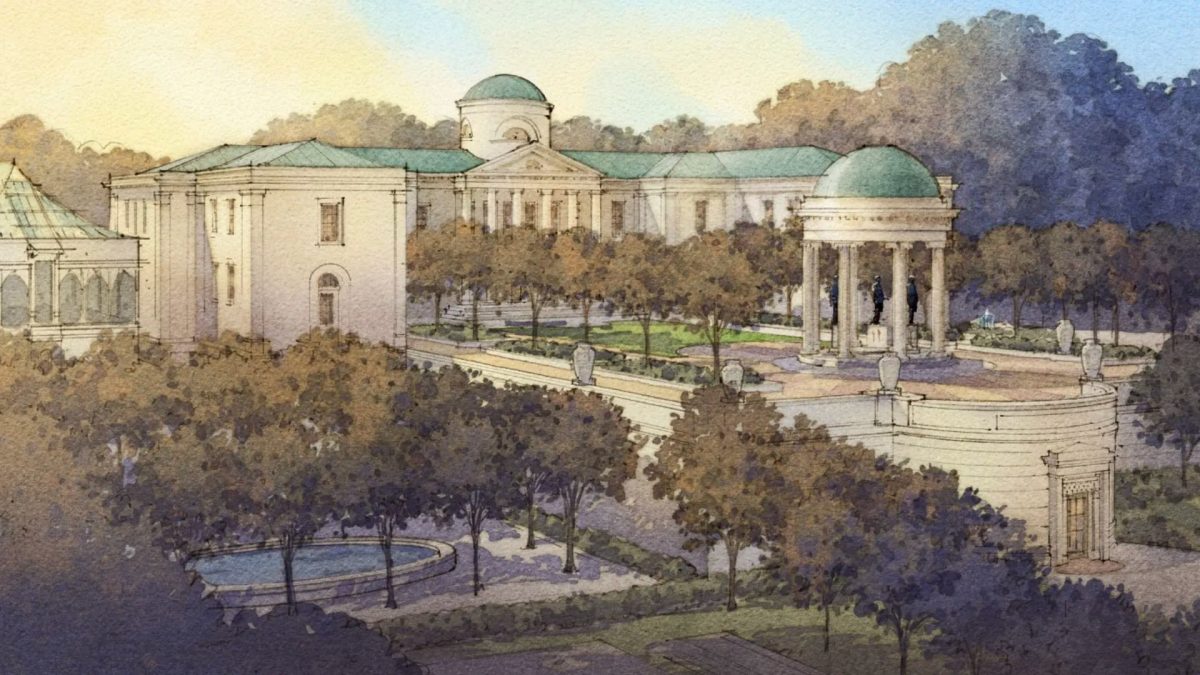
While Decatur’s watch parties energize neighborhoods that are already thriving, the energy of the World Cup is spurring development at a rapid pace just steps from Atlanta Stadium. South Downtown, an area loosely defined as several square blocks southwest of Atlanta Stadium and the Centennial Yards redevelopment, is seeing rapid renovations before the World Cup to revitalize a once-neglected part of Downtown Atlanta.
SoDo Atlanta is an over $140 million revitalization project of South Downtown, and has been eagerly counting down until the games come to Atlanta in June. With less than 30 days until the first match, his office keeps a countdown clock on the wall.
“We have a huge countdown clock in the center of our office,” Birdsong said. “Our project is reinvigorating the area for a safe, livable, walkable downtown neighborhood for all to enjoy. With less than a month out, every second counts to make this place the best possible for both our World Cup visitors and local Atlantans.”
With the purchase of the SoDo property in late 2023, Birdsong said the project has been an ongoing process, and the World Cup accelerated the project to a high-speed race against the clock to redevelop an area that is in a prime area for World Cup attention and foot traffic.
“We have a bias towards action, but this creates a very clear milestone that we have to achieve,” Birdsong said. “That is a sense of urgency that otherwise wouldn’t be present. Added together with our bias towards action, it really creates something special. We’ve got to deliver.”
SoDo has been designated as Atlanta’s first and largest open container district for the tournament, spanning roughly 10 city blocks. The district emerged from a negotiated agreement between the district’s business owners and its City Council Representative Jason Dozier.
“What the district means is that you can have a drink, take it outside and walk on the streets with your drink,” Birdsong said. “It gets people in a good mood and also provides an economic boost for the businesses that make up this area.”
Birdsong said crews are rushing to deliver a sweeping set of physical improvements and back-to-back summer programming for SoDo ahead of the first wave of World Cup tourists in Atlanta. Among the additions is Founder’s Green, a half-acre public space opening along a newly designated pedestrian-only section of Broad Street.
“At the Green area, there’s going to be street vendors, festivals, bike tours and all sorts of programming planned for match days,” Birdsong said. “Whatever you can think of, we’ll have it here for tourists and Atlantans to explore together.”
SoDo is hastening to open eight new restaurants before the first match kicks off at Atlanta Stadium, including taqueria El Tesoro, Glide Pizza and soccer bar Brewhouse Café.
“From a construction perspective, everybody’s racing to the finish line,” Birdsong said. “There’s still just a couple of unknowns, but we’re tracking well to have them all open before the World Cup.”
Beyond dining, the district will anchor Spain’s official World Cup headquarters – a building where fans can buy merchandise and access the country’s presence at the tournament, modeled after the country houses seen at the Olympics.
“We’re very proud to host the Spain House in SoDo,” Birdsong said. “That’s going to be a place where fans, tourists and anyone else can buy official merchandise or maybe even meet players. It’s a place where Spain can take up their space and make it their own.”
To increase accessibility to SoDo, the new MARTA Rapid A-Line runs through Downtown to Summerhill, now cutting directly through the neighborhood and stadium district.
“We’re located right across the street from what used to be Terminus,” Birdsong said. “It is the most well-connected part of Atlanta. There’s Garnett and Five Points stations, the Bus Rapid Transit and so many more options for walkability that it really is a miracle of connectivity and access.”
Birdsong said the goal of the summer is not just foot traffic from tourists – it is changing the perception of part of the city that many Atlantans have written off. Birdsong said he is most excited for the regular Atlantan to experience the reinvented SoDo, emphasizing the importance of the project as a city gem.
“The local Atlantan that wants to experience the closest thing in our lifetime to the Olympics – that’s who I want walking through South Downtown,” Birdsong said.
Birdsong said the district has been deliberate and intentional about the kinds of businesses that it recruits, specifically avoiding chains and large-scale developments that dominate other parts of downtown Atlanta.
“We’ve been very focused on three things: unique, boutique and local,” Birdsong said. “We want businesses to thrive and the apartments we have to be leased out – that’s what success will look like for SoDo.”
Regarding the international attention the tournament will attract to Atlanta and Downtown, Birdsong is direct about what he hopes visitors take away.
“When I go to a city and walk away being like, ‘my gosh, that city is so cool,’ there’s a great feeling in that,” Birdsong said. We should recreate that feeling for as many people when they visit and then leave Atlanta.
The SoDo neighborhood sits inside the Whitehall Historic District, with three national historic buildings and roughly 50 state-designated ones. Birdsong said the World Cup excitement and attention to SoDo is a means to an end. The longer vision, he and his team hold, is a lively downtown that Atlantans actually use and enjoy.
“We want Atlantans to rediscover their authentic historic downtown,” Birdsong said. “We’re building South Downtown for locals.
He said the next six to 12 months will be the test of SoDo’s viability.
“We need to see: do people want to live down here; do people want to work down here; do people want to eat down here,” Birdsong said. “We’ll evolve our strategy based on the community and feedback we receive.”
Birdsong said the project is something that should be experienced by anyone skeptical before making their own judgements about its long-term viability.
“As Atlantans, we’ve been promised a downtown for so long, and it’s never come to fruition,” Birdsong said. “My biggest piece of advice is to come down and experience it for yourself during the World Cup. Come with an open mind.”

In the coming months, soccer’s grip on the North American continent will only tighten, as the World Cup brings its truly unique atmosphere to 16 cities, including Atlanta.
Atlanta’s involvement is not a footnote either. With nine matches set to be played at Mercedes-Benz Stadium, Atlanta is tied with Dallas for the most matches of any host city. Locations like Los Angeles and New York, which dwarf Atlanta in population and GDP, will all host fewer games. Not only does this represent the further emergence of Atlanta as one of the nation’s top players, it also indicates the lasting impact the World Cup will leave on the city. Similarly to the 1996 Olympics, which propelled Atlanta into international status, once the World Cup is over and the dust settles, Atlanta will be primed to make another significant, holistic leap.
Prior to the ‘96 Olympics, Atlanta, along with the rest of the south, was in an economic downturn marked by the city’s worst unemployment since the ‘70s. The economy was relatively weak due to the drop in demand for unskilled labor, which the region had largely based its industry on. Atlanta’s neglected city center was full of decay and vacant plots as a result of the widespread white flight of the ‘60s and ‘70s, which took funding and attention away from downtown.
However, the Olympics would be Atlanta’s saving grace. According to the International Olympic Committee, billions of dollars were poured into the city’s infrastructure. Centennial Olympic Park helped transform downtown. Two thousand trees were planted in the area. $500 million went towards the construction of new parks and plazas, with the purpose of simply making Atlanta’s urban environment nicer to be in. In the end, Atlanta saw a $5 billion growth as a result of an event that only spanned 17 days. The Olympics are credited for “putting Atlanta on the map,” and for good reason. It is undeniable that Atlanta would not be in the position it is today without the ‘96 Games.
Unlike the ‘96 Olympics, Atlanta will have to share the World Cup spotlight with 15 other cities. Regardless, the tourism and overall stimulation of the economy that will come with just one World Cup match will be enormous, and Atlanta gets to host nine of them.
Additionally, some of the benefits have already been visible to Atlantans. For one, 32 miles of road across 10 Atlanta streets have been or are being repaved in preparation for the World Cup. Also, MARTA has finally caught up with other major city’s transit systems through the introduction of new railcars, as well as a much needed transition to a ‘tap to pay’ system. These kinds of investments are reminiscent of the ones which transformed Atlanta three decades ago, and, crucially, they are not temporary.
For the most part, the changes brought about by the World Cup will continue to benefit Atlanta residents for years to come, while also helping the city acquire more traits of a true global economic player. Is it a bad omen that our great city needs a major international sporting event to come along in order to heavily invest in improving itself? Maybe. But when these unique opportunities do roll around, they always seem to leave Atlanta better than they found it.