Meet the candidates challenging Georgia State Superintendent Woods in November


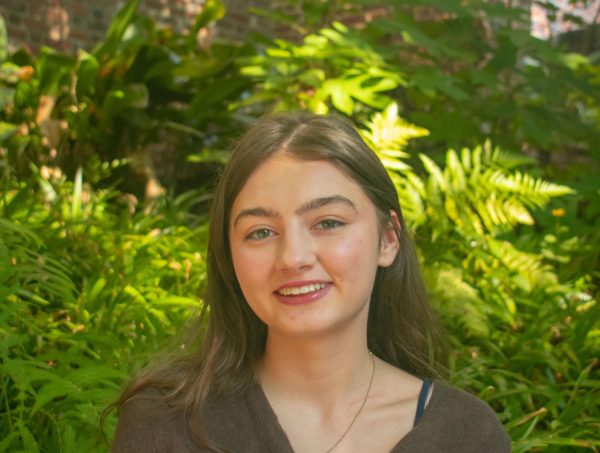
Candidate Dr. Lydia Powell has 25 years of experience in education including serving as Assistant Principal at Hampton High School and Fayette County High School Principal’s Advisory Council. The candidate said that working with students helped to motivate her run.
“Because I work with children everyday, I know and I believe that we should not be ranked 38th in the nation for public education,” Powell said. “I know that our children are capable of knowing how to read by grade three. We have had 12 years of the same and it’s time for the change. This campaign is about building a public school system that works for all of Georgia’s students, families, and communities.”
Georgia’s lottery system provides significant funds for the state’s education system; in the 2025 fiscal year, the organization transferred $1.47 billion to the Lottery for Education Account. Dr. Powell plans to assess the Georgia Lottery system funds, which supports Georgia’s HOPE Scholarship and Pre-K programs, to find a source of backing for universal preschool.
“To fund universal preschool education, I would start with assessing what funds can be allocated from the Georgia Lottery and what funds are in our educational budget and how funds from the HOPE grant are allocated to dual enrollment students,” Powell said. “I would look at district trends for early graduates to assess if funds statewide could be used for pre-k education. Basically, ask the question, ‘are students graduating earlier or taking off campus dual enrollment and at what rates? Can we sustain having a statewide early learning pre-K program?’ It would essentially look more like an age 4 – 17 or pre-K – 11th grade system with students that would traditionally be in grade 12 would be focused on tech school certification, work based learning, or college preparatory courses. This would increase students’ opportunities to attend college, enter the workforce, training program, or certification program.”
To fund her goal, Powell cited the Georgia Lottery system and surplus reserve to allocate to preschool.
“There is money that is available for this,”Powell said. “For example: Lottery Surplus Funds. Since FY 2011, the state has consistently appropriated more money for HOPE Scholarships and Grants than students have used. This has resulted in the accumulation of nearly $1.3 billion in lottery reserves (as of 2020), which sits in the state treasury rather than being spent on education. Surplus Reserves, Georgia has a budget surplus ($14.6 billion total general fund surplus in 2025), a portion of which includes unspent funds from various state departments, including education, that are not utilized.”
Georgia utilizes the Milestone assessment at the end of the school year to assess students progress; however, the candidate thinks the system is not reliable and takes away from other learning practices.
“That is a lot of assessment, and all of these assessments are deemed as important,” Powell said. “All this testing leads to progressions and district wide academic pacing calendars. So no more projects, no more group work, there is absolutely no time for field trips, no Socratic method, no peer review. All of these strategies produce life long learners, independent thinkers and college and career ready young adults. I propose a testing system that is more focused on accountability and assessment on what attributes matter most in the area of college and career readiness. This can be assessed in 3rd, 7th and 11th grade. High stakes testing in these grade bands allow for a year of remediation as needed and enough time to see real growth. Other smart assessments would include a portfolio, final paper, attendance percentages, research and defense, capstone for graduate readiness.”
Rural students make up 20% of Georgia’s student body with some facing poverty and living long distances from the school.The candidate also cited Rural connectivity as one of her goals, Powell explained how she would go about achieving this.
“We have to heavily recruit for these areas, highly qualified teachers,” Powell said. “Offer incentives that are linked to contracts that span two to three years. Create specialized grants that will assist with technological access like portable hotspots, and digital labs. Work with museums, legislators, and federal governmental agencies (CDC, Federal Reserve, CIA) to provide opportunities for field trips, internships, and work study opportunities for students in rural Georgia for the purposes of student exposure in various fields. We have the ability and the funds to offer incentives for quality educators to teach in rural communities. We just need to put together a strategic plan, collaborate with school districts and colleges, and put effort into making it happen. I know that targeted recruitment can yield results.”
Additionally, the candidate believes the Quality Basic Education formula needs to change, and she explained the specifics that need to be added in.
“The biggest challenge in Georgia’s education system is ensuring that legislation is passed to support a new QBE formula that adds a poverty weight and accountability assurances for local school boards to guarantee that the weights for gifted, special education, early intervention, remedial education and ESOL actually equate to the visibility of funds being used for teachers, teacher training, and intervention materials for these special populations,” Powell said. “Currently, a school may earn these funds and see no follow up from the district regarding providing the additional supports in the school although these students earn more money for the district.”
Powell further emphasized her experience in public education. She said she wants all students all throughout Georgia to have the chance to succeed.
“I made a decision to run for State Superintendent because I believe that Georgia needs an educational makeover,” Powell said. “I’m running for Georgia State Superintendent of Schools because I want Georgians to have a candidate that they can vote for that has public education experience; that will stand up for teachers and students, and knows how to articulate the needs of our districts based on experience. I believe that every child no matter their zip code deserves a real chance to succeed.”
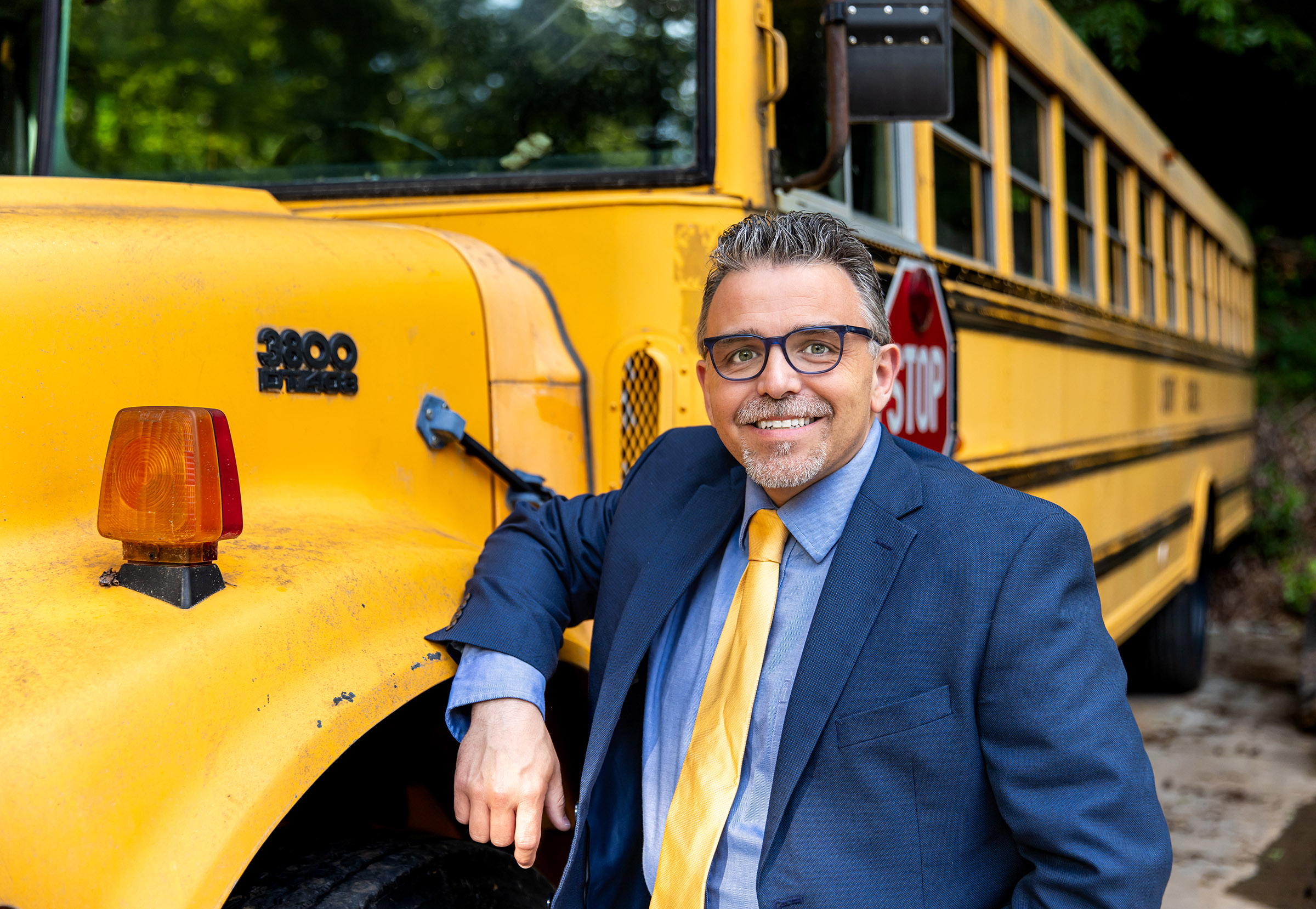
Trammell is the founder of the Georgia Center for Civic Education and was appointed chairperson of the Georgia Commission for Civic Education by Governor Brian Kemp. Trammell described what led to his campaign.
“I want to make sure that no matter where you are in Georgia, whether you’re in Alpharetta or Atlanta, or this little bitty town Southwest, that wherever from the very top, very bottom and anywhere between that you get a quality education, and that’s not based on where you live or your ZIP code, that when you graduate that your diploma is worth something,” Trammell said. “So you can take that diploma, and it is valued and you can go, and get a job and be employed you can enlist into the army services.”
The candidate also cited his family, and the state’s education ranking as a motivator for entering the race.
“I want what is best for my kids and I look at our state and where we’re ranked education on education nationally and we’re ranked 39th in the nation, ” Trammell said. “I saw that and I just didn’t like it. I want the best for my kids and I want the best for everyone else’s kids and I thought we can do better.”
Trammell plans to put a focus on Georgia’s literacy rates if elected.
“Our third and fourth graders are not reading on grade level,” Trammell said. “Once you get past third grade, even in the middle school level and particularly once you get to high school that is so much of how you learn. What you learn has to occur by gathering the information for yourself through reading. That’s one thing that we gotta do, is fix the way we teach reading. The legislature did this past year through creating a bill that restored teaching as to what is now being called the ‘science of reading,’ but older folks would refer to it as phonics, and it’s just the way that you teach students how to read and break down the words, etc.”
As the founder of the Georgia Center for Civic Engagement, a non-profit that focuses on civic education, Trammell emphasizes the importance of social studies education and plans to expand the curriculum if elected.
“Georgia requires that students take a half credit of American government and a half credit of economics, which is paired with a personal financial literacy in a standard semester,” Trammell said. “A half credit is about eight weeks, so, essentially, we’re saying that in eight weeks, a high school student can become proficient in American government, or citizenship as some people called the course, and can become proficient in economics and personal finance. I don’t think that’s enough. I think it should be a full credit and there should be graduation requirements for social studies just like there are for math and science and the other core courses. Our students need to understand the rights and responsibilities that accompany Georgia citizenship and U.S. citizenship.”
Trammell said he wants students and their families to have input in the school they can attend. He noted how this choice is not just private vs. public, but all types of schools in between.
“Some people call [it] school choice,” Trammell said. “I call it parent choice, and a lot of times when people are talking about choice, their mind goes very quickly to, ‘Oh, you must be talking in a public school vs. private school,’ and that is one of the tools in the toolbox, but when I talk about choice, I’m talking about charter school, magnet school, homeschool, private school, college and career academy at universal enrollment within a high school district or perhaps even within the entire state. If there’s a program at a school that you’re interested in, what would keep you from going to that school? My idea is to equip parents with every tool in the toolbox for them to make the best decision for their child.”
Trammell continued on this point, highlighting the importance of quality public education.
“[Parent choice] is even more important when we have so many schools that are underperforming or quite frankly failing, so I certainly am not looking to divert tax dollars from public schools and send them to private schools,” Trammell said. “What I’m looking to do is for the money to follow the student and parents be empowered with the choice to make that decision for the student. Let me be clear. I am 100% supportive of public schools. My wife is a public school teacher. My three children are in public elementary school. My goal is that every public elementary, middle and high school is so excellent and we are just knocking it out of the park–that they are the choice because no one wants to have to drive out of their community to go to the school so that that’s what I’m wanting is wanting to make sure that our our local public schools are excellent but right now, we’re not living up to that promising so many parts of our stay.”
The candidate described his familial connection to Georgia’s education system.
“My wife, she’s a special [education] teacher right now, and four or five days this summer she went over to the school to clean her classroom to get it ready for the school year,” Trammell said. “A lot of times people think that the teachers are sitting by the pool and you know going on cruises or something during the summer, but quite frankly, the summers are fairly short for teachers. By the time they have to go back for pre- planning they’re all the time thinking, ‘How can I make things better for my students? How can I make my classroom better? How what supplies do I need?’”
He highlighted the expenses that teachers incur for their students and classroom as a problem.
“Each teacher gets a $250 tax credit on their Georgia income taxes for stuff that they get for class, but I can guarantee you from personal experience, that we end up buying a whole lot more than $250 worth for my wife’s classroom,” Trammell said.
Trammell envisions a bright future for Georgia’s education.
“I want Georgia to be number one in the nation for education and I think we can do it,” Trammell said. “I just think we need a fresh vision and a fresh leader to make it happen.”
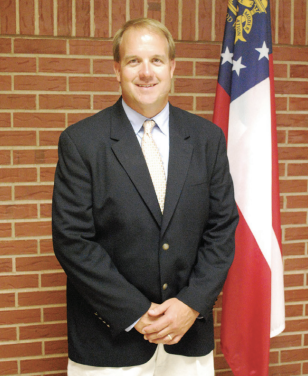
Fred “Bubba” Longgrear has been in public education for 30 years, He additionally serves as the superintendent of Candler County School District, a position he has held for 11 years.
“I just know how important leadership is,” Longgrear said. “I’ve been in some leadership roles around the state and a lot of people approached me about running for state school superintendent and just feel like it’s an opportunity to really step into this role and hopefully help Georgia progress in a positive direction.”
Longgrear believes his experience as a district superintendent will be beneficial if elected.
“The experience I have at the district level really gives a perspective of some of the challenges and struggles that districts are going through and some of the barriers to success,” Longgrear said. “I think perspective is important. As a local district superintendent, there’s all the things that you have to deal with leading a district: working with a board, working with the community, working with staff and then really creating a collective focus and a collective goal will help me be successful in the state school superintendent role.”
To encourage student success, and prevent teacher-burnout, the candidate plans to increase the focus on student behavior to ensure a conducive learning environment.
“In terms of behavior and being very clear with expectations and then being clear with how we’re going to respond when those expectations are met,” Longgrear said. “I think that as we look at career development opportunities, if we’re allowing, and almost encouraging, students to do things that will impede them from being successful in the future and in society and in their career, it’s not best for the child. Look at teacher burnout, and students that feel like they’re in an unsafe environment. I think it’s because we’re not adequately and efficiently addressing behaviors that cause the environment to not be what it can be.”
Longgrear pictures Georgia’s education system as a place where parents will be happy with the schools available and have their children stay in public schools.
“I want public education to be such a desirable choice for all,” Longgrear said. “That eliminates the needs or desires for parents to try to take their kids elsewhere. I think that we can do that through creating higher expectations, focusing on career development, opportunities and moving away from a focus of how many kids can we get to graduate to truly preparing kids and students for success beyond graduation.”
Additionally, the candidates cited the state’s low literacy rate as a reason for change in Georgia’s Department of Education.
“I do think that literacy is such a pivotal point and I think we need to really address gaps in literacy opportunities for students early on,” Longgrear said. “There’s still some students that are not at mastery during the ‘science of reading’ and them being able to be successful at that I think that needs to be a priority.”
The candidate highlighted parental involvement.
“I think in my experience what I’ve seen is the more engaged our families are in their child’s education, the more successful the child’s gonna be,” Longgrear said. “I think we need to be very deliberate [in engaging families] when we try to do this at the local level, where I’ve been in a leadership role. I’m in their child’s education. Such as having school governance changes, a parent representation—having parent committees, where you call parents and explain some of our issues if some of the things we’re doing and get feedback on things where we can improve and better serve their children.”
Longgrear recognizes the strides that have been made with Georgia’s education system but acknowledges that there are still improvements to make.
“With all the good work that’s been going on in Georgia,” Longgrear said. “I think that there is room to improve, provide support and collaborate to make public education even better in the state of Georgia.”

Dr. Nelva Lee is a former adjunct professor, former healthcare employee and was appointed to the Department of Community Health by Governor Brian Kemp. She said she was inspired by her own educational experience when deciding to run.
“I’m running because Georgia’s outcomes aren’t where they should be, and I know education is the great equalizer,” Lee said. “My own story—earning a trade certificate in high school, working my way through college to a doctorate, then building a vocational school—proved to me what’s possible when policy clears pathways instead of blocking them. Georgia’s current rankings, graduation and college-going rates aren’t acceptable; I’m stepping up to fix inconsistencies in our system and modernize outdated rules that hold students back.”
Lee is building her campaign on two promises.
“Two pillars: one, if you want college, you get to college; two, every graduate earns at least one industry-recognized trade certification before leaving high school,” Lee said. “Around those pillars, we empower parents with true choice, elevate multiple high-quality school models, including charters, and drive Georgia upward from middling rankings to a state known for both excellence and opportunity.”
In order to ensure students are career-ready when they graduate, Lee plans to make sure students have trade credentials.
“I will make trade credentials a graduation expectation by embedding industry-recognized certificates into high-school pathways, expanding work-based learning and clearing regulatory
barriers that block modern delivery—updating rules that penalize high-quality online programs for lacking a ‘physical address’,” Lee said. “The goal is simple: every senior crosses the stage with a diploma and a marketable skill in hand.”
Lee said her mix of experience will give her a unique perspective as state superintendent.
“I’ve lived the full pipeline: homeschool mom, substitute teacher, adjunct professor and CEO/founder of a vocational school that trains bilingual medical interpreters,” Lee said. “I also serve on the state Department of Community Health board. That mix gives me a practitioner’s eye for workforce needs, a teacher’s heart for students and a reformer’s urgency to fix outdated regulations—so education actually launches young people into skilled jobs or college success.”
Dr. Lee’s platform includes expanding charter schools.
“One size does not fit all,” Lee said. “Charter schools give parents more autonomy, expand high-quality options and create healthy competition that lifts outcomes. Tying charter growth to a robust school-choice funding stream—moving from the $6.5 thousand Promise Scholarship to an $8 thousand universal model—helps new and existing charters become financially viable and flourish, right alongside traditional public, magnet, private and homeschool options.”
One of Lee’s goals is to make college more accessible for students. She explained how she would prioritize funding and policies in order to make that happen.
“First, fund students, not systems—so families can place their children in the environment that best prepares them for college,” Lee said. “Second, clean up policy inconsistencies that undermine learning and accountability. Third, align high school with real-world outcomes by strengthening academics while offering career pathways, so students arrive at college focused, prepared and with fewer wasted credits.”

Otha Thornton is a former National Parent Teacher Association president and second-time campaigner for the state position, falling short around 223,000 votes. Thornton explained how his past experiences in the military and political administrations have shaped his view on education.
“As a senior officer in the military, I travel all around the world, seeing different education systems,” Thornton said. “So my last couple of years in the military, I served at the White House. I worked in the Bush and Obama administrations as director of [human relations] for their communication teams. And during that time, I was working with school systems on improving school systems around bases.”
Thornton reflected on his first run for state superintendent, and what he is taking from his first campaign to his current campaign.
“I got involved the first time to make a difference in making a better Georgia, and overall, as the chief education officer for Georgia, making sure that we had resources in place to help our school systems out,” Thornton said. “And this time, same thing. I ran back in 2018, but I never stopped working from the standpoint of pushing good policies to properly fund our education, get our parents involved and support our teachers.”
Thornton’s extensive military training and PTA management will be beneficial to Georgia’s education system, according to the candidate.
“We are taught [in the military] how to run systems and how to analyze challenges and just basically run systems,” Thornton said. “So as a national PTA president, because of my extensive planning and leadership training in the military, being able to take an association with 4,000,000 people across 50 states and four U.S. territories, I had to be able to understand and run advocacy operations. How do we advocate for education issues for our children? I had to have a grasp on the budget. ‘How do we bring funding in?’ I was able to increase business, partnerships and national PTA by about 35%. When I left PTA, we had more units. There was a reduction in membership, which was a common thing across all nonprofits, but we were able to get into other communities and we had more units when I left National PTA.”
Thornton explained how his current work will roll over to the position of state superintendent.
“As a state superintendent, you’re responsible for ensuring that federal monies are properly allocated and going to the right places,” Thornton said. “So because of my understanding of these things, it’ll make me a much better superintendent and really a transformational superintendent for the state of Georgia. I also work with school systems now, I work with special needs [students] across the state, and basically doing pre-employment transition services training like teaching the interviewing skills, effective communications and how to advocate for themselves. So I get to see different school systems in Georgia. As a state school superintendent, these types of things will be critical as I move into the position to serve.”
The QBE formula determines how schools in Georgia receive their funding, Thornton noted a needed change to the system.
“We need to update our QBE, that’s a quality based education formula,” Thornton said. “That has not been updated since 1985. So imagine if you talk to an adult and imagine if you had a job since 1985, you never received a cost of living allowance. So again, you have the same static income. Since 1985, we’ve upgraded in technology and we’ve had more mental issues going on in our school systems. So we need more counselors. I think the average school in Georgia has one, two, to 400 as far as counselors to students. So a lot of students fall through the cracks, and we can do better.”
Thornton noted teacher retention as one of his goals.
“We have some great teachers, and we’re currently having a crisis in Georgia, where we’re losing so many teachers because there has been dictated on how to teach, what to teach,” Thornton said. “Don’t get me wrong, there are standards that we have, but let teachers teach and support them. Keep their classrooms safe and give them the opportunity to be creative and help their students, and reach their potential.”
The Promise Scholarship voucher program offers $6,500 to assist in private school tuition for certain students. Thornton emphasized how he believed the program is not beneficial, and wants Georgia to remove the program.
“We need to try to move Georgia away from vouchers,” Thornton said. “Vouchers are basically taking money out of public schools and funding private schools, and other entities and private schools do not have the accountability. Public schools have scrutiny that they have to go under. And I say, if you properly fund the public schools, we wouldn’t need to send kids to private schools. So, if someone wants to send that child to a private school, you pay their private money. But as far as public schools go, we use public money for public schools.”
Thornton noted the poverty rate for students, especially those in rural areas of Georgia. Thornton argues for the importance of pre-k for students to ensure they have a good base education they will build on throughout their time at school.
“If a kid is coming out of poverty, they’re not properly nourished. They struggle and they come to school with all these challenges and it comes out of a challenging environment. That’s why we need pre-K. And ensure that we protect pre-K, so we can give those 3 or 4-year-old kids an opportunity to get on par. So by time they hit kindergarten they’re reading and they acquire some skills that may not have come out of the environment they’re coming out of. And that just makes things better.”
Thornton believes education should be a nonpartisan issue.
“Now, I will say this, when it comes to education, I’m a nonpartisan,” Thornton said. “I think we should have the best education possible. I once told a Republican. I said, ‘When kids do not have D or R behind their names, we need to have a good policy to ensure that our kids are taken care of.’ So, I’m glad to be right now, the only Democrat, and hopefully it will stay that way. Right now, I am the only one, and that seems to be the projection.”
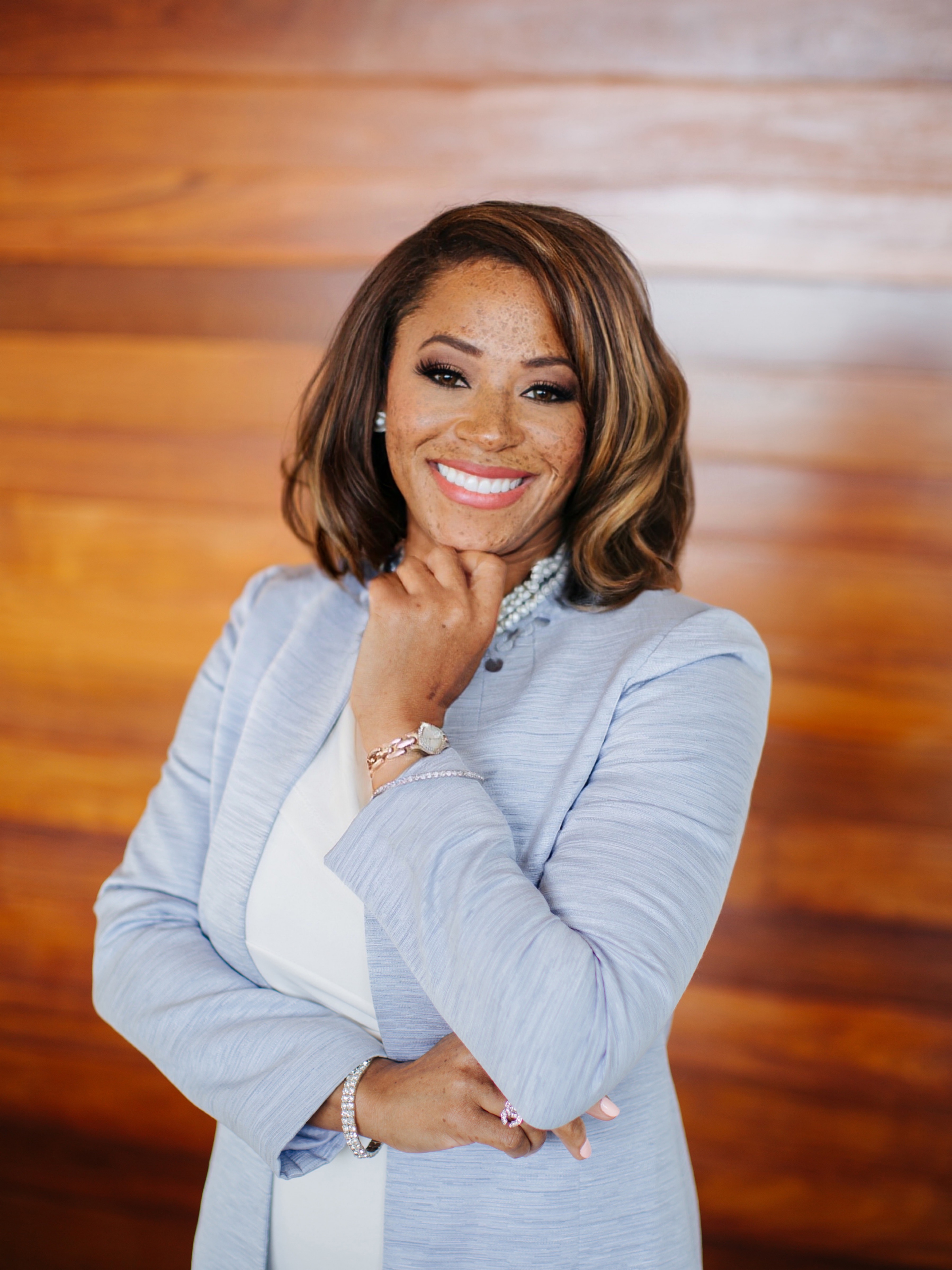
Mesha Mainor was elected as a state representative in 2020 as a Democrat, and in 2023 officially switched to the Republican Party following her support of the private school voucher program. She said her former position will affect her role positively if elected state superintendent.
“It’s crucial because the state school superintendent essentially must follow the laws that the policymaker or the legislature makes,” Mainor said. “So being a state representative in the past, I made the laws that the superintendent must implement. One example, we created a law that personal finance is going to be required in the school now. Being able to really understand the purpose of the law is important and you also need a really good relationship with the legislators so you can really understand what the legislators are trying to achieve because that can be a little confusing for some people, especially if you’re not the one writing the law. I think having the experience of knowing who those legislators are, I can just pick up the phone and ask, ‘Hey what was your real intent to this.’”
Mainor emphasized the importance of having a state superintendent who has a focus on special needs students. Further, Mainor said, as a former physical therapist, she has experience working with children with special needs.
“Within the department I would like to implement some policies, and also some parent advocacy groups throughout the region to really make sure that parents of children with special needs that their needs are being met,” Mainor said. “I’ve spoken to lots of parents with children with disabilities as a legislator and it is a group that tends to be forgotten, and I want to make sure those families are still uplifted. I want to make sure those families feel like they have a voice and I wanna make sure those families feel like someone cares and understands what their child needs.”
Mainor said she will implement more “accountability” in the school system, and compared Georgia to nearby states.
“Right now we are in the bottom tier of schools compared to the rest of the United States,” Mainor said. “Mississippi is the neighboring school, they used to be one of the worst performing pools in the nation, and they are soaring ahead of us. Mississippi is known for a part of it having poverty, but yet they’re soaring. There’s this connotation that poverty is low performance. I think Mississippi is a great example that does not have to be the case… I want to be able to make sure that the local systems have what they need because I understand that if you’re in a rural setting a lot of times leaders are coming from that community and sometimes you may not have broadband or you may not have access to certain things, and if we take that into consideration at the DOE level, that means we may need to get extra executive training or extra leadership training, whatever they need to ensure that they are just as excellent as a school in any other place right, so I would like excellence everywhere. It shouldn’t just be excellence in a higher economic community.”
Mainor wants to implement additional training for teachers, the candidate exemplified what and how.
“There’s a way you can still teach the standard without having your own opinion in it,” Mainor said. “It’s OK to say to the student, ‘What is your opinion on this’ without you saying well this just happened and this is crazy and XYZ. There should never be a circumstance in my opinion where a teacher is giving their personal opinion. I think you have to be trying to do that, and so right now I say it’s not the fault of the teachers, you have to be trained to do that. I was trained to do that so that’s something that I will definitely be implementing… I think we can take the fear out of the teacher’s mind if they’re properly trained on how to be more objective while they’re teaching versus providing subjective input.”
In her pursuit of creating a more accountable Georgia DOE, Mainor explained a system she would implement if elected to the seat.
“I’m gonna implement a four-point system or four-tier system in what I’m calling it PASS. If you think about students, [they] must pass their grade every year, so should the Department of Education,” Mainor said. “The Department of Education and the leadership of the superintendent should be able to tell the taxpayers, ‘This is the return on investment and this is how we’re going to measure it versus parental involvement.’ We will not try to take parents out of their child education because at the end of the day, parents know more about their child. In some cases, the teachers in the school know more than a parent, but parental involvement is going to be very important so that’s first and foremost accountability.”
Mainor’s goals are centered around helping parents be more involved in student’s education in Georgia.
“Though parental involvement, accountability, student success, all wrapped up in exceptional service, I really want the culture of the Department of Education to be community-oriented,” Mainor said. “I want them to feel like even though this is a state agency, I want them to feel very local. A lot of times, parents feel like they can’t get what they need from the school or the local school board. If that is the case, I would like parents and family to know you have another option that is very easy to contact and that would be the state board of education.”
_PNG.png)
Dr. Anton Anthony is the current Superintendent of Hancock County Schools. He has over a decade of experience in Georgia schools, both rural and urban. Anthony explained how this impacts his campaign.
“My campaign is rooted in real experience, not theory,” Anthony said. “I am the only candidate who has served across rural, suburban and urban communities in Georgia and is currently serving as a superintendent… I don’t just want to talk about change, I want to be the action behind it. This isn’t theory for me, it’s the work I do every day in Hancock County.”
Anthony is campaigning for this position because he wants to make a difference in the Georgia education system; further, the candidate addressed equity in schools.
“What motivated me to run is the opportunity to improve education at a greater scale,” Anthony said. “I’ve served as a teacher, assistant principal, principal, district leader and now superintendent across rural, suburban and urban communities in Georgia. What I’ve seen consistently is that students, especially students in poverty, are not given the same level of exposure and opportunity. As a classroom teacher and school leader, you can only do so much within your building. But as State Superintendent, you can ensure that every district receives the support they need to truly serve students. For me, this is more than a position — it’s a calling to make sure no child’s future is determined by their zip code.”
The candidate expressed his vision for Georgia academically.
“My vision is centered around three key areas,” Anthony said. “Strengthening literacy and numeracy, every child must be reading on grade level by third grade. I started my career as a reading teacher, so I understand firsthand how critical literacy is to a student’s entire academic journey. Real support for teachers. Teachers need more than mandates — they need training, tools and ongoing support to meet the needs of every student. Expanding exposure through CTAE pathways. Students should be introduced to career pathways as early as middle school so they can discover their interests and prepare for their future.”
Addressing the importance of literacy, the candidate explained how he would increase Georgia’s literacy rates.
“If a child is not reading on grade level by third grade, it impacts everything: math, science, social studies and overall confidence,” Anthony said. “That struggle follows them throughout their academic career. As State Superintendent, I would provide targeted training for teachers in reading instruction, ensure teachers can identify whether a student is struggling with fluency, comprehension or vocabulary and move away from simply promoting students and instead focus on true mastery of skills. If we fix literacy, we change the trajectory not just of education, but of society.”
Anthony emphasized modernizing what he described as “broken systems.” The candidate explained how.
“Modernizing education starts with exposure and access,” Anthony said. “I plan to expand CTAE pathways into middle school, partner across districts so students can access programs not offered in their local school, utilize [Georgia Regional Education Service Agencies] regions to create shared opportunities, provide transportation and funding support so every student has access — not just some. Modern education should ensure that all students can explore, create and prepare for real-world careers.”
Anthony explained what he brings to the table.
“My experience translates directly because I am currently doing the work in Hancock County as superintendent,” Anthony said. “I understand what districts need, where support is lacking, how decisions at the state level impact schools in real time. Many candidates can speak about education, but I’ve lived it at every level. I bring not just knowledge, but practical experience and empathy for educators, students and communities.”