

Wildfires in South Georgia prompt temporary burn ban


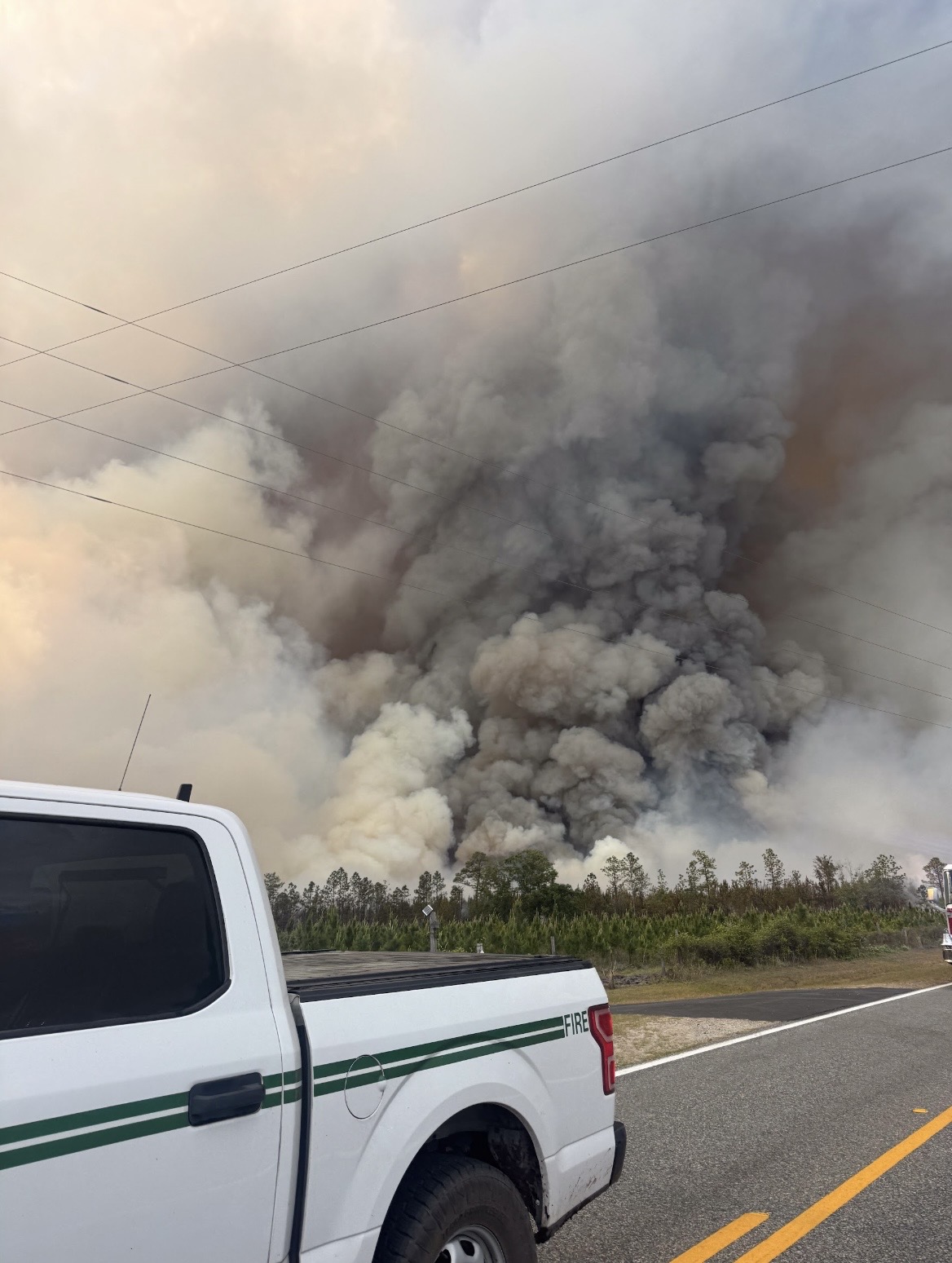
Collectively, the two fires have burned over 50,000 acres of land. According to the National Aeronautics and Space Administration, they were influenced by patterns of drought and strong wind.
“Currently, the southeast is in the worst drought since 1895,” Tudor said. “In Georgia, many towns are within the Wildland Urban Interface, meaning the transition zone where human development, such as houses and infrastructure, meets or intermingles with undeveloped wildland vegetation. This creates a serious risk for wildfires, especially fires that could threaten residential areas or cities.”
In the past, Georgia has experienced substantial drought in the years of 2006-2008, 2010-2012, 2016-2017 and 2019. Meteorologist and Agricultural Climatologist Pam Knox said the current drought is reflective of these past instances.
“Drought is a natural part of Georgia’s climate, and we go in and out of these on a regular basis, so it’s not anything new, but when we are in one, it’s really hard,” Knox said.
According to Yale Climate Connections, El Niño-Southern Oscillation, a pattern of changing ocean temperatures contributing to heat waves, increased temperature and dry conditions, will likely occur in 2026. Curtis explained how El Niño patterns have influenced Georgia’s weather.
“We are entering an El Niño year that is considered to be much more impactful than other years,” Curtis said. “As warm water is pushed to the coast of South America, those cold waters that would normally provide moisture to the U.S. are going to be shifted away, resulting in dryer than normal conditions in the state.”
Knox believes this pattern contributes to the drought seen in Georgia.
“I think the first cause [of the drought] is the lack of tropical storms last year, because usually that gives us a bunch of rain,” Knox said. “I think the second reason is that we were in El Niño over the winter. I think the third cause has been this consistent high pressure over the Southeast over the last month, which has shut down any chance of rain until [recently]. These three things are all acting together, and they resulted in rainfall values that are really low, in some places, record-setting low, compared to the long-term average.”
On Sept. 27, 2024, Hurricane Helene made landfall as a Category 2 storm in South Georgia. This led to the mass destruction of forestland. Marshall Shepard believes that, in addition to drought, Hurricane Helene’s impact is another contributor to the spread of wildfires.
“The combination of drought and debris from Hurricane Helene is fueling massive fires,” Marshall Shepard said.
Knox explained that vegetation destroyed by Hurricane Helene can act as a catalyst to spreading fires in Georgia.
“Wildfires happen because you have a long period of dry conditions, so all of the vegetation dries out,” Knox said. “One of the things unusual about this year is that we are still dealing with the after effects of Hurricane Helene in the southeast parts of the state. During Helene, with all of the strong winds and everything, a lot of trees came down. They [have been] sitting there drying out for the last year, so that’s the perfect fuel for these fires that are now occurring.”
Fires can easily spread in dry and windy conditions, Knox said.
“Any kind of spark can set off a fire, especially when you have any kind of fuel already on the ground,” Knox said. “If the fuel is there and the conditions are right, especially if it’s windy, then it’s easy for the fire to start. When it’s really dry, there is no moisture and the fires [burn rapidly].”
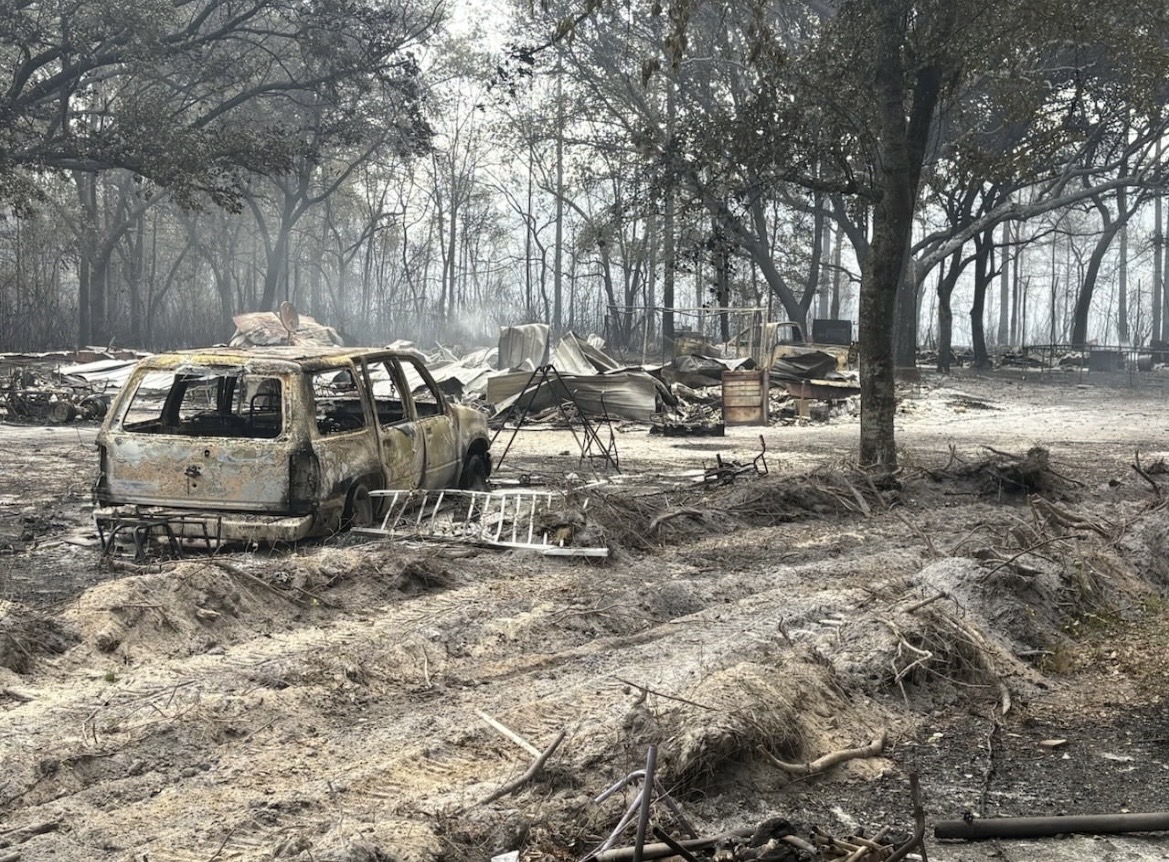
According to the Georgia Forestry Commission, the Highway 82 and Pineland Road fires have caused damage to infrastructure, and pose threats to agricultural and commercial activities.
“On the Highway 82 Fire, 110 homes were destroyed, as well as four commercial structures,” Tudor said. “Estimates currently show 27 homes and two commercial structures were damaged, as of May 3. On both fires, large amounts of timber were damaged, as well. Damage assessments will continue on both fires. Pineland Road Fire was primarily on private timberland, so a large amount of the economic damage was from timber loss.”
In total, the Highway 82 fire has burned 22,420 acres of land, and the Pineland Road fire has burned 32,575 acres. Knox believes the outcomes of these fires are devastating, but said proactiveness during the event has saved lives and prevented further damage.
“A lot of people live in those areas, and they’ve had [many houses destroyed],” Knox said. “That is devastating for the people that live there. [However], people have really been paying attention and the firefighters down there have been working really hard to get people evacuated if they are in an area that is dangerous.”
Among these impacts, wildfires can lead to the fatality and injury of animal populations, water pollution, soil degradation, worsened air quality and reduced visibility.
“Wildfires impact air quality,” Tudor said. “Smoke can travel hundreds of miles affecting many people, especially those with respiratory issues. Smoke can also impact visibility on roads, leading to accidents. Fighting wildfires is also expensive and costs the country billions of dollars a year. The damages to homes, lives and other values like timber revenue and land value is also critically important.”
As wildfires emit hazardous pollutants into the atmosphere, they can be harmful to individuals with respiratory illnesses, Knox said.
“There is the issue of the destruction of things on the ground; there’s also the issue of bad air quality,” Knox said. “When the fires burn, there is a lot of smoke and ash and [pollutants] that enter the air. It can cause health problems for people with respiratory diseases, and so that can be an issue, as well. The destruction on the ground, as well as the air quality issues, are both important factors.“
Annually, millions of people are affected by natural disasters. For this reason, Knox believes being weather-conscious is important for preserving the environment and minimizing the impact of harmful weather events.
“I think people need to keep in mind that weather will impact you in a lot of ways,” Knox said. “Even if the climate wasn’t changing, we would still have the potential for damage, so it’s very important to continue to be aware of what the weather is and how it might affect you. I think that being weather-aware is something that we can all do [to prevent further damage].”













Joyce Serwitz • May 8, 2026 at 7:13 pm
Excellent article on wild fires in South Georgia. The content was very informative.