The Stitch urban park and redevelopment project lost over $100 million in federal funding under the recently passed One Big Beautiful Bill Act. However, project planners and government officials maintain that construction will still begin despite the cuts.
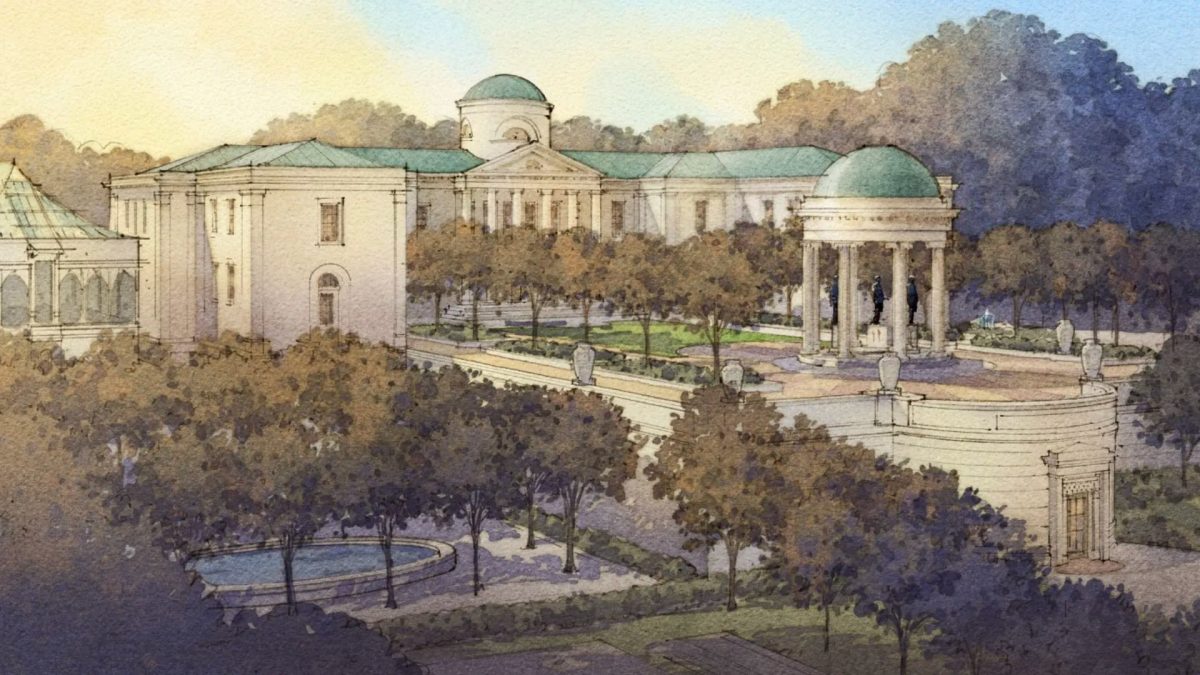
The Stitch is a highway capping project similar to the Big Dig (Rose Kennedy Greenway) over I-93 in Boston and the Cap over I-579 in Pittsburgh, where stretches of urban interstate were covered with new parkland. As proposed, The Stitch would span 17 acres over the Downtown Connector from Ted Turner Drive on the north end to Piedmont Avenue on the south end.
One of the major intentions of The Stitch project is to resolve neighborhood inequalities created by the construction of I-75 and I-85 through the center of Atlanta in the 1950s. Atlanta Downtown Residents Association president John Fischer said this is one of the major factors that makes this project so important.
“The connector just bifurcated the neighborhoods and split Atlanta in many cases in the haves and have nots, and as the neighborhoods have changed and rapid growth has happened in part because of the BeltLine, you see that more and more,” Fischer said. “But we’re now inside the core of the BeltLine, so as we’re here on Ivan Allen and Ralph McGill, I mean, that’s looked at as a major east-west corridor. We’re looking at bike lanes, possible street cars going west and east. So, this is kind of the central hub east, west, north, south and The Stitch becomes a connection point for all these different Atlanta neighborhoods.”
The economic impact of The Stitch in downtown is expected to expand across business, housing, and retail.
We’re implementing The Stitch to ignite an estimated $5 billion in private sector investment and $9 billion in economic impact,” The Stitch project director Jack Cebe said. “It will catalyze an estimated 25,000 multifamily homes, 4,500 jobs, and support other major developments by attracting permanent residents to downtown.”
Along with the acres of new parkland, new bike paths and walking trails will be created to connect the western and eastern sides of the city. This would link two areas of Atlanta that were previously traversed almost exclusively by car or bus. Midtown drafting teacher Melissa Nunnink said she believes this will add a new sense of freedom to the city.
“I am an avid cyclist, and having this ability to bike across town opens up a whole new world of opportunities for me,” Nunnink said. “I can bike across the park to restaurants or other places I would have always had to drive my car to, I think it will be very freeing.”
The Stitch would also increase the greenspace in the city by covering the connector and creating a massive new park over it.
“Atlanta, although it has Piedmont Park and West Side Park, it’s still lacking a fair amount of green space, particularly downtown, and it’s that lack of amenities that stops people from coming out of their houses and connecting at the street level,” Fischer said. “So, certainly green space and activation is something that’s gonna benefit not only residents, but the entire greater Atlanta community, as well.”
The One Big Beautiful Bill Act, which was signed into law in July, removed all $157.6 million in federal funding for The Stitch from the U.S. Department of Transportation, which had awarded the grant in 2024. Despite losing over a quarter of its planned budget, Cebe insists that the project will break ground next year.
“We are ready to build, and by mid-2026 phase one will be shovel ready,” Cebe said.
The previously expected $157.6 million in federal funding for the Stitch was only a portion of the project’s anticipated $450 million price tag. Even before the loss of federal money, the project was not fully funded, and local and state governments will have to finance the remainder.
To pay for the additional $200 million or more, the Atlanta City Council levied a new property tax on the newly-created Stitch Special Services District, an area around The Stitch that will receive special attention from the project. The city will begin collecting taxes from the district in April. The district is bounded by Third Street to the north, Central Park Avenue to the east, Auburn Avenue to the south and a series of roads, including the Downtown Connector itself, to the west.
“The Stitch is a once in a generation infrastructure project, a park and gathering place that will reshape the heart of downtown Atlanta [with a] path and bike lane that make it easier to live, to work and to play in this great city,” Atlanta COO Lachandra Burks said. “It reflects our vision for an inclusive and equitable Atlanta, a city where everyone has access, opportunity and a place to belong.”
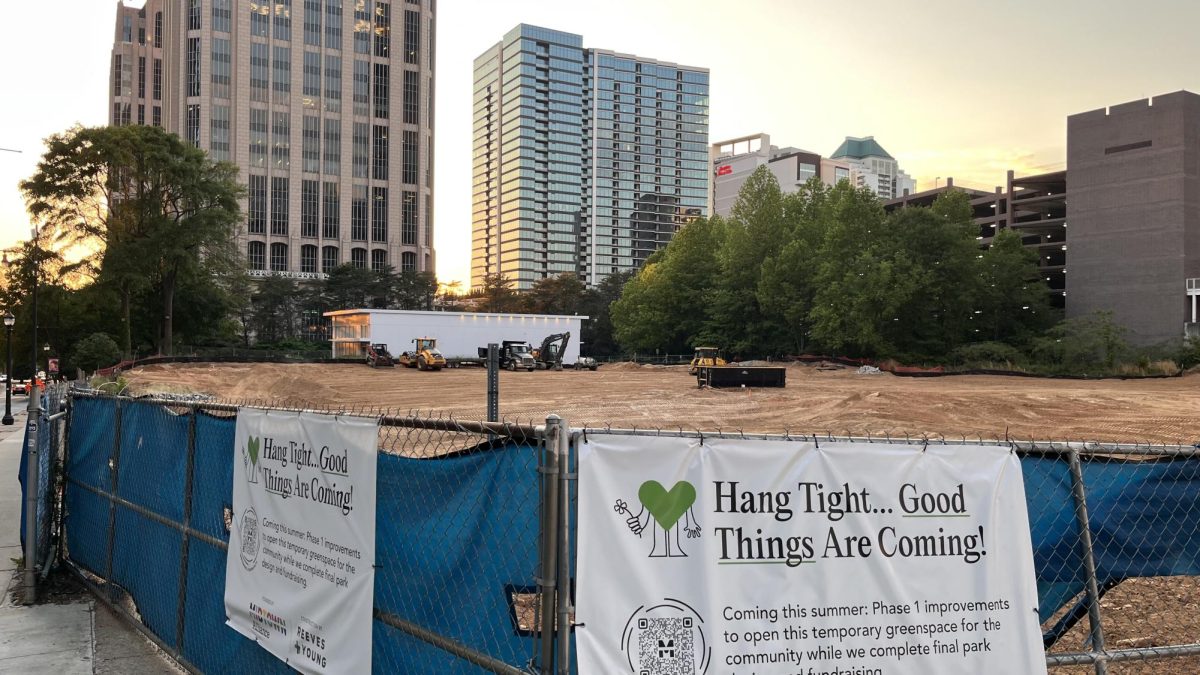
The project is split up into three phases. Phase 1, called the “Heart of The Stitch,” is expected to break ground in 2026 and will encompass the area bordered, in clockwise order, by Currier Street, Courtland Street, Ralph McGill Boulevard, Ivan Allen Jr. Boulevard and Peachtree Street. It will focus on park land and community space, with planned elements such as a playground and multiple pavilions.
“As you look around, you can imagine the parking lots and the vacant building surrounding us today replaced with new apartments, shops and restaurants buzzing with life long after the workday ends,” Cebe said. “A new neighborhood right downtown.”