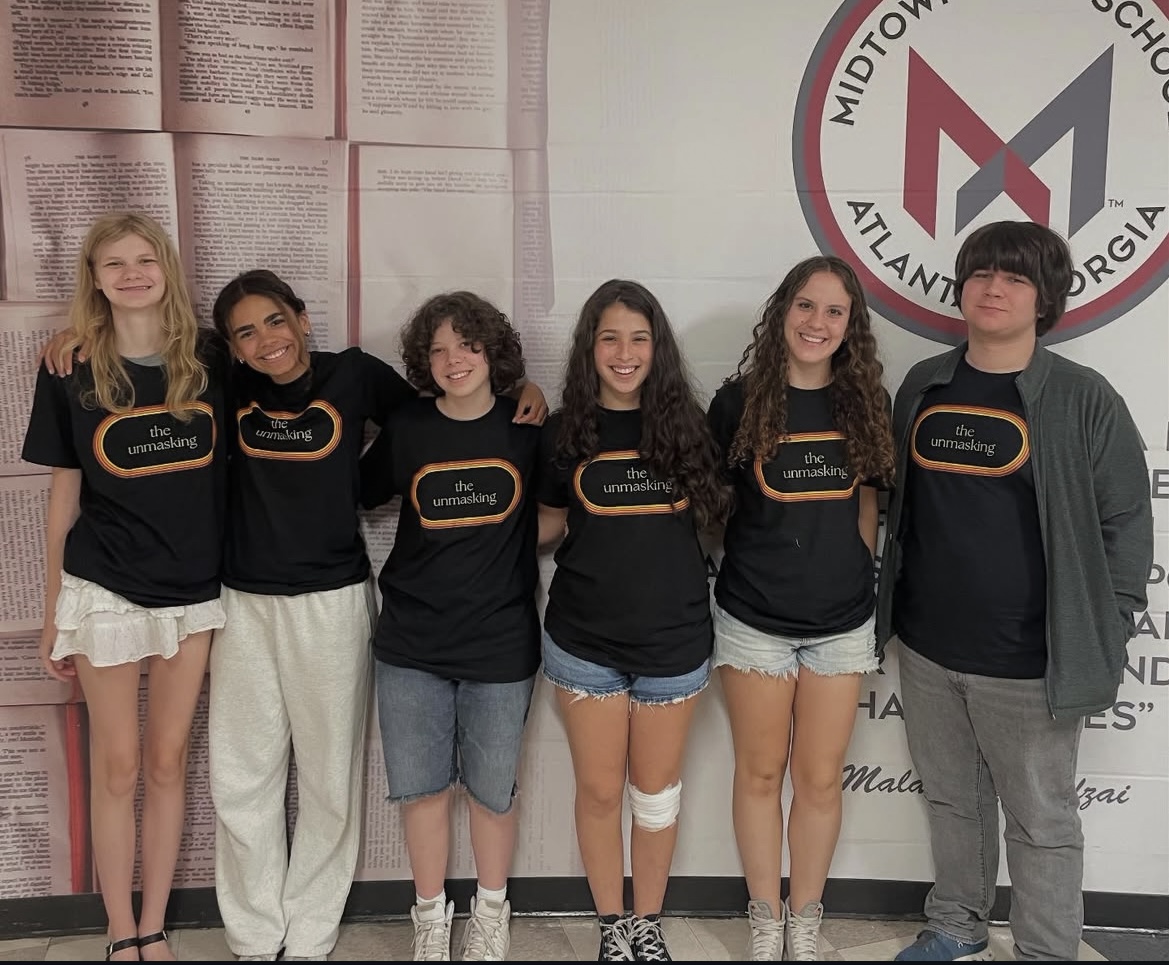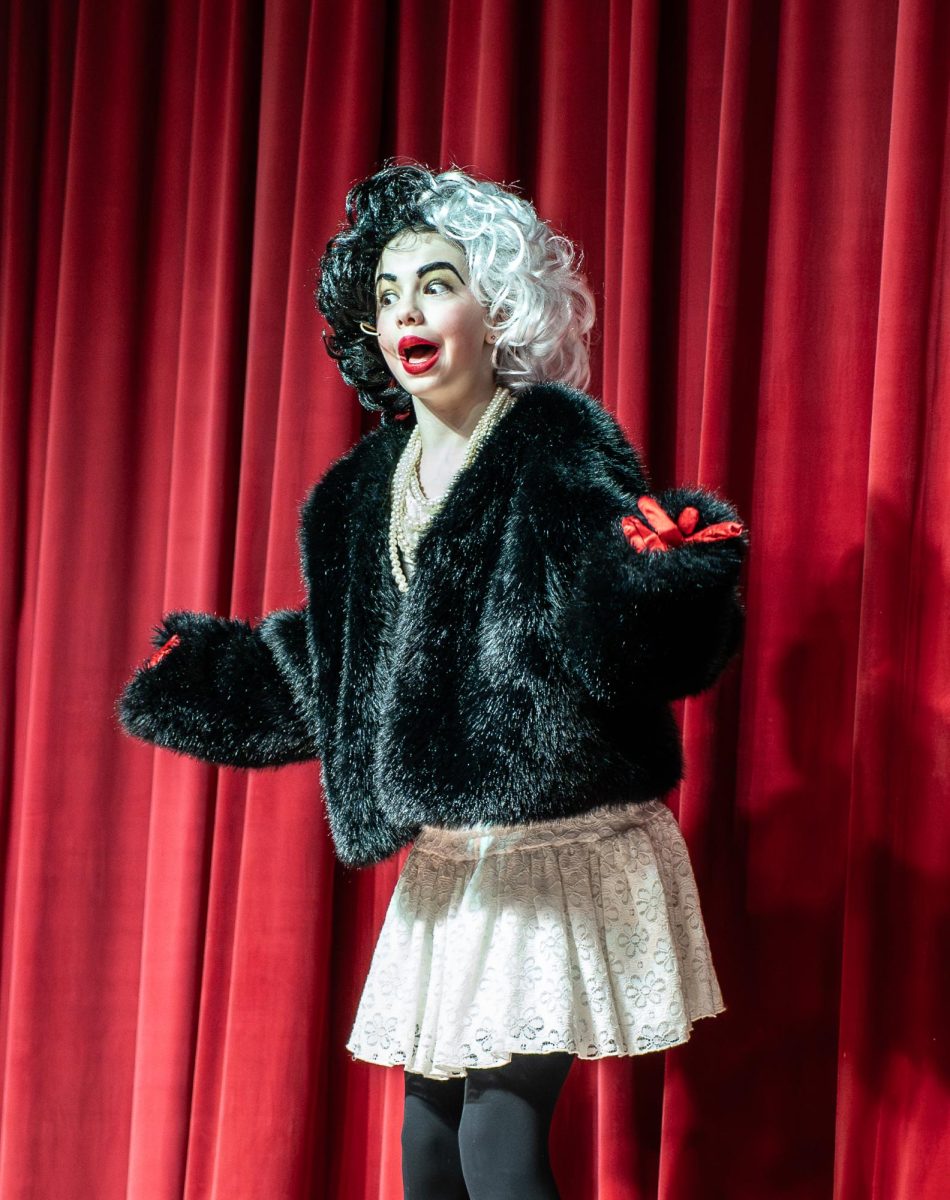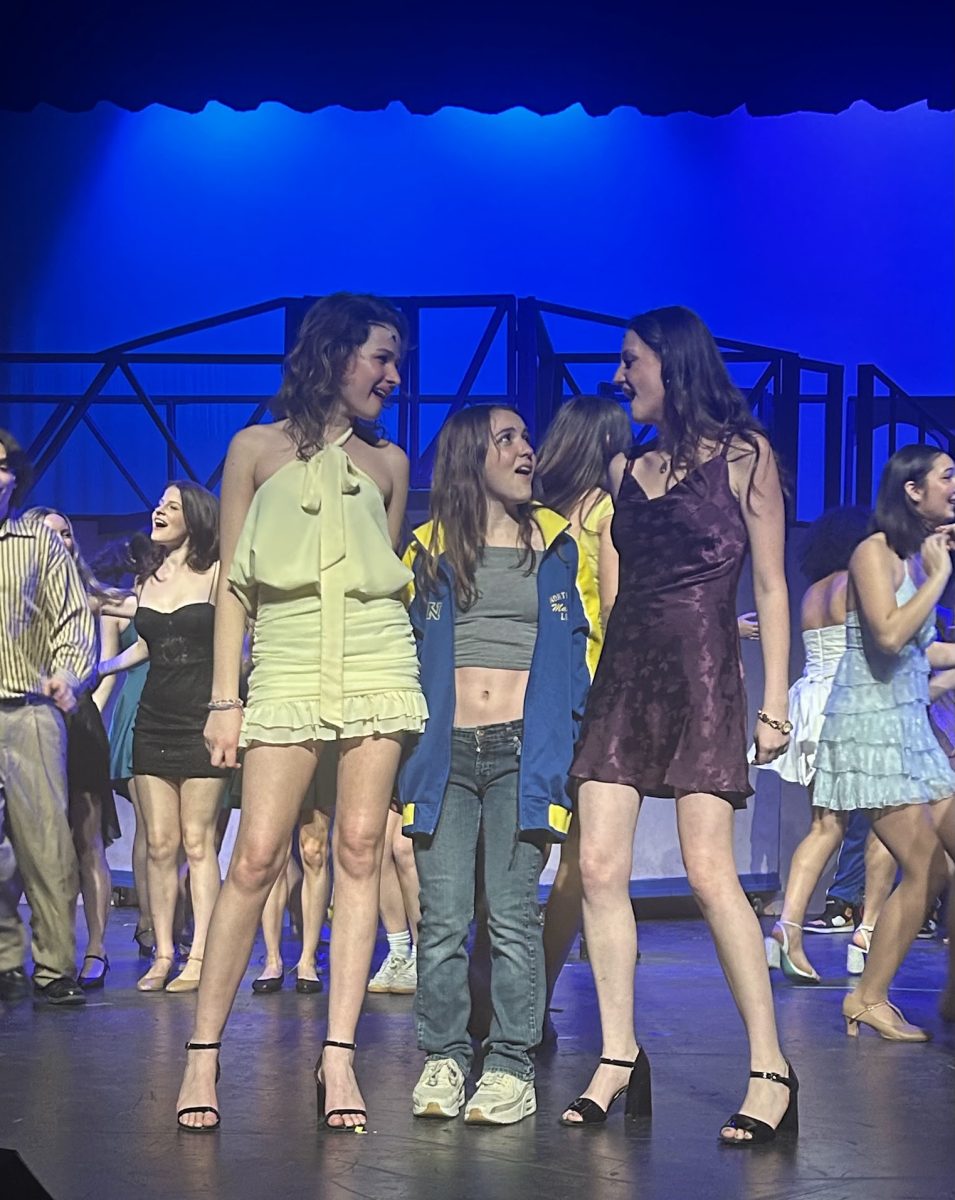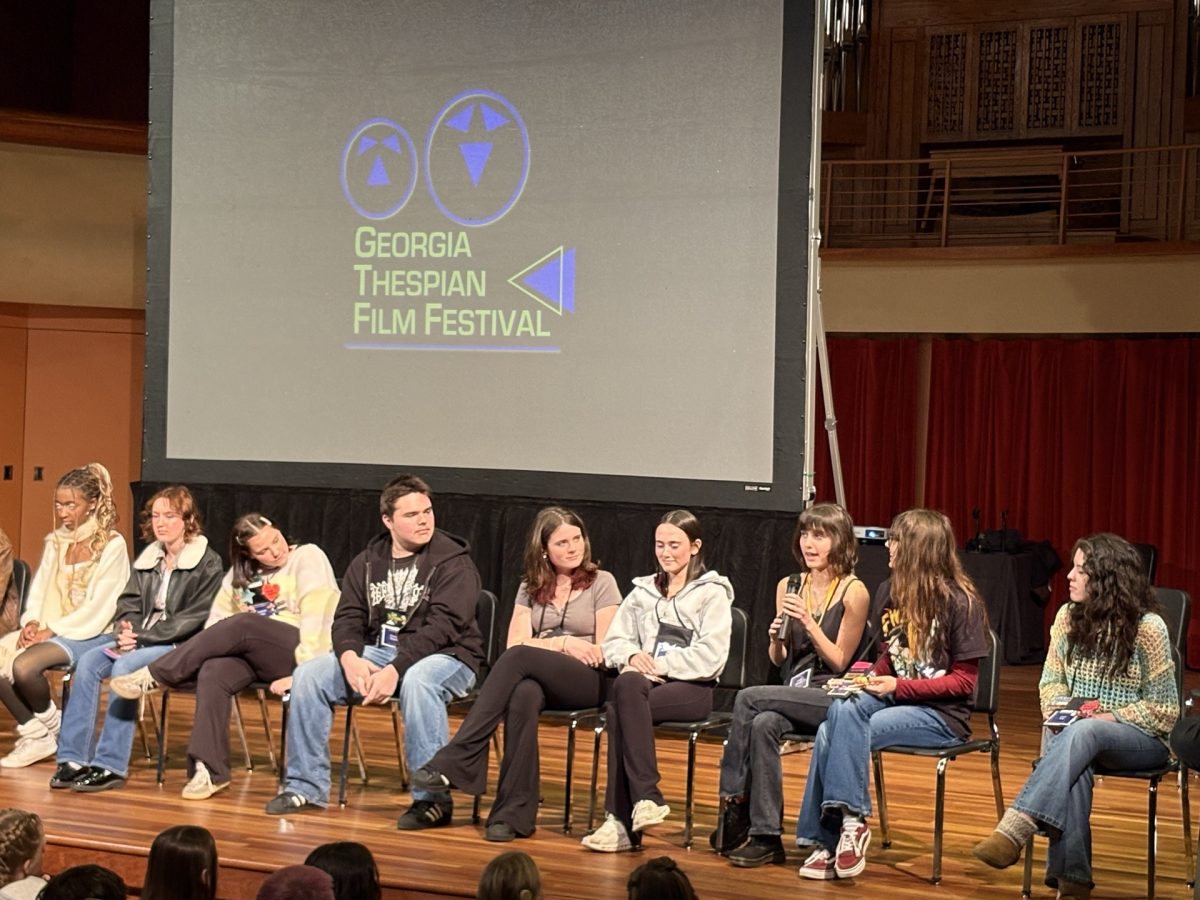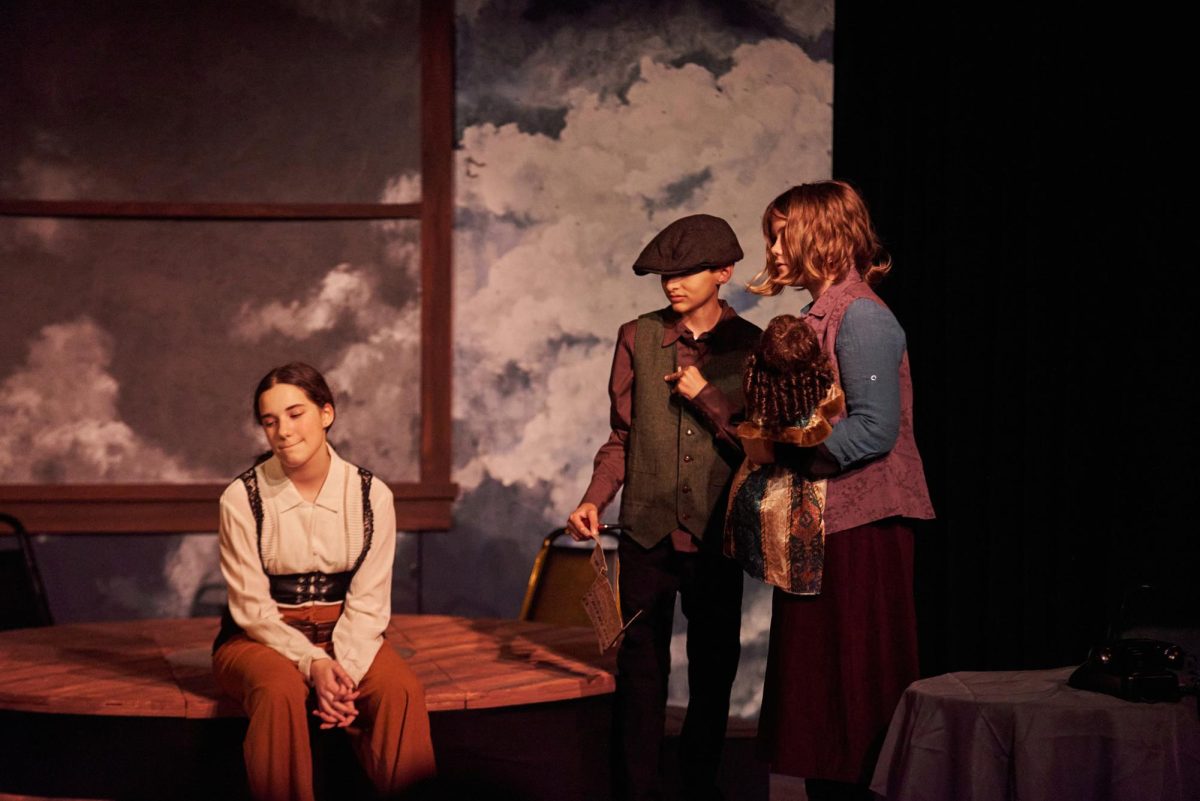
Starting in the 2020-21 school year, Synchronicity Theatre began their collaboration with David T. Howard Middle School. Their playmakers program aims to teach students important life skills and collaboration and has significantly grown in size since its introduction to Howard.
The club includes one two-hour rehearsal every week. Throughout the semester, students audition, rehearse and put on a production at Synchronicity’s theater. Taryn Janelle, the Synchronicity Education Director, developed the playmakers program and launched it at Howard.
“Our instructors are very intentional about the way they help the students frame what they are doing in a ‘professional light,’” Janelle said. “We use terminology and processes that we use in a professional setting and provide access to professional theatre-makers and Synchronicity’s mainstage for their performance. By providing a look into the sides of theatre that are not performance, we hope to broaden their interests and set up our students for success in high school and beyond.”
While the group has put on well-known shows, including “Macbeth,” “The Wizard of Oz” and “Dracula” they have also put on a few lesser-known productions like “The Prophecy of Calypse,” “The Cat Noir” and “The Three Musketeers and the Very Shiny Diamonds.”
“From a script standpoint, we select scripts that are license free or license flexible or even written by our teaching team to ensure the students can bring themselves into the script,” Janelle said. “Storytelling is a very powerful tool for expression, and we are helping our students find their voices. Maybe that comes in the form of a dance number that was never there before or a few added characters… As far as subject matter, we have always been able to adapt rather challenging texts for the Howard students. By their request, over the years we’ve tackled Greek Mythology, Shakespeare and classic literature.”
Ideas for the program started in 2018 with Midtown parent Celise Kalke, the Managing Director at Synchronicity Theatre. Kalke said that she and Janelle had a vision for the expansion of Synchronicity Education.
“Something [Janelle] and I shared was an interest in middle schools, and that is not an age that a lot of teaching artists want to teach, because you have to have special training,” Kalke said. “But, we at Synchronicity do something called trauma-informed training for working with another program, which is called Playmaking for Girls. Playmaking for Girls is working with girls who are coming out of the juvenile detention center or who are also in the refugee community. So, we have a lot of teaching artists who are really great at working with girls who are in middle school or early high school ånd who also are doing trauma-informed instruction for that program, making it easy to transfer skills.”
During their development of the program, the pandemic hit. Due to their Playmaking for Girls program, Synchronicity’s teaching artists pivoted to working online and got virtual classes going. This led to the development of the program virtually during the 2020-21 school year.
“So then, [for the 2020-21 school year], I emailed the Howard principal and I said, ‘Hey, what’s going on with after school programs?’” Kalke said. “‘The theater where I work has figured out virtual theatre. Maybe that’s something that would be helpful.’ He wrote back right away, and he said, ‘That sounds like something that would be helpful right now, let’s see what happens.’ So he introduced me, and [Janelle] was very quickly folded in, because I was really just the parent contact.”
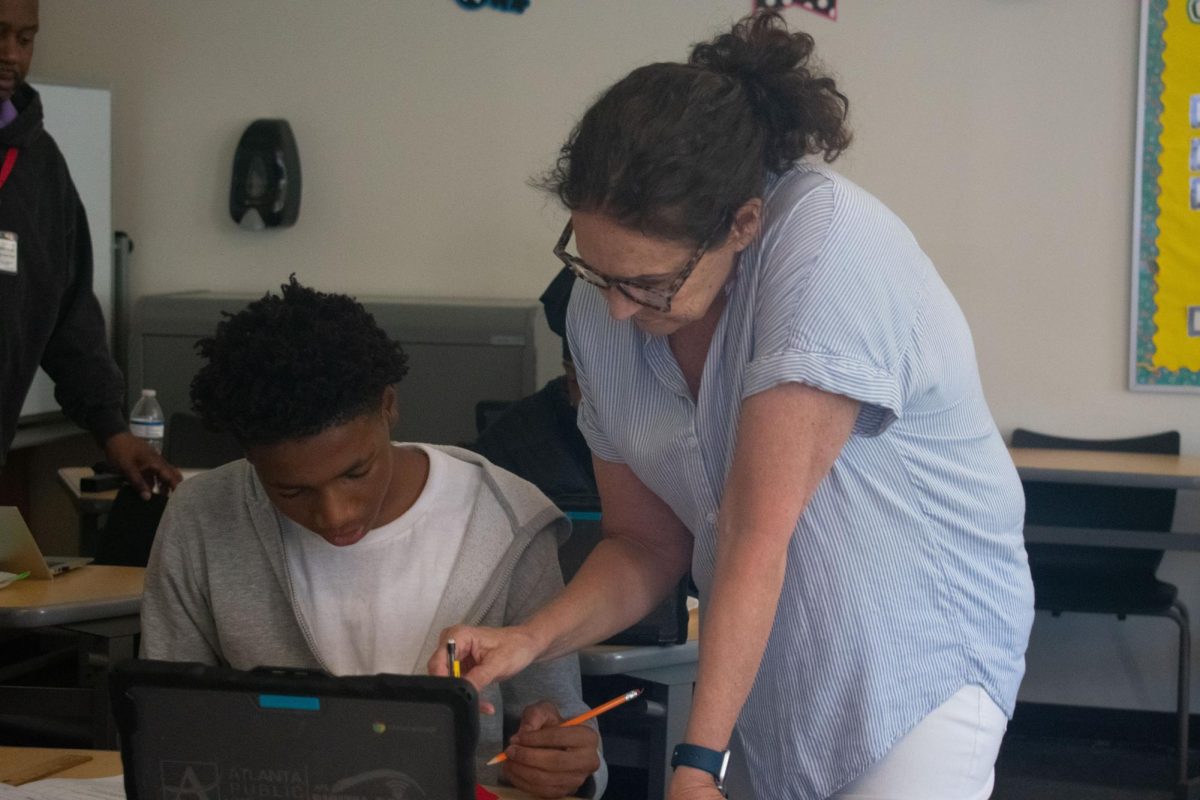
Last year, senior Elizabeth Lyman interned with the Synchronicity program through the Gifted Mentorship/Internship class at Midtown. Lyman said this experience taught her the ins and outs of being a theatre teacher.
“I think the thing I enjoyed most about my experience with Synchronicity was getting hands-on education of what it’s like to actually be a working theatre teacher,” Lyman said. “You can read and you can watch videos. You could take classes. I mean, you could watch your theatre teacher, but getting the ‘behind the scenes,’ like when we’d plan, ‘Okay, what are we doing next rehearsal?’ ‘Okay, what do we need to work on?’ and getting all the little tips and tricks. It was so, so helpful. So I loved getting that sort of experience.”
Lyman said the program also gave her insights into the art of theatre in general. While the program doesn’t require the same time commitments or costs of a professional production, the result is still meaningful.
“I learned a lot about theatre during my internship, because it taught me about the scalability and the versatility of theatre,” Lyman said. “I’d been in high school productions and I’ve seen Broadway productions, and then this is a middle school production, and it’s after school, less time, less set, less costumes, less everything. They make it work and it’s beautiful. The art of theatre is that you can take away expensive sets, costumes, everything and it’s just that raw art of theatre, and I think that is what made it so fulfilling to watch and to be a part of with these super talented kids.”
Freshman Kate Genco participated in the program during her seventh and eighth grade years at Howard. Genco said the program laid the foundations for what she’s learning now at Midtown.
“The middle school theatre program helped teach the basic skills I’m building on at Midtown,” Genco said. “I learned how to read a script well and how to project, and I got experience with memorizing lines. I also learned how to understand a character’s motivation and how to become a character while adding parts of yourself to it.”
Sophomore Mia Pivoshenko said the program taught her meaningful skills and sparked her enthusiasm for Midtown’s theatre program.
“Doing theatre in middle school only got me more excited for the high school program because I knew it would be even better and stronger,” Pivoshenko said. “I am still doing theatre now and am a part of [Midtown’s fall one act: “Edward Tulane.”] Looking back, I think the program was very beneficial to helping me learn how to work as part of a cast and how to work through problems together.”
While the program is much smaller than Midtown’s, certain aspects of it have been successful in preparing students for Midtown. Kalke said that while the students don’t assist with technical aspects of the production, it introduces them to the idea of technical theatre.
“For one thing, it’s after school, so they’re getting used to the time commitment,” Kalke said. “The other thing is that even though there isn’t a technical element in terms of what kids can do, they are working with costumes there. They end up performing at a theater. They’re under the lights. They see stage management, and they see the technical side. And, of course, the teaching artists are there to answer questions. So I think those two things, the time commitment and getting used to that, and then the third thing is just getting used to learning lines and being in a play where you might not necessarily have to know someone else’s lines, but you have to know how the whole play works.”
While the program has taught students theatre foundationals, Genco said it has also brought her more confidence and life-skills.
“By far, the program improved my public speaking skills the most,” Genco said. “I used to struggle with stuttering and volume while presenting in front of an audience, but I’ve become very good at it through theatre, and enjoy it so much more. The program also helped me gain self confidence and become more comfortable being myself.”
Janelle said this is a part of the goal of the program. In middle school theatre, while students are putting on a production, they are also learning collaboration and important strengths.
“Theatre for a middle school student is all about teaching them how to become a more productive and functional human,” Janelle said. “There are skills that theatre-makers have to utilize, collaboration, public speaking, critical thinking, introspection and more that are invaluable to have as a person. At a time when a student is in a very large emotional and developmental transition, theatre can be an excellent tool for not only cultivating those skills, but providing space for the messier parts of that growth.”
The prioritization of these skills can be seen in the community that has been built within the program. Lyman said one of her favorite memories from her internship was when she realized the students had bonded with her as she had with them.
“My best memory from my time at synchronicity is the night of one of the shows,” Lyman said. “We were talking, hanging out, doing some pre-show karaoke, good stuff. And I guess the memo had not been passed that I was not going to be back next year, and this was just a one year thing. I don’t know if I mentioned that or something, and so many of the kids got emotional about it, and they were sad, and they were like, ‘We’re gonna miss you so much.’ ‘No, you have to come back.’ And in that moment I was surprised, because I had been kind of nervous that I hadn’t gotten through to them. They had just seen me as some sort of shadow in the corner instead of an active participant, but at that moment, I knew they actually enjoyed my presence as a teacher, as a mentor and as someone they would just kind of want to be around. And that meant a lot to me, because I had kind of questioned whether I had been doing a good job. Though I’d gotten good feedback from my mentors, just getting that direct feedback of the impact you’re making is powerful and fulfilling.”
Kalke said that while the production is enjoyable for students, a professional product is not the goal of a Synchronicity playmakers semester.
“The point of the program isn’t to turn out a production that could be on TV, or that looks like Glee or that looks like something that was professionally done,” Kalke said. “The point of the way we do it is for scholars is to discover theatre and its elements, to have a good time and then to discover the joy of working together.”