Skip to Content
Categories:

Frayed separation: De facto segregation divides students

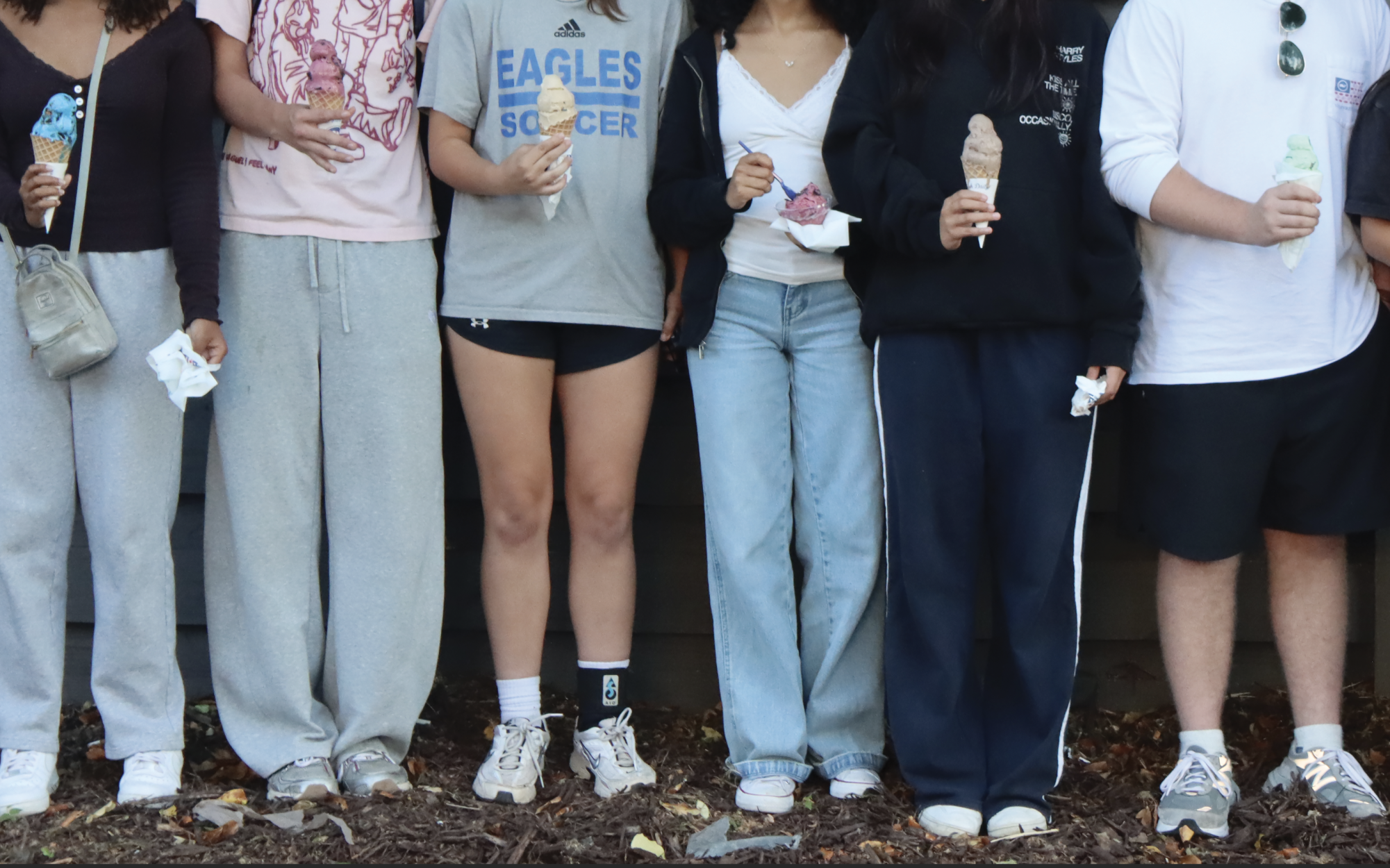
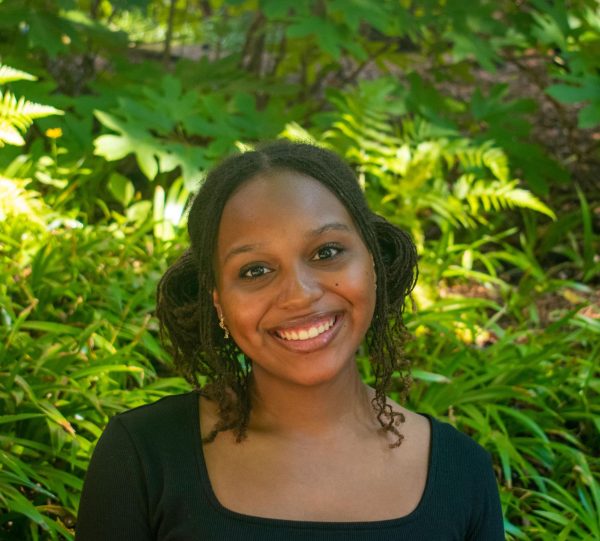
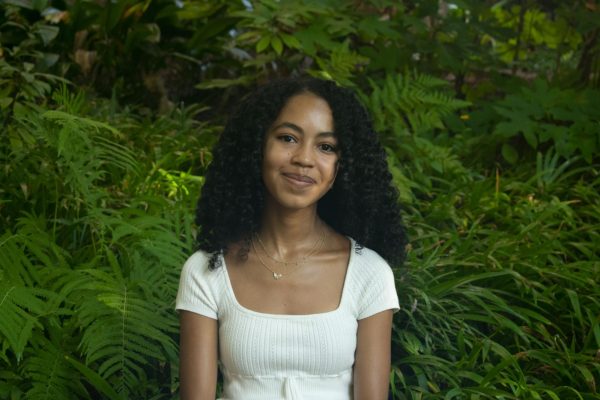
BREAKING BREAD: Senior Julia Mayi is working on a documentary about de facto segregation and has played a role in hosting "breaking bread luncheons," where a diverse group of students have met to discuss their experiences over food. "Even though we are a school of great diversity and amazing inclusion, sometimes we segregate ourselves mentally without even noticing it," Mayi said.
BREAKING BREAD: Senior Julia Mayi is working on a documentary about de facto segregation and has played a role in hosting “breaking bread luncheons,” where a diverse group of students have met to discuss their experiences over food. “Even though we are a school of great diversity and amazing inclusion, sometimes we segregate ourselves mentally without even noticing it,” Mayi said.
Audrey Lyons
Effects of the School System

About 60% of Midtown’s students are minorities. That diversity, however, is not always reflected across classes and friend groups. 

Sophomore Tenecia Richardson went to Centennial Academy for middle school, where about 99% of students are minorities. She noted that although Midtown is more diverse, social divides persist.

“I see a couple friend groups from Howard [Middle School] that are biracial, but I feel like the majority is Black people with Black people,” Richardson said. “Like how my friend groups are mostly Black people; their friend groups are mostly Black people. But, like me, they also have friends of other races that are not necessarily in their friend group.”

Student Support Specialist Dr. Cheryl Nahmias highlighted the effect of educational backgrounds on the diversity of student friend groups.

“Really, what kids were citing was their elementary experiences,” Dr. Nahmias said. “They said it starts in elementary, maybe even earlier in neighborhoods where people go to the same pre-schools; they go to the same neighborhood pool, they join the same Scout troops … Then, by the time you get through elementary and middle school, it’s pretty well baked in.”

Richardson credited Midtown’s diversity for changes in her social circle.

“From Centennial to Midtown, I gained more Caucasian friends,” Richardson said. “It shows there are evenly Black and white people here, versus Centennial, where it was majority Black, and you would barely see a white kid there.”

Advanced Placement Literature and Composition teacher Brian McNeil noted the importance of Midtown’s diversity and the accompanying diversity in perspectives.

“I believe diversity is important because it provides students with real-world experiences and enriches the learning environment by exposing them to a wide range of beliefs and perspectives,” McNeil said. “This is especially valuable in literature classes, where students engage with texts from diverse backgrounds and explore complex, varied topics.”

Richardson is in two Advanced Placement classes and sees a strong skew of one race in those classes.

“In [AP] Seminar and AP World History, the ratio of those classes is majority white,” Richardson said. “I have seen, at the most, five Black kids in there, counting myself … I’m in one honors class this year, and it’s the same. Last year it was like that, too.” 

A 2023 College Board analysis of ethnic gaps in AP Exam performance concluded that differences in prior education are to blame for raw score gaps between ethnic groups, highlighting the need for educational equity. This aligns with the 61% gap in English Language Arts proficiency between Black and white APS students grades 3-8 found by 2024 Milestones results.

McNeil said his AP and honors classes are majority white, whereas his on-level and co-taught classes are majority Black. He noted the value of diversity in literature classes.

“In these spaces, students not only share their own interpretations but also learn from others, leading to deeper analysis and more meaningful discussions,” McNeil said. “That exchange of perspectives is where the real magic happens.”

Senior Julia Mayi is creating a documentary about de facto segregation at Midtown. She acknowledged efforts, including those facilitated by her documentary, to combat divides.

“We are trying to bring light to the fact that Midtown is indeed a great school, [a] very diverse school and indeed it’s unlike any other high school in Atlanta, and for that we are grateful, but with that we still have gray areas where even though outside people think, ‘Oh we just we hold hands with each other and we are friends with everybody,’ but that is not fact,” Mayi said. “So, I don’t believe that there was ever a true effort like the one that we’re, you know, we’re trying to get through now, but now there is a true effort.”

Stigmas and Stereotypes

Stigma also contributes to racial divides. Freshman Jessy Cobos Vazquez said that although his friend groups are diverse, he has experienced prejudicial jokes.

“They’re kind of common,” Vazquez said. “I’m not bothered by the jokes, but maybe someone would be. It’s like basic Mexican slander, like taco eating and stuff like that.”

Dr. Nahmias said socializing with different groups is central to the process of breaking stigmas and stereotypes.

“It’s hard to know someone unless you’ve had a chance to break bread with them,” Dr. Nahmias said. “Sitting down, having a meal, talking to someone face-to-face, really, just like taking that time to get to know someone is really the only way to move past whatever superficial ideas you have about another person.”

Belloso-Wilson has noticed that stigma may be more common in AP and honors classes.

“I was in honors classes last year, but not this year,” Belloso-Wilson said. “Last year, I saw a lot more racial prejudice, especially toward Latino students.”

Richardson said she has not personally experienced any racism at Midtown.

“Of all the races here, I’ve never heard of anything racist here,” Richardson said. “Even the white kids, they just be nice and everybody just be welcoming. I haven’t heard of any slurs being said or anything offensive being said to anybody.”

Belloso-Wilson feels that although stigmas against Latinos are growing, Midtown students remain supportive.

“The ICE protest was a pretty good way to stand up for fellow Latino students,” Belloso-Wilson said of the Jan. 29 campus protest. “I ran into my Latina friends there, and I was like, ‘What do you guys think of this?’ And they’re like, ‘We love it. It’s so great.’”

Mayi credited the ICE protest with cementing the idea for her documentary.

“I think it started with the ICE protest here at Midtown with students that facilitated student-driven, student-led protests to stop what was going on or trying to bring awareness to what ICE was doing to families,” Mayi said. “I think that really made it clear to us, ‘This is what we’re going to be doing.’”

Belloso-Wilson noted the danger of prejudice.

“I think they definitely want us to be scared of each other,” Belloso-Wilson said. “I think they wanted people to think that Latinos are these crazy mobster criminals, that they were stealing their jobs, that we’re coming after the economy and causing horror. But we just came here to provide for the economy and do some good. We just came for better.”

Belloso-Wilson said she has experienced teachers in her honors and AP classes failing to distinguish between Black students.

“Our teacher keeps mixing up their names, but they don’t look anything alike and their names don’t sound anything similar.” Belloso-Wilson said. “She keeps looking at them like they’re the same, when [one] looks like one thing, and [the other] is a definitely different looking person.” 

Belloso-Wilson acknowledges the impact of teachers’ remiss approach to student identity.

“It didn’t make sense how they were mixing it up,” Belloso-Wilson said. “I crack a joke and say, ‘Do we all look alike to you?’ and they go like, ‘No, no, no.’ It’s kind of true, though.”

Belloso-Wilson believes multiple groups are at fault for consistent prejudices. 

“I don’t want to blame it on only white people, but I think everyone, actually,” Belloso-Wilson said. “We all make assumptions about people – trust me, I’ve made plenty of assumptions about white Americans.”

Friend Groups

Racial divides across schools and classrooms are a likely contributor to racial divides in the hallways.

Belloso-Wilson said students have a tendency to self-segregate.

“There’s a group that has all the Black girls and a group that has all the white girls,” Belloso-Wilson said. “I think everybody has cliques based on their like ethnic similarities, which is something you can easily bond over.”

Mayi encouraged students to branch out beyond existing divides.

“This is an issue … and it’s unintentional, but it’s now a thing that we have to undo,” Mayi said. “We have to put it back on ourselves to fix it within our friendships, within who we talk to and also just making sure that we’re kind and loving to everybody. So now it’s time for the students of Midtown to take the initiative.”

Belloso-Wilson tries to diversify her friends, especially because she doesn’t feel a sense of belonging to a specific group.

“I just kind of talk to everybody, but everybody doesn’t know, ‘Where do I fit in?’” Belloso-Wilson said. “I think everybody has something to bring to the table. I have friends that are just Black, My white friends; I have a lot of Jewish friends, and I have an Italian [friend].”

Dr. Nahmias emphasized the impact of student comfort zones.

“If you can just get people to communicate past the very superficial level, that that truly is the only thing that’s going to work, and that that part is hard because we’ve been kind of conditioned to only communicate with people that we’re familiar with,” Dr. Nahmias said. “It would be an interesting exercise, I think, to get kids at Midtown to reflect on … how many people you’re friends with now are just literally from your same neighborhood.”

In Mayi’s documentary, group sessions are held to facilitate interactions between students of different races and genders who may otherwise not interact. Mayi explained the importance of breaking barriers.

“You have to sit next to people of different races and you eat together,” Mayi said. “That is essentially trying to break the barrier, the racial barrier and the mental segregation that I feel like a lot of people have.”

Breaking barriers: students and faculty work to reduce de facto segregation

Elementary schools in the Midtown cluster have large racial divides due to structural barriers to equity, including historical segregation – a trend across all of APS. These divides contribute to divides in achievement and patterns of de facto segregation that follow students even into high school.

Student Support Specialist Dr. Cheryl Nahmias is optimistic about the ability of schools and students to break such trends.

“I think people see that there’s a real opportunity,” Dr. Nahmias said. “It’s just a matter of how you do that. So the fact that they identified their neighborhood, their elementary experiences, as sort of a core part of this situation we find ourselves in, I think indicates that maybe down the road, they’ll come up with some ways to lead or help younger kids break out of some of these habits earlier.”

Richardson noted that the social structures of students’ educational backgrounds may contribute to social divides.

“Since I was so used to hanging around my kind, that’s just what I’m used to,” Richardson said. “But that doesn’t mean I’m not friends with white kids or Hispanic kids – my closest friends are just my race.”

Dr. Nahmias suggested that underrepresentation can drive students away from leaving their comfort zones.

“It can go to the extremes of wanting to sort of get the maximal opportunities possible, or it can go in the direction of, ‘Oh, I don’t really even know fully what all the opportunities are. I’ve never really, you know, had a sit down with someone to explain it all to me,’” Dr. Nahmias said. “‘So I may be assuming, because I don’t see kids that look like me, or I don’t see a bunch of my friends taking these classes, that those just aren’t for me.’”

 Midtown counselor Dr. Chelsea Falcone has proposed a panel with the aim of increasing the participation of underrepresented minorities in advanced classes.

“I developed the idea of this panel after speaking with a Black male in an AP class, and I felt it would be impactful for our Black male students to hear from adult Black men who were once in their shoes as Black boys,” Falcone said. “The men participating in the panel work in various fields where Black men tend to be underrepresented…, so my hope is for them to speak with our boys and encourage them to continue to push themselves into spaces where they are underrepresented.”

Senior Julia Mayi created a documentary about de facto segregation at Midtown. She described attempts to bridge gaps between commonly separated groups.

“One of the last moving pieces [of the documentary] was a listening session where people of all races, all genders just talked about different topics and tackled topics that they felt were essential to the experience here at Midtown, whether that was racially, whether that was gender- wise, you know, but understanding everybody’s experience,” Mayi said.

Mayi said that teachers and staff have been supportive of her efforts.

“We’re not trying to make it a, you know, smear campaign,” Mayi said. “We just want kids to know that they are heard and that we hear them and that we see them, and that we are addressing something, and that we want to make sure that they get their point across with how they feel like their school environment is being impacted by the social cohesion.”

Dr. Nahmias said that efforts to encourage students to branch out have so far been successful.

“One of the questions we asked people we did the follow up interviews was like, ‘What have you done differently since we all met and talked,’ and a number of people said similar things about that,” Dr. Nahmias said. “It’s made them more aware, and they’ve gone out of their way to actually engage with kids that they wouldn’t normally.”

AP Literature and Composition teacher Brian McNeil suggested that many students may have never been exposed to these opportunities before.

“As a staff, we are seeking to reduce the racial divide across classes by actively encouraging students who are underrepresented in AP and Honors classes, who demonstrate academic ability but may not have been exposed to or never considered taking an Honors or AP-level class, to do so,” McNeil said.
More to Discover
About the Contributors
Avery Meadows
Avery Meadows, Opinion Section Editor
Avery Meadows is a sophomore and this is her first year writing for the Southerner. Outside of writing, she plays club volleyball, playing board games, and hanging out with friends.
Ava Mitchell
Ava Mitchell, News Section Editor
Ava Mitchell is a sophomore, and this her first year writing for The Southerner. Outside of writing for the Southerner, she enjoys writing creatively.
Audrey Lyons
Audrey Lyons, Editor in Chief
Audrey is a senior and this is her third year on the Southerner staff. She currently serves as editor in chief and president of the Journalism and Communications Booster Club at MHS. Outside of journalism, she can be found performing with Midtown’s chorus and theatre programs, cooking and baking for friends and family and working on political advocacy. She is grateful to be part of Midtown’s amazing publication!