

Midtown library named after former Grady Principal Adger, honors his legacy

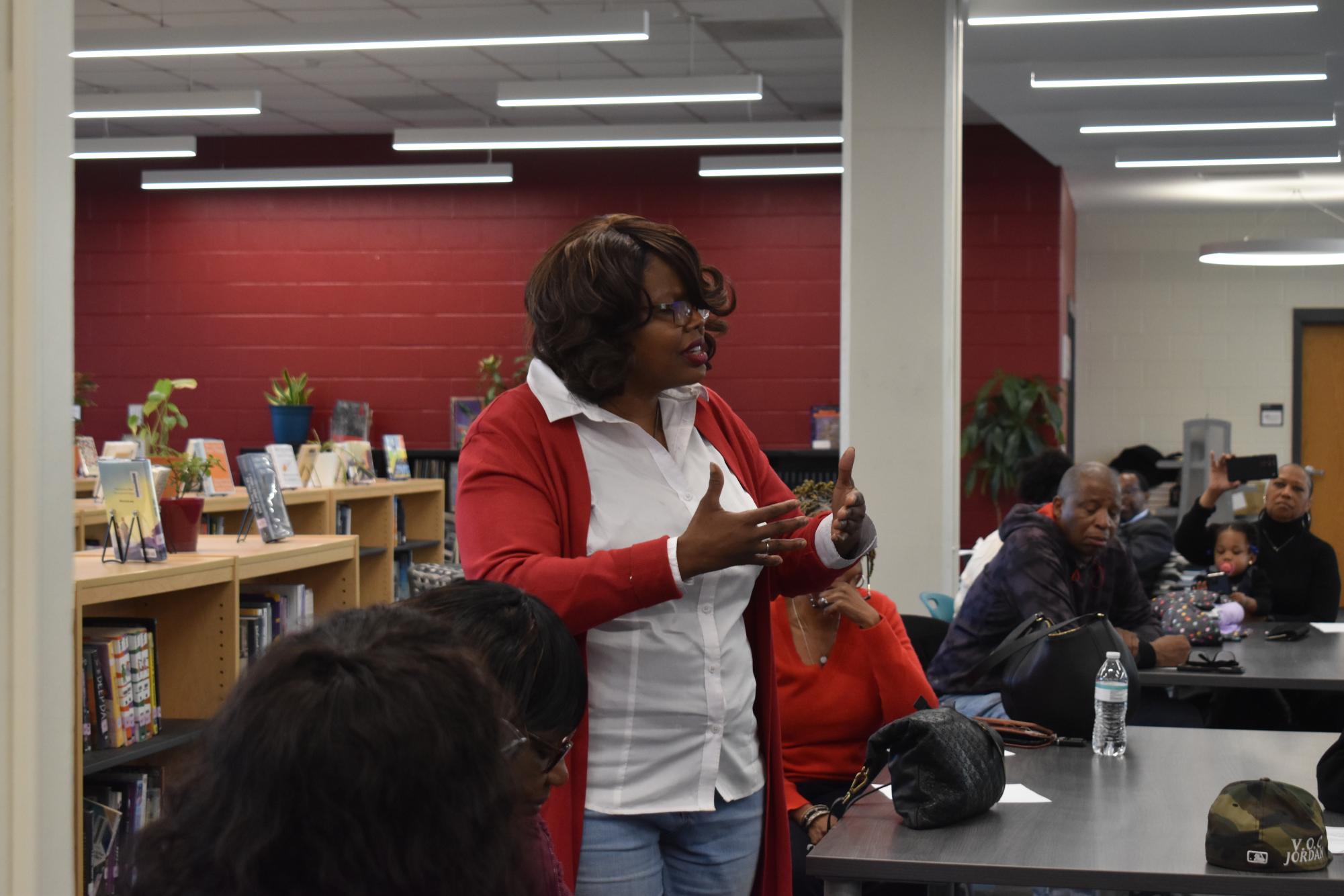
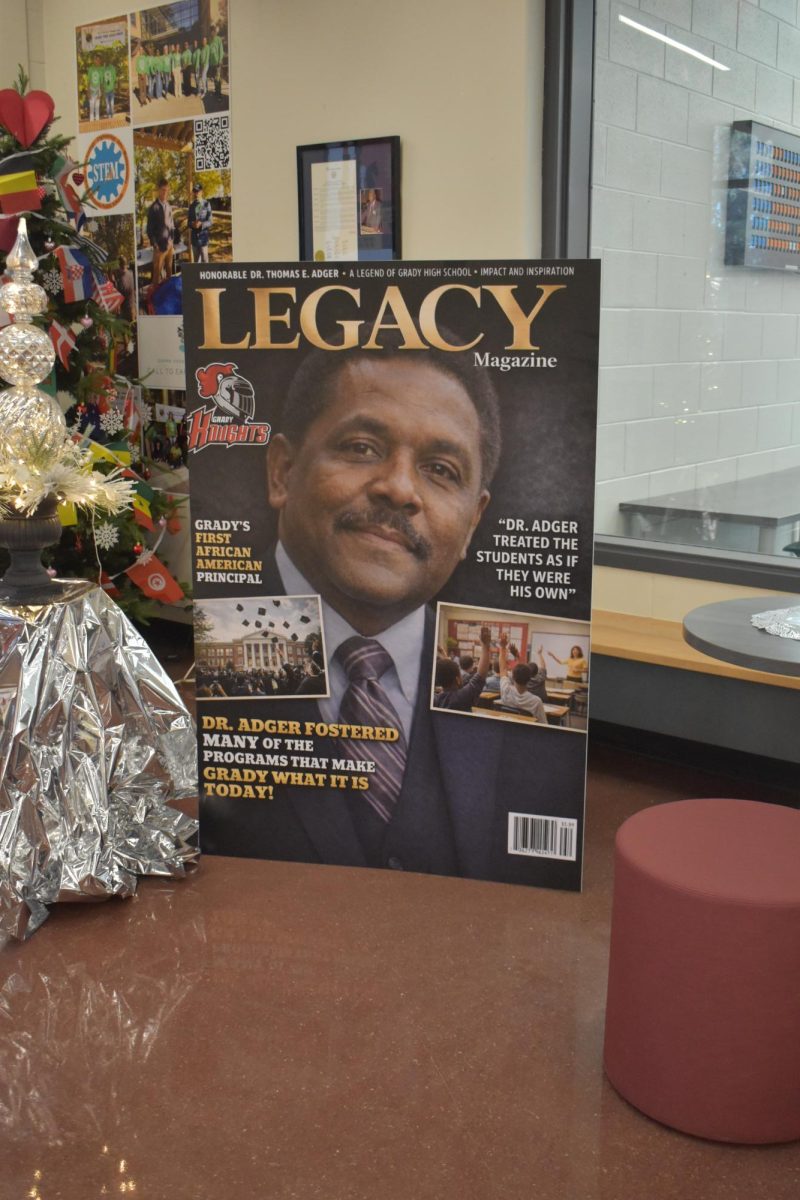
Dr. Adger helped foster and create many programs at Grady that now have grown immensely and dominate Midtown today.
“[He was] great about celebrating the achievements of students and faculty alike,” Willoughby said. “He allowed people to take risks, started the theater program that exists today, fostered the speech and debate team. He pulled money from other programs to help them go to tournaments and helped me rebuild the theater program that was there before.”
Naomi Grishman, a former assistant principal, Grady’s communications magnet coordinator and social studies teacher, explained she was the one who originally came to Dr. Adger with the idea of starting a debate team.
“A prominent memory is when I came to him with the idea of starting a debate team,” Grishman said. “Though I had five interested students, and my little, red car for transportation, I had no idea where to get funding. Dr. Adger assured me that I should just concentrate on the coaching; he would get the money. And he did.”
Dr. Adger not only built up the programs in the school, but also brought up its overall rank through prioritizing rigor.
“At the time I came to graduate [college], [Grady was] ranked fifth in the system, not a particularly fabulous reputation,” Willoughby said. “He sought out to hire teachers that would be rigorous and used magnet programs to attract teachers and more students.”
Grishman furthered this sentiment, explaining the achievements the school received during Dr. Adger’s principalship.
“By 1990, the last full year of his principalship, Grady was named a Georgia School of Excellence,” Grishman said. “Dr. Adger set the tone for his staff and students by modeling integrity, excellence and fairness.”
At the time when Dr. Adger was serving as principal, the area was relatively dangerous, Willoughby said. She explained how Dr. Adger prioritized the safety of students, and made sure parents knew that so they could un-worryingly send their children to a city school.
“[It was] during the time when people were in Atlanta going missing and getting murdered, so parents were reluctant to let kids stay after school,” Willoughby said. “He ensured the kids would be safe and made it possible for kids to be able to be kids and not be able to be limited by the horror in the city at the time.”
One main part of Dr. Adger’s legacy at Grady and into Midtown, was the media and communications magnet program he started.
“Ms. (Kay) Earnhardt and Dr. Adger were there, and I started part time to teach the journalism class, and then it grew into much more,” Bolster said. “I taught a mass media class, intro to journalism and the journalism production class. And then we also did Grady New Network; so, things evolved as I was there and a lot of it was due to the companionship and working together between Dr. Adger and Ms. Earnhardt because they both had the vision that it could become a school of communication.”
Bolster explained, even though Dr. Adger created the program, he allowed the teachers freedom and instilled his trust in them to continue it on.
“Dr Adger let me teach the class and let the students write,” Bolster said. “He did not interfere; he did not ask to preview an issue before we published; he didn’t ask to look at stories beforehand; he just trusted us, which is exactly what you’re supposed to do with journalists.”
Much success came out of the program, as today, several journalism and media classes and pathways exist at Midtown. Additionally, many students in the program went on to continue journalism professionally.
“Through time, there have been several students who have ended up in journalism careers,” Bolster said. “The daughter (Isabelle Taft) of one of the librarians at the time ended up writing for the New York Times.”
Willoughby explained the communications program not only brought these programs and popularized them, but diversified the school.
“At times, very few Morningside and Virginia-Highland went to Grady because parents thought an inner-city school was too dangerous,” Willoughby said. “He showed parents and the community that it would be a rigorous and demanding program and that would give their kids the future they wanted. He helped create a diverse community in the school. At the time, [Grady] had wealthy Eastern European students and very few poor African-American students. This [magnet program] bridged that gap and was used as a tool to improve the school, so by the time Dr. (Vincent) Murray took school, it would be back and forth from the number one school.”
As more students came to the school through this program, teachers came with them. These teachers hired by Dr. Adger were especially chosen because he knew they would add rigor to the programs, and would help make the school great, Willoughby said.
“He brought in a lot of new teachers, but sorta integrated them into the school,” Willoughby said. “He joined this team, and we are going to try to make this school a pretty phenomenal place. He was also a former football coach. He was very much about supporting the different athletic programs at school.”
Bolster said she thinks Dr. Adger would be proud of the success of the programs today and how dedicated the students are to the work they do within them.
“I think he would be very proud that students have tried to do comprehensive coverage of not just the school, but the community, because the school doesn’t exist by itself. There’s all the community around it, and these stories about demonstrations downtown and people running for office are extremely important in helping kids become aware of how they live in the world, and I think that would be heartwarming to him,” Bolster said.
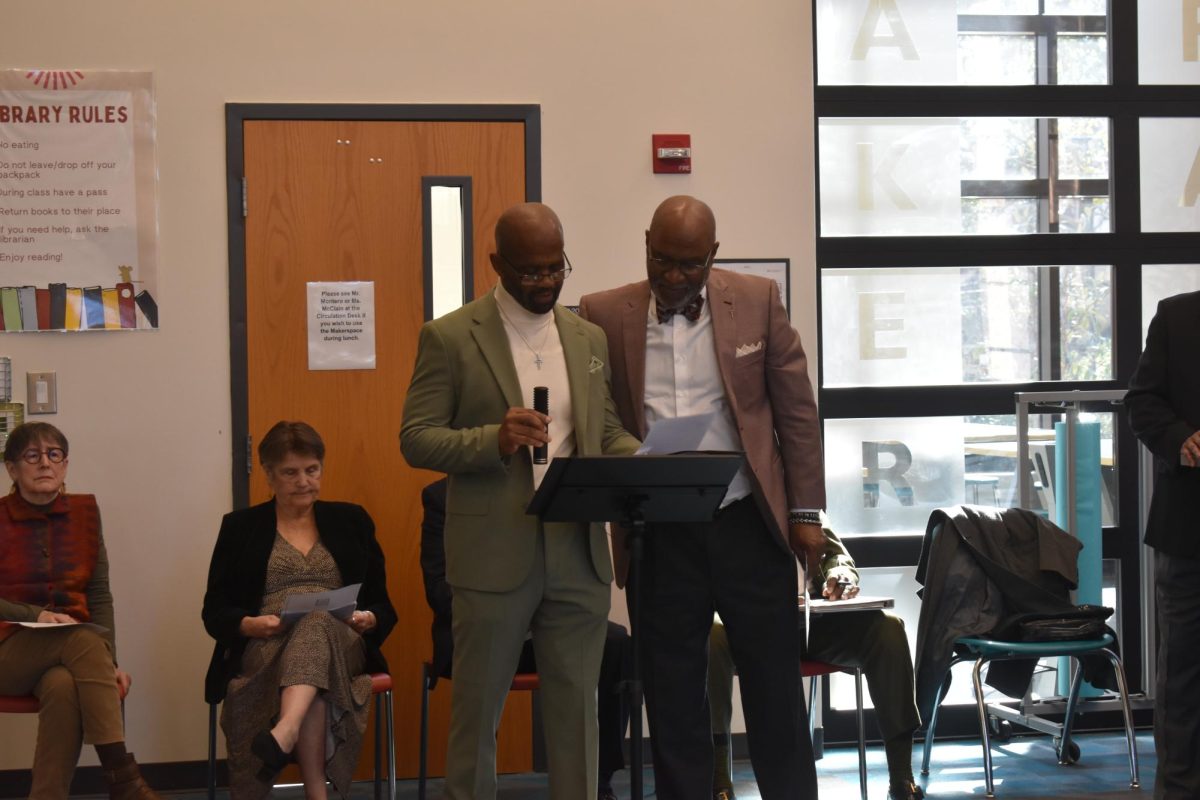
In 2020, when Grady was being renamed, Dr. Adger’s name was in the running, and overall efforts to name something in his honor have been in effect since 2005.
“There have been efforts to name something in his honor for a while,” Willoughby said. “When the school was going to be renamed, he was in the running, and that didn’t end up happening.”
Alumni and faculty who were students or worked with Dr. Adger felt his legacy needed to be honored somewhere in the school, so when the library became an option, they took it, Dennis said.
“We thought it was an honor that should be bestowed upon him,” Dennis said. “We wanted to get something to get named after him, and the library that was what we were able to end up with.”
Henry Mitchell III is a Grady alumnus who spoke at the dedication ceremony; he explained his role in the ceremony and the importance of all the involvement of its organizers.
“I kind of was behind the scenes and helping getting it done because I’m a part of the Board of Commissioners in Douglas County, and I had relationships with the Atlanta school board and those individuals,” Mitchell said. “So, we kind of tied those things in together and trying to move this agenda along by making this announcement this media center, Dr. Thomas E. Adger.”
Atlanta Board of Education District 1 member Katie Howard, is a Grady alum who spoke at the naming ceremony. She explained the process for naming the library is simpler than it would be for a bigger building, but it is clear the effort was put in and well-deserved.
“I’m really proud of this community, this Grady High School athletic alumni group, really wanting to honor and memorialize Dr. Adger in this way because clearly he had a tremendous impact,” Howard said.
Howard did not have Dr. Adger as her principal, however, she explained she walked away knowing much more about his legacy after the naming ceremony.
“Now I’m walking away knowing even more, and I hope that others, and then seeing Dr. Adger’s name here [above the library], will really help share that story and remind people of what’s been and more that can come,” Howard said.
Willoughby believes the library is a suitable place to hold and carry his name and legacy.
“I’m very glad that they had decided [on the library], and a lot of times the library is the heart of the school, so was he,” Willoughby said.
Mitchell believes Dr. Adger’s legacy can be seen throughout Midtown, and by naming the library after him, that is made even more true.
“This guy, Dr. Thomas E. Adger is, his legacy is, if you listen down the hallways of Grady High School, now being named as Midtown, you’ll hear, and you’ll feel, you can, just in the room [during the ceremony], you can feel that legacy and what he did and how he touched so many students,” Mitchell said. “That part of it, you embrace it, and it’s all about success. You have no other choice but to be successful, just by embracing his thoughts, his ideals, where you need to be, how you need to be on time. He set those standards that people kind of live by. And that’s why we are who we are today.”







Greta Gustafson • Feb 17, 2026 at 1:51 pm
Great story!