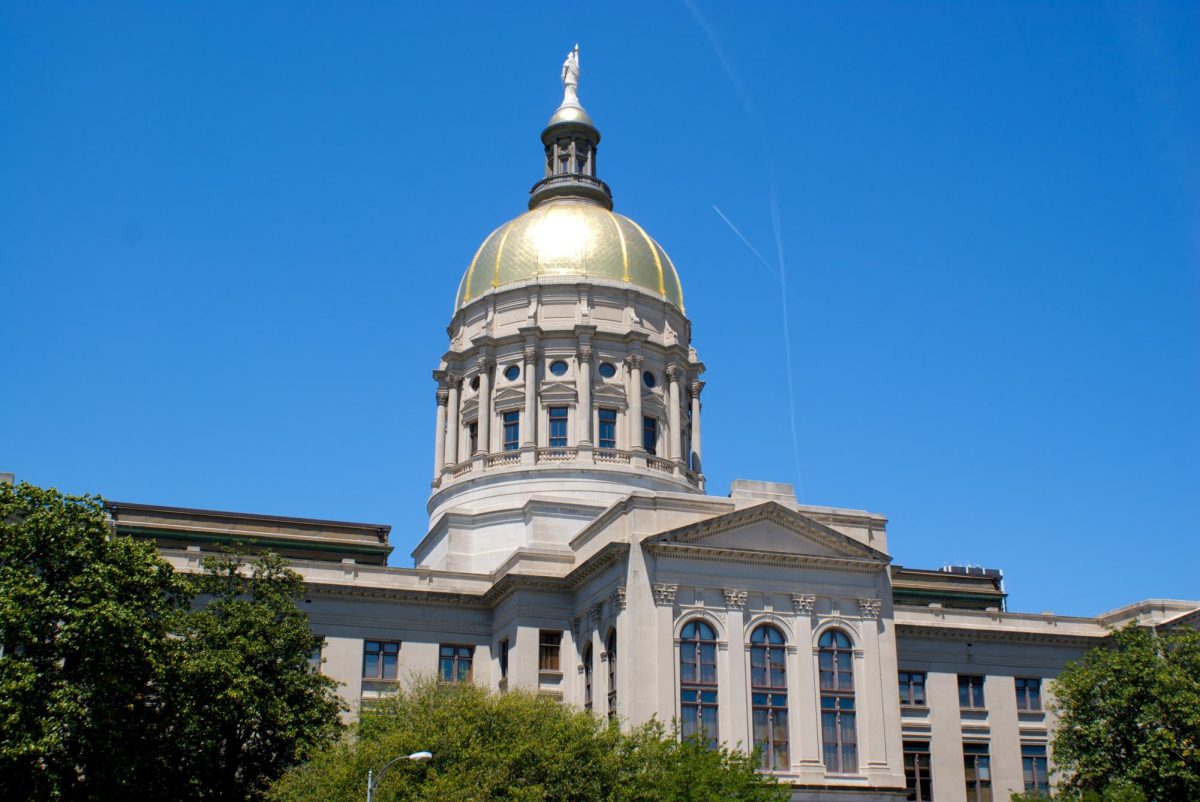
In March 2025, Georgia lawmakers reignited a heated debate over religion and public policy with the passage of the Georgia Religious Freedom Restoration Act (RFRA). Modeled on a 1993 federal statute, it claims to strengthen protections for individuals whose religious beliefs conflict with government policies; however, opponents warn it could create more problems than it solves, especially for LGBTQ+ Georgians.
Introduced by Rep. Brian Strickland (R-McDonough), the bill asserts that “government shall not substantially burden a person’s exercise of religion” unless it demonstrates a “compelling governmental interest.” While the language may sound innocuous, it mimics earlier versions of religious freedom bills that have been used to justify discriminatory practices in housing, healthcare and commerce. In 2016, then-Governor Nathan Deal vetoed a similar bill after widespread backlash from civil rights organizations and Georgia-based corporations, including Coca-Cola and Delta Air Lines, who argued it would damage Georgia’s reputation as an inclusive business hub.
Critics say the recent bill risks repeating those mistakes. The American Civil Liberties Union of Georgia has called the legislation “a solution in search of a problem,” arguing that existing state and federal laws already safeguard freedom of speech and expression. “No one is being persecuted for their faith in Georgia,” the ACLU wrote in a March statement. “But this bill would invite a new kind of harm, allowing people to use religion as a weapon against others.”
Because of the absence of statewide nondiscrimination protections for sexual orientation and gender identity, the RFRA law could be used to validate denial of services, employment and housing. LGBTQ+ advocacy groups caution that individuals and businesses may now claim religious objections to refuse medical care, reject tenants and fire employees. Moreover, under RFRA, offenders’ biased behavior could essentially be shielded from legal repercussions.
Similar laws in other states have had troubling consequences. In 2015, then-governor Mike Pence passed Indiana’s own version of a Religious Freedom Restoration Act, prompting national boycotts after businesses refused to serve same-sex couples under claims of “religious conscience.” Arizona, Kansas and Mississippi have faced comparable controversies. Economists estimate that Indiana lost more than $60 million in convention and tourism revenue within a year of passing its bill. Georgia’s economy, which is driven by industries that prioritize diversity, could face comparable losses.
The measure passed the state Senate by a 33-23 vote and the House by 96-70, largely along party lines. Supporters, including Sen. Ed Setzler, contend that the bill simply aligns Georgia with federal protections, ensures religious practices are shielded from government interference and codifies the principle that the government should not coerce individuals into violating their faith. Rep. Strickland has claimed it would “protect people of all faiths equally” and prevent “unnecessary government intrusion.” However, civil rights attorneys warn that the bill’s lack of specificity creates loopholes that could lead to unequal treatment.
Religious freedom is a foundational American value, but so is equal protection under the law. When one person’s exercise of faith infringes on another’s rights, limits are necessary. The First Amendment guarantees everyone the right to worship freely, not the right to impose faith-based restrictions on others. Georgia’s constitution already provides one of the strongest religious liberty protections in the country. This new law, rather than adding necessary guardrails, risks undermining those that already exist.
Public opinion nationwide reflects that nuance. According to a 2023 Public Religion Research Institute survey, a strong majority of Americans support both freedom of religion and non-discriminative protections for LGBTQ+ citizens, viewing them as compatible rather than contradictory. The challenge for policymakers is upholding both without allowing one to compromise the other.
Governor Brian Kemp signed the law into effect in April, despite previously suggesting that any measure seen as “discriminatory” could harm Georgia’s global reputation. For a state positioning itself as a center for international development and higher education, alienating major employers and diverse companies would be a costly misstep.
Georgia lawmakers now face a critical choice: endorse legislation that signals exclusion and invites economic backlash, or reaffirm the state’s commitment to fairness and equality. True religious freedom thrives when all citizens are protected equally, not when faith is wielded as a justification for division.
The implications of this law extend far beyond politics. Businesses may reconsider investments, students and faculty may think twice before relocating to Georgia and residents could face new barriers to basic services. In essence, a law intended to protect religious practice could unintentionally erode the social and economic fabric of the state.
Ultimately, the question is not whether Georgians have religious freedom – they clearly do – but whether the law preserves that freedom while respecting the rights of others. Protecting religion and protecting citizens are not mutually exclusive; they are mutually important.