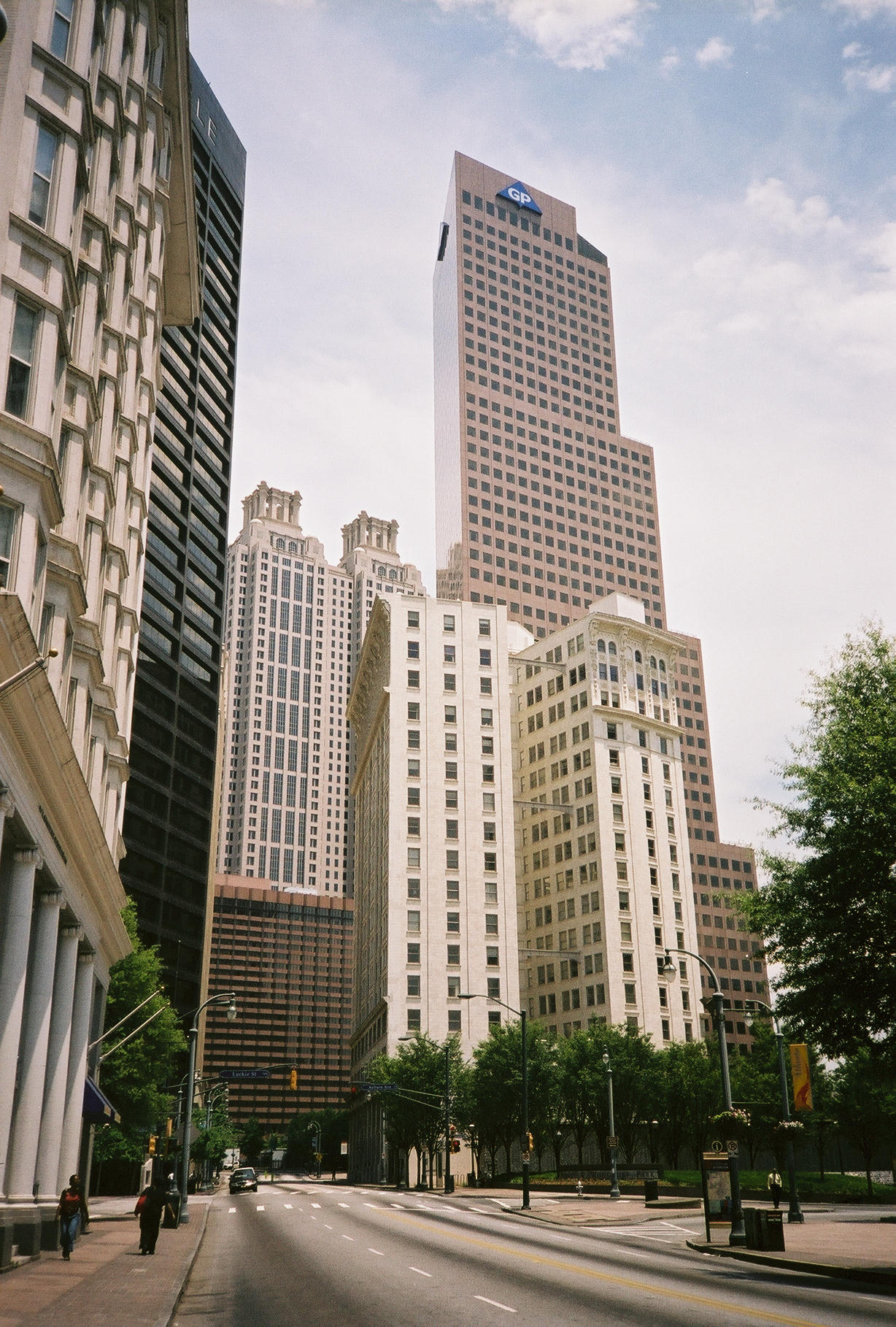
Georgia-Pacific announced as of March 2026 that they will be converting one of their high rises, previously used for office space, into a mixed use area for Atlantans. This is unprecedented, but it is a smart, efficient investment for both the business and the city.
Georgia-Pacific is a huge paper products company, so they have a very recognizable high rise in downtown Atlanta. The building is noted for its red-pink granite with a staircase pattern going up the side, and a Georgia-Pacific logo on the top. It primarily houses offices for the company, to be converted into a mixed use space with apartments, food, entertainment and retail space.
The switch from a building only focused on office space to a building that has multiple uses is beneficial for Georgia-Pacific as a business. There is a lot of demand for this type of space, with housing becoming few and far between and more expensive in the entire Atlanta metro. With more demand for this space, it becomes a better decision for Georgia-Pacific, as it is nearly assured to generate business for itself and the downtown area it is located in. With downtown office usage decreasing nationwide, building owners are scrambling to try to find tenants who will fill their vacancies. Georgia-Pacific, on the other hand, is proactively preparing for the future, understanding as work from home increases, less office space is in demand. So, Georgia-Pacific can still generate revenue from their high rise, even with the declining office building usage inside. The demand for retail, entertainment and food is high in Atlanta, and that will rise with more people living downtown because of downtown redevelopment and South Downtown’s revival. This means that the Georgia-Pacific building will be utilized, only for a different, considerably smarter purpose.
The new vision for the Georgia-Pacific building has described the building as a new “community engagement hub.” This is the perfect name for the location; it will revitalize the downtown area by bringing in people and businesses. Because it is focused on both housing people and inviting in to the public, it will bring in businesses as well as the people to buy from those businesses. Individuals will be connected with a community that is built on interaction through shared business and residence.
This development very well could represent a shift from an office-dominated Peachtree Street to a more vibrant, people-focused area. People and businesses coming into the downtown area are bound to bring more opportunities for activities of all sorts, especially to an area that has relatively few at present.
To accommodate for affordable housing, rents will be put at 50 to 80% of the median area income for the building. Georgia-Pacific said that more than half of the 1.3 million square feet for the building will be turned into mixed use, which includes a large chunk of affordable housing. This means that the diversity and quality of life in downtown Atlanta could increase. Also, homelessness, which has been a big issue in Atlanta, could be alleviated with this affordable housing present.
Georgia-Pacific’s plan is also beneficial from an environmental standpoint. Instead of building a new area downtown, with new materials and burning more fossil fuels in the process, developers are just repurposing an old building. Such is a key tenet of sustainable building and urban development.
Looking forward, more high rises should follow suit with Georgia-Pacific. Though it is expensive, they should shift parts of their buildings to mixed use because of the advantageous effects on the Atlanta community, but also, from a business point of view, the benefits it can have for their corporation.
As discussed before, demand for office space has gone down in recent years as employees work from home. As such, buildings like the Georgia-Pacific office face large amounts of underutilized building space. This is harmful for the environment and for the business. First of all, the buildings are being powered even when a large number of people aren’t working in them, wasting resources. Also, the building owners are losing money because tenants are leaving their offices as others depart. Because demand for offices is so low, they can’t get anyone to fill these vacancies. For this reason, mixed-use buildings, such as the plan undertaken by Georgia-Pacific should be created by more building owners, because it could take advantage of areas that are in demand currently.
However, Georgia-Pacific is still in the planning stage of their process. Building processes such as this one, that are large scale projects, are dependent on a lot of moving parts. So for now, all that is being built is excitement.