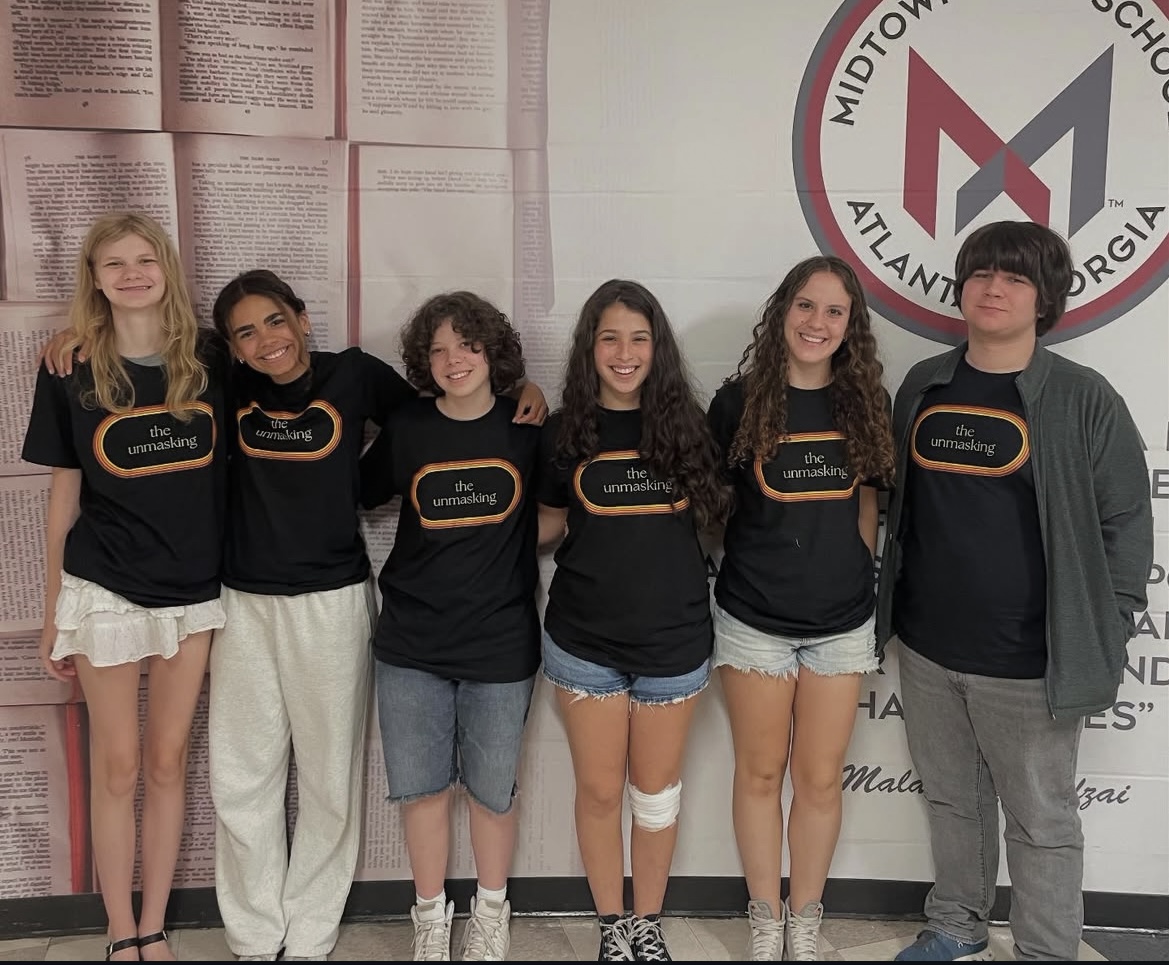
The recent government shut down has caused problems for many households that are reliant on federal assistance to keep food on the table. Midtown students and faculty decided to get the ground running on increasing the local support for the food insecure through the program Court of Kindness.
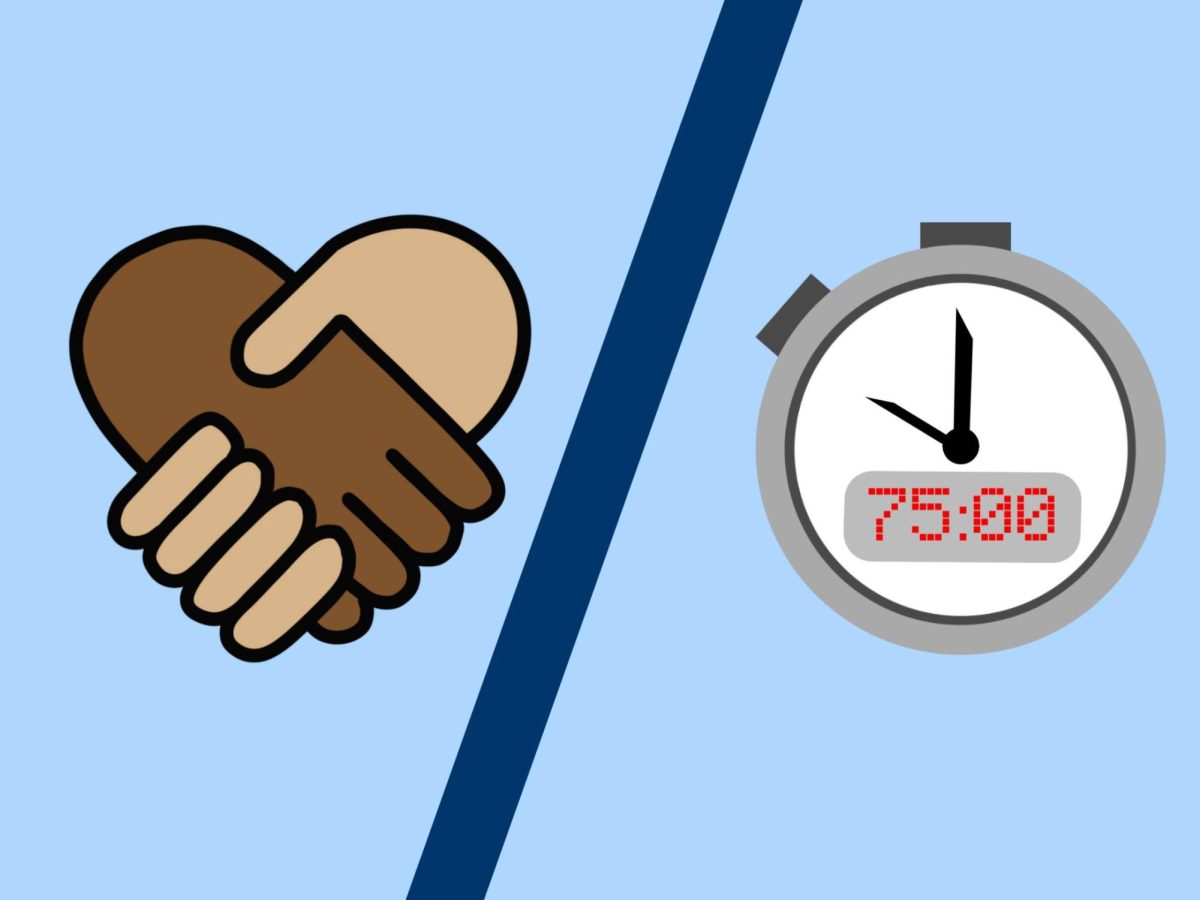
Food insecurity isn’t always noticeable. In fact, nearly 75% of APS families qualify for free or reduced lunch. Midtown’s Court of Kindness is a new initiative designed by students for Atlanta locals. The program strives to raise both awareness and donations for nearby foodbanks. AP Seminar teacher Mario Herrera is the faculty sponsor of Court of Kindness and takes a personal interest in the matter.
“People needed help, it’s that simple,” Herrera said. “Food insecurity is nothing to ignore. Growing up, my family was experiencing that, and it helped shape the way I see the world. Whenever people are in need, I try to see where we can help.”
The design of the project is aimed at reaching the largest audience possible. Director Henry Moye came up with the idea of the program with the intent of the project becoming school-wide, and eventually becoming district-wide or larger. The online aspect ensures viewers and accessibility to the content of the progress the clubs have made.
“Our plan is to create an online challenge where clubs at Midtown can challenge each other to raise food within this club, which takes a lot of the work off of us,” Moye said. “By organizing this fundraising across different clubs, we can hopefully start a school wide movement of raising food for the hungry.
The elected club will complete a “challenge” similar to the viral “Ice Bucket Challenge”, which was created in 2014 by the Amyotrophic Lateral Sclerosis Institute. This means that the club will do a task to hook people’s attention in order to jumpstart awareness for the cause and boost support. Once the club has met its donation goal, a new club will be chosen to participate.
“The goal is for people to see that they have the ability to change things and to respond when people need help simply because they can,” Herrera said. “It has got to be intrinsic, it has to come internally from the individual and I think that it is difficult. There is a difference between empathy and sympathy, and I think trying to find a way to bridge that difference is what is necessary for people to see that their actions matter.”
Like Herrera, Moye believes that motivation comes from within. He explains that the need to help comes from the desire to make a change for both APS and local households in need.
“I was inspired to start the Court of Kindness because I realized the impact that hunger has on individuals across the county,” Moye said. “When the government shutdown cut SNAP benefits, millions were left without a source of food, which highlighted the impact that hunger can have on individuals. Because of that, I was motivated to start the club to help my neighbors in my community.”
According to the Atlanta Community Food Bank, every one in seven people in the state of Georgia are food insecure, and every one in eight are food insecure out of Food Bank’s 29-County service area. Additionally, Common Cause reports that over 25% of households in West End Atlanta are food insecure. Moye emphasizes the inclusivity of the project.
“I want people to know that the Court of Kindness aims to help individuals at Midtown too,” Moye said. “I don’t think a lot of people realize that there are many students at our school who go home hungry and actually have problems acquiring food, but just don’t tell people about it. I hope for this project to provide individuals in the Midtown community with aid and allow for them to pursue their goals in life. I don’t think hunger should be a problem for any individual.”
Project Manager Kai Chen aims to propel the achievements made towards the goals of the Court. She has brainstormed and arranged lists of acceptable donations and potential Atlanta organizations who would be willing to accept support in addition to their confirmed partner, Blue Print Church. Chen has also sorted acceptable and non-acceptable items to be delivered to Herrera’s room to be given to community support centers.
“Most of the traditional food donation staples are acceptable,” Chen said. “Basically anything canned like beans and corn and some dairy or produce are good too. If people would rather go the route of giftcards, any amount to the stores Kroger, Publix and Walmart can be delivered to either Mr. Herrera’s or Ms. [Phoebe] Chung’s room.”
Chen also stresses the urgency in helping despite the lifting of the government shutdown, expressing that food insecurity is always a threat to the community and should be a priority in future plans.
“Seeing so many Atlantans fall into a state where they were going hungry and couldn’t eat or have basic human needs felt unfair, so I hope people will come to understand that they have the opportunity to help,” Chen said. “The most important thing in times of need, not only during the shutdown, but now when there is still so much uncertainty, is for people with the ability to help to seize that chance at making a difference.”
Public Forum debate captain Nathan Brawner hopes this will just be the first year in many to come for the Court of Kindness and the benefits it creates for the community, explaining that the recurring efforts of a project like this one at Midtown could really help those in need.
“This program has so much potential to do great things,” Brawner said. “We’ve been working really hard, and I’m excited for what we have lined up. The program is only in the beginning phases, but I think what comes next will be really great for not just us, but everyone in the community.”
Public Forum captain Lola Lignugaris said this program is designed for the people in the community and not for alternative reasons, highlighting the purpose of the program and its goals.
“I want people to know that this is an organization and a campaign that at its core, wants to help people,” Lignugaris said. “We are not interested in becoming a name or putting this on a college application. We want this to be our way of saying thank you to a community that has treated us so well and give back in whatever way we can.”