Midtown was featured in a global TV initiative on Thursday Nov. 6, to highlight efforts made by young people to better the environment.
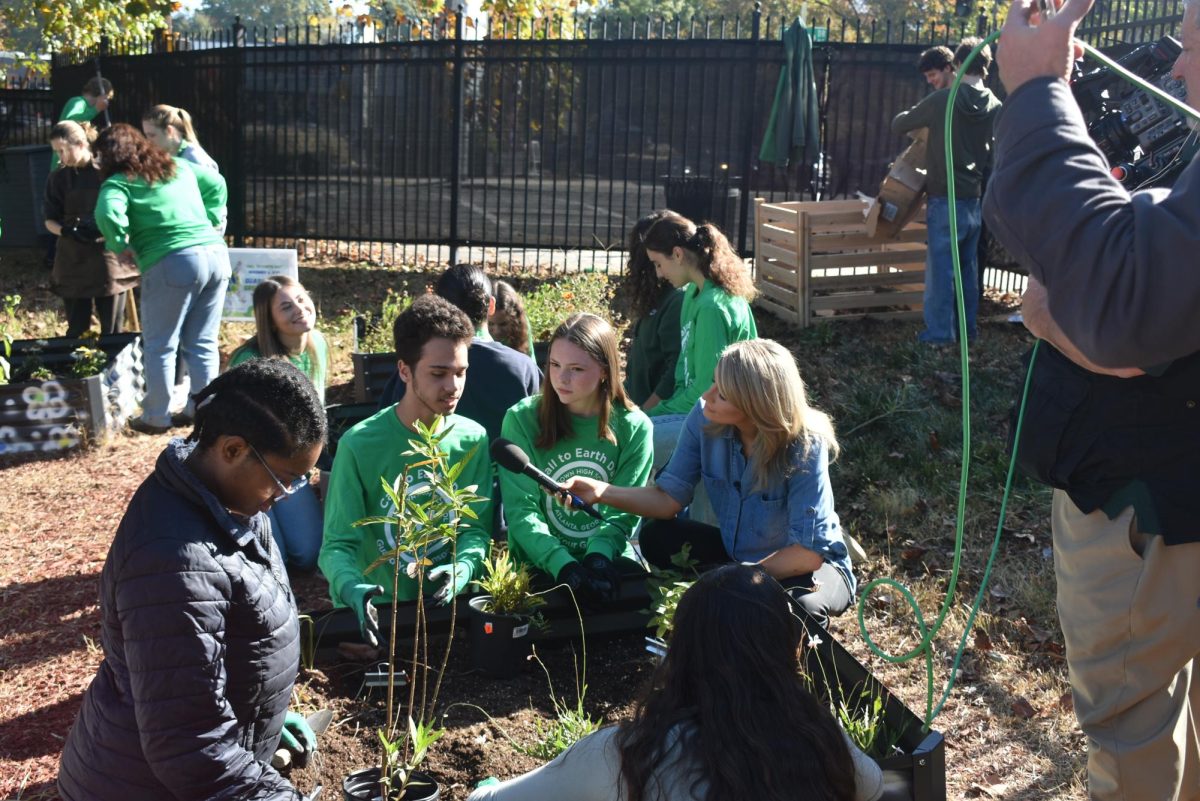
CNN International’s Call to Earth program visited Midtown to speak with students about upgrades to the school’s garden as well as other green projects around the school. Midtown is one of hundreds of schools around the world that have participated in the program.
“Call to Earth is a worldwide initiative for people to take action locally, but think globally,” CNN International Anchor Lynda Kinkade said. “They can improve their own green space and from a bigger perspective, improve the environment. There are hundreds of schools involved and 600,000 people are taking part in this initiative all around the world”.
Midtown’s garden is located on campus, along the back fence of the stadium looking out onto 8th Street. The space contains beds housing native species that support pollination for bees as well as other insects and will serve as an outdoor classroom for years to come. AP Environmental Science student Harper Green was featured in CNN´s coverage.
“I appreciated the efforts by Midtown,” Green said. “Our school is located in such a lush and green city that many people do not recognize. We were one of the only schools highlighted for Call To Earth Day in North America, which was very cool.”
Environmental Science teacher and sponsor of Midtown’s Earth Club, Madeline Olliff led the initiative to transform the space.
“[The garden] has been kinda neglected over the past few years, so I thought this was a great opportunity for us to revitalize it,” Olliff said. “Nothing was really growing in the [gardening] bins, so it was a blank slate where we could do whatever we wanted with it. I thought it would be the most beneficial for us as a school to support biodiversity but then also it makes the garden a little more self-sustaining. Something that I’m really passionate about is creating a safe haven for our native pollinators”
Oliff worked with Midtown’s STEAM Instructional Coach, Alex Wallace and Midtown’s Earth Club to get the garden up and running.
“Our students take the initiative to raise awareness and encourage their peers to be intentional and kind toward the environment,” Wallace said. “Through classroom projects and campus-wide sustainability efforts, we’re helping build lifelong habits that make a difference.”
Select students in Oliff’s AP Environmental Science class planted seeds and composted different plants. The garden hopes to be used as a resource and help students learn about the earth using a hands-on approach. Although students in the AP course participated, efforts in the garden began with students in Midtown’s Earth Club, which is seeing a growing number of students signing up. Junior and Earth Club co-president Jerry Laster says there has been an 80% increase in members this year.
“We are doing lots of work to create a community driven, sustainable society at Midtown,” Laster said.
Midtown’s French 3 and 4 classes were also involved in creating unique mosaic stepping stones. These stones were placed throughout the garden during filming for Call to Earth Day. The project aligned with the French classes curriculum which studies culture from francophone countries.
“We started learning about Zellige mosaic art last year which dates back to 10th century Morocco,” senior Gigi Ret said. “In class we came up with our designs on paper and eventually practiced assembling them with pieces of glass. Then we went outside and put them all together.”
This project not only allowed a more creative learning experience for students, but also allowed them to contribute to a schoolwide project.
“We wanted to beautify the garden as much as we could,” Ret said. “It fit perfectly with what we were learning already in the course and was such a fun project.”
Wallace hopes these new projects encourage not only action at school, but also pushes students to go above and beyond, and create impact outside of the classroom setting.
“It is my hope that students will take what they are learning in class and apply those best practices within their local communities,” Wallace said. “We want to inspire them to see that their everyday actions—no matter how small—can contribute to a healthier planet.”