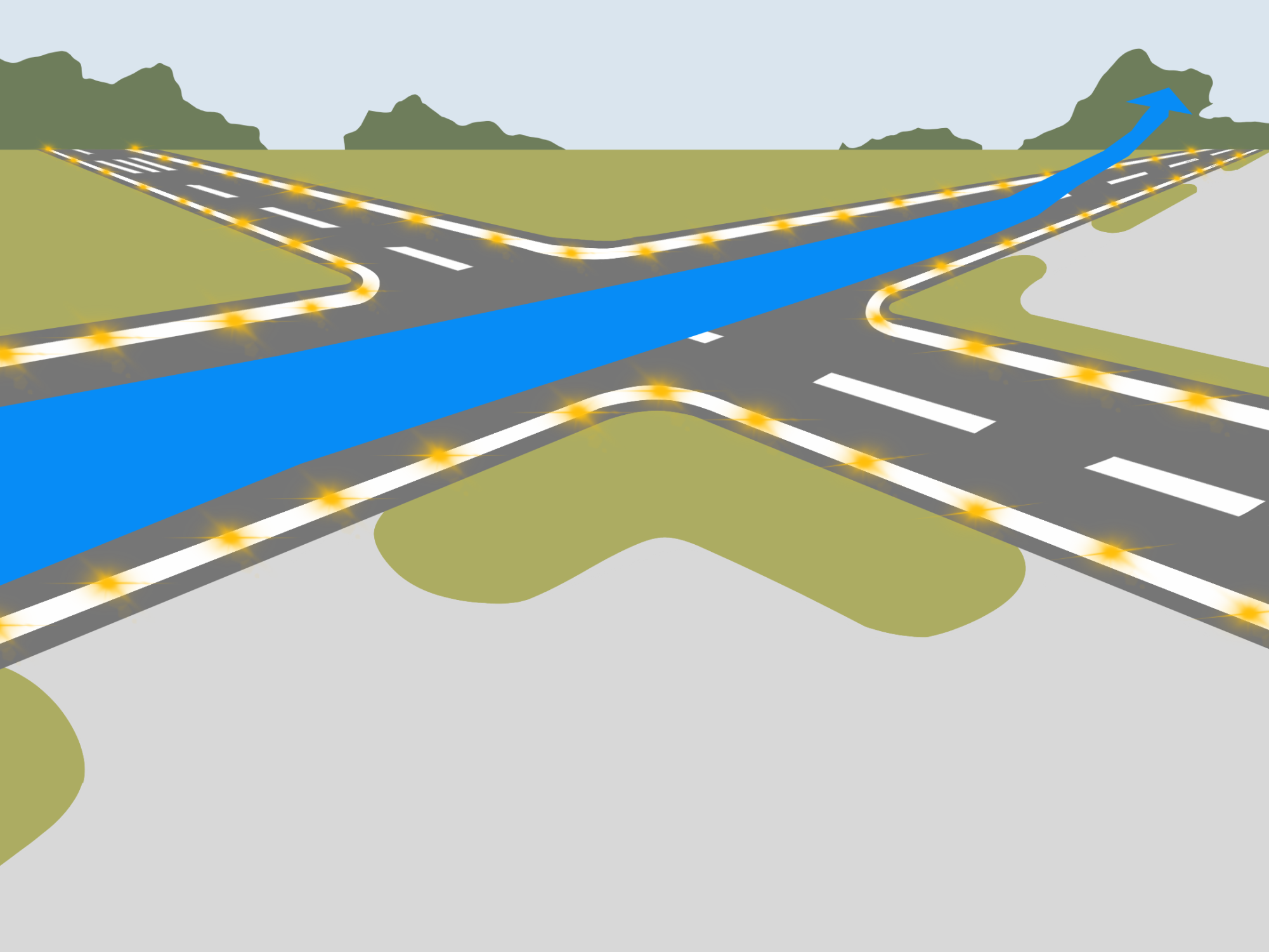
In a tragic series of events, a collision involving a landing airplane and a fire truck claimed the lives of two pilots at one of our nation’s busiest airports, New York’s LaGuardia Airport. In the aftermath of the crash, even more attention has been brought to the fundamental issue that is the understaffing of air traffic control (ATC) centers.
The crash, which took place on March 22, 2026, occurred after a fire truck crossed a runway in response to a separate incident elsewhere at the airport. Having been cleared to cross the runway by LaGuardia’s single air traffic controller, the fire truck drove onto Runway Four, where it was struck by Air Canada Flight 8646 at a speed of 104 miles per hour. Both pilots, Mackenzie Gunther and Antoine Forest, were instantly killed, and 41 more people were injured.
The key contributor that caused this accident was the fact that LaGuardia’s ATC center, like many across the nation, was understaffed at the time. According to FAA regulations, in periods of low traffic, there can be only one controller in a tower. They would be responsible for managing ground and air traffic, which, even in quiet periods, is hard to manage. At an airport like LaGuardia, which has departures, arrivals and other events all transpiring at the same time, expecting just one or two controllers to manage all the traffic is downright unsafe. Over 400 flights a day go through LaGuardia’s two runways. Handling this immense traffic is the kind of practice that should be handled with an abundance of caution.
Crucially, though, this accident is not a one-off. It is representative of a much larger issue in the U.S. commercial aviation industry: increasing shortcomings in safety are simply not being addressed.
Just over a year ago, on Jan. 29, 2025, a mid-air collision between American Airlines Flight 5342 and an Army Black Hawk helicopter killed 67 people. The crash, in the airspace near Ronald Reagan Washington National Airport outside of Washington, D.C., was caused by a helicopter flight path being dangerously close to the approach path of one of the airport’s runways. At its closest, the two routes were only separated by around 75 feet. For context, that is less than a quarter of the length of a football field, and less than the length of a CRJ700, the very plane that was involved in the crash.
Additionally, the ATC center at Reagan National was also understaffed on the night of Jan. 29. Just five controllers were in the tower, which is less than the traffic of the time would typically require.
The result of this complex airspace arrangement and the understaffing of ATC was a practice of pilots visually searching to ensure their path was clear of other aircraft. While this is something pilots do all the time, the crucial problem comes when they are expected to rely on their eyes too much. On the night of the crash, low visibility made looking for other aircraft much more difficult, and the understaffed ATC center meant the pilots needed to rely more on their eyes and instruments. In the modern era of computer-based flying, where many landings are entirely computer automated, having pilots rely on visually looking out for and avoiding other aircraft is a barbaric solution to an incredibly dangerous problem. The fact that more has not been done to address this problem is shocking.
In the investigation following the D.C. crash, the National Transportation Safety Board found an extensive history of close calls between helicopters and planes. They came across 85 separate instances along the same route where a similar crash would’ve been caused, if not for the difference of a few feet. When dealing with something like air travel, where hundreds of lives at a time are at risk, near misses or close calls simply cannot happen.
The necessary changes needed to be made after the first near miss. It should not have taken 84 more close calls and a deadly mid-air collision for change to the flight patterns around Reagan National to be made. It should not have taken a plane hitting a fire truck for the fundamental issue of ATC understaffing to be addressed. Flying has been one of the safest ways to travel for decades, but we cannot become complacent with the current safety standards. The aviation industry needs to continue to operate on an abundance of caution, through increasing minimum staffing requirements and taking the warning signs more seriously.