Junior Connary builds anti-drone turret, aims to contribute to Ukrainian war effort
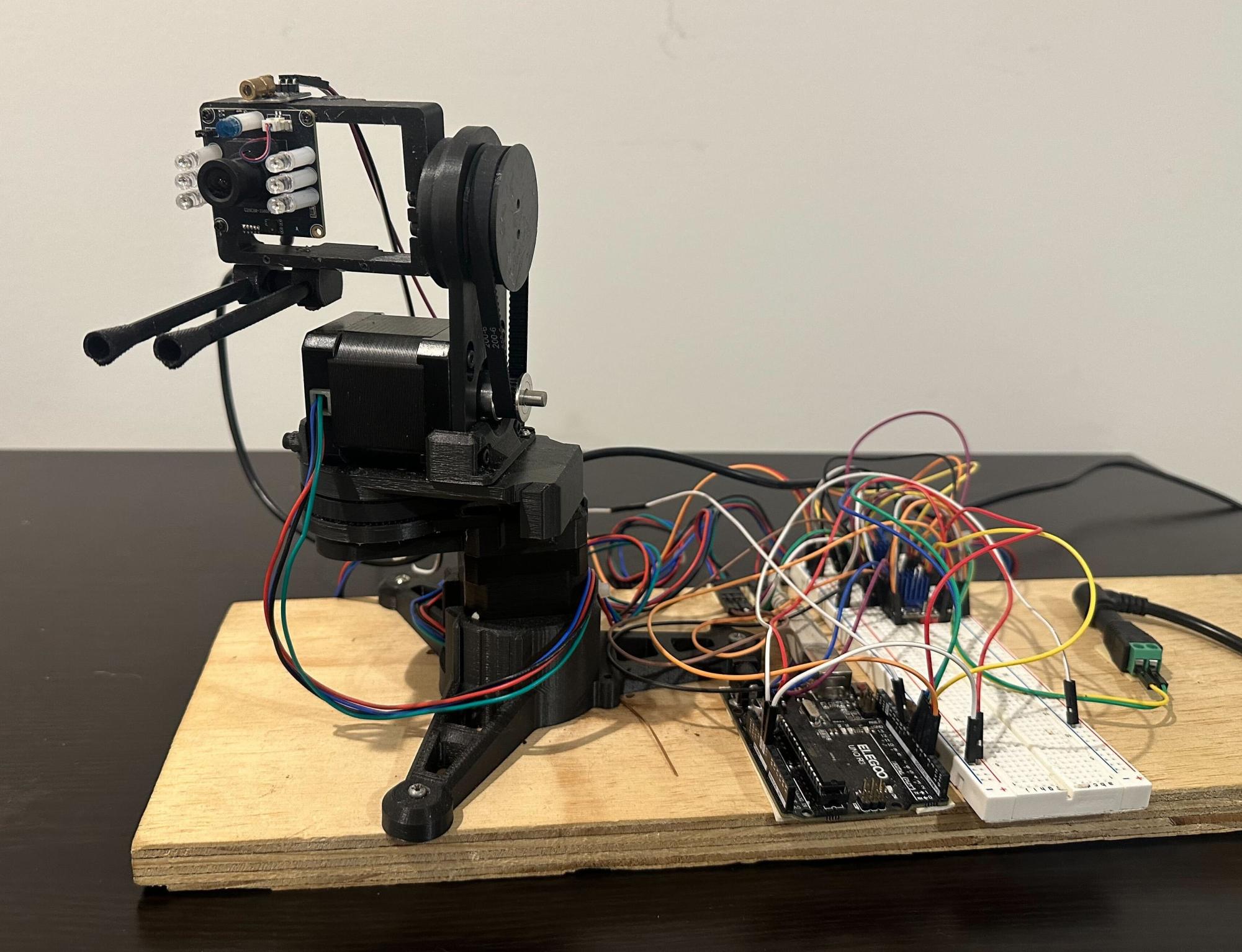
From over 5,000 miles away, junior Kai Connary hopes to contribute to the Ukrainian war effort by designing and programming a cheap, transportable turret that tracks and shoots drones down with an attached net launcher. On this project, he has worked alongside a Ukrainian commander of a squadron of drone operators, Alex Andrienko* and Midtown junior Ben Davis*.
Connary said he wanted to start building the turret to help Ukraine fight against unmanned drone technology. Once Connary began his project, he posted about it on Instagram and received comments from people on both sides of the war.
“I initially got into contact [with Adrienko] after I’d noticed a lot of Russians and Ukrainians were reaching out with questions about what I was designing, and decided to give [Andrienko] my phone number because I wanted a better connection with people on the front line,” Connary said. “I was happy to get reached out to, and even happier when he told me he wants to support my project via the camera he is sending me.”
Andrienko is supporting Connary’s project by sending him a thermal camera used by the Ukrainian military, as well as a Ukrainian flag signed by his squadron as a token of appreciation.
“They had a very expensive bombing drone that uses a thermal camera,” Connary said. “[The camera] is what I need for much more precise and effective tracking at longer ranges, and he’s sending that over to me for free because it came off of a broken drone, but the camera wasn’t broken, so he could still salvage it.”
Davis believes this turret could be instrumental in supporting supply trucks, as Russian drones have limited the ability of Ukraine’s military to send resources to the front lines.
“Supply trucks are the main way that people get food into the front lines,” Davis said. “Nowadays, there are air drops [and ground drones], but supply trucks — a man driving a pickup truck — [are] still the main way of delivering supplies … If you can mount an anti-drone turret on top of those trucks, that would significantly increase the survival rate on the battlefield.”
Through Twitter, Davis has become friends with another Ukrainian soldier who has been fighting in Kherson Oblast, a southern province of Ukraine. Davis believes this turret could combat many of the issues his friend faces.
“He always complains to me about logistical issues: how the commanders cannot supply enough food, water and ammunition onto the front, and that has greatly impacted their operation capabilities,” Davis said. “He once told me he hadn’t eaten in a week.”
Connary noted Andrienko’s description of not receiving paychecks in weeks due to Ukraine’s failing economy and President Donald Trump’s rescindment of American financial support. Every month, Ukrainian soldiers are supposed to receive a weekend away from the warfront, but many Ukrainian soldiers struggle to afford food on their breaks, according to Connary and Andrienko.
“I can tell the American people, as a military man, [what it is like] to live in the here and now,” Andrienko said. “Life is really very short. The situation in Ukraine has been bad for four years now. The people are not very good. [The Russians] are sick in the head; they want to seize land and kill people. Unfortunately, we are forced to fight to save our family and our people. War is a very difficult craft, psychologically and morally. You don’t see your family or friends. You’re at war almost all the time. There are a lot of young guys here. I would like a different life for them.”
Just as Connary is able to contribute to the war effort through the design of his turret, Andrienko notes that ordinary Americans can assist Ukraine and the soldiers fighting there in other ways.
“If Americans want to help, then, as in any war, it’s through donations,” Andrienko said. “The military spends a lot of their own money on the war, equipment and much more. But otherwise, you can help in any way you want. Ukrainian soldiers are happy with everything. Thank you for the fact that so many of your people support us.”
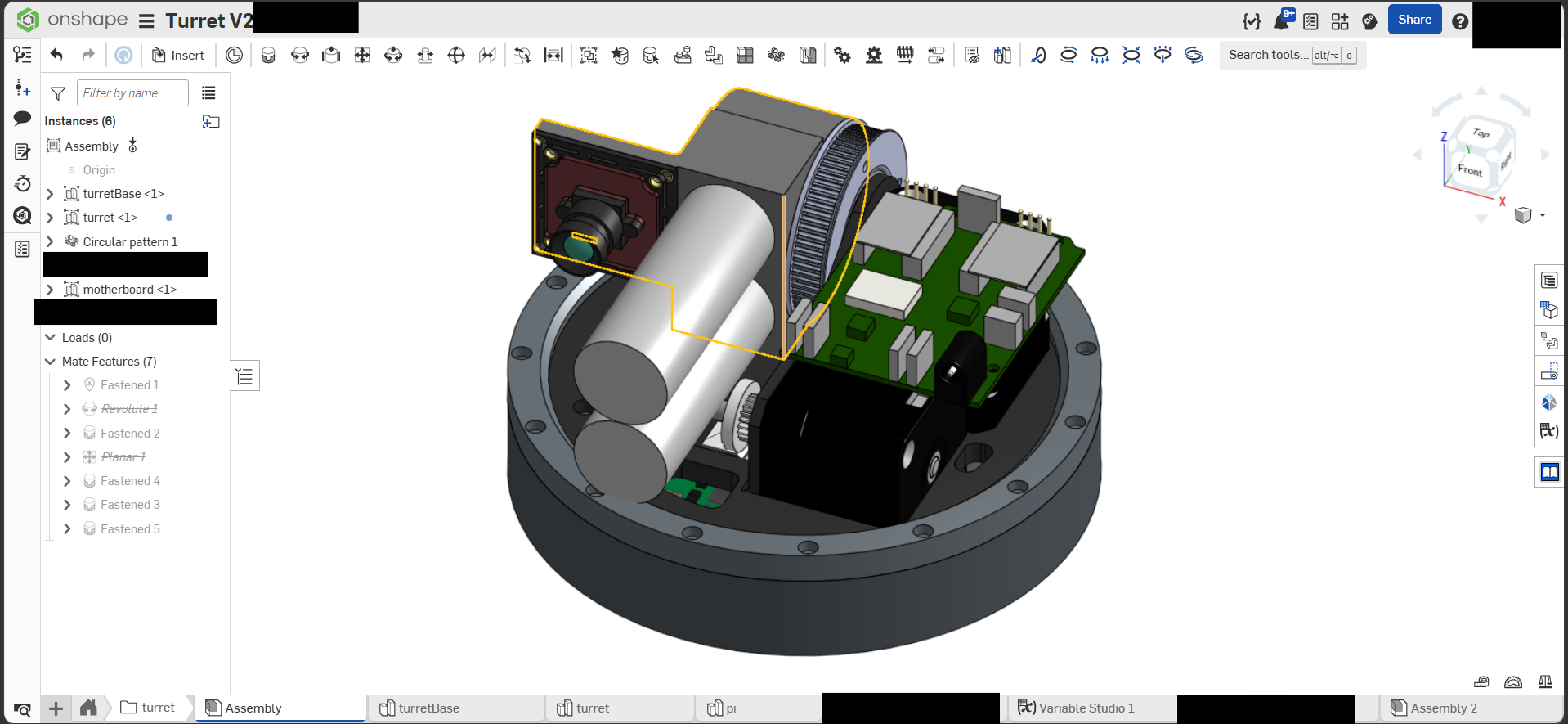
Connary has been working on this project for over a month and has focused on the programming aspects, whereas Davis recently joined and is specializing in the turret’s design. Originally, Connary repurposed and built the design of a remote control laser pointer for his turret. Now, Davis is redoing the mechanical design using OnShape, a computer-aided design program, to make it more customized and effective. Once they finish, Connary and Davis hope their turret can be manufactured in Ukraine.
“I would send them the hardware necessary to build it, and then send them the proof [of concept], all the code and files necessary,” Connary said. “Then they could easily set it up there. That would be the idea. The hardware itself isn’t that hard to build. It’s just mainly [3D] printing.”
Connary said he was able to assemble the physical turret quickly, but the real work began when he had to program the rotating hand tilt mechanism.
“There were a lot of issues and drawbacks in the initial motor controller logic to make it point and follow the drone it detects,” Connary said. “For a while, it would continuously rotate and tangle its wires until it pulled the plug on itself.”
Once Connary got past these initial issues, the greatest difficulty with this project was training the turret to track enemy drones as they fly.
“One drawback of my method of tracking is you have to train a neural network on whatever object you want it to identify looks like,” Connary said. “You’d have to go in with a camera, show the camera whatever object you want it to identify and track, take that video footage and then frame by frame outline where the object you want it to track is.”
Inspired by the robotics defense company Allen Control Systems, Connary is beginning to implement a new method for tuning the turret, which he believes will save considerable time over his original process.
“[Allen Control Systems] simulates a fake video game environment and has a camera that watches fake drones fly over the camera,” Connary said. “Then they extract data from where exactly the target is in each frame, and it instantly trains the model based on that, so you don’t have to go through every single photo and then identify where [the drone] is. With that process, [training the object detection model] will be 90 times faster.”
In his development of this turret, Connary has been contemplating ways to focus on what he calls “defense defense” as opposed to “offense defense” to maintain his ethical standing.
“If I can find a way to work with a company that focuses on countermeasure systems against drones and other systems that aren’t actively hurting or trying to hurt people, then I would love to do so, because these are systems that are saving lives,” Connary said.
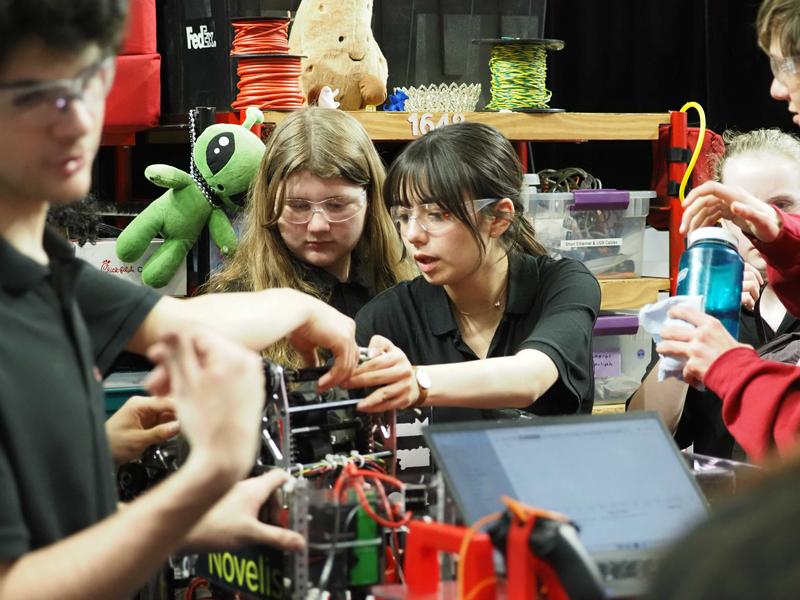
AP Physics teacher and G3 Robotics teacher sponsor Alexander Santos hopes Connary will inspire other students to pursue their own projects.
“[Connary] began this project out of his bedroom,” Santos said. “[He] transferred the skills and concepts he learned as a member of the school’s [G3] Robotics team programming team and applied them to his drones. He took what he learned in computer vision to train his drones to visually identify a target and calculate the direction after it locks in on a target. He’s even applied some concepts we’ve learned recently in physics, like torque and moment of inertia, to perfect his program.”
Andrienko believes Connary’s turret has the potential to do a lot of good for Ukraine.
“[Connary] is a very talented young man,” Andrienko said. “These are difficult times, and a lot has to do with war. His project could help the defense industry by preserving drones, which are very expensive. His technology could also save many lives, both military and civilian. It’s a very useful thing; I hope it works out.”
*Represents sources who have requested anonymity