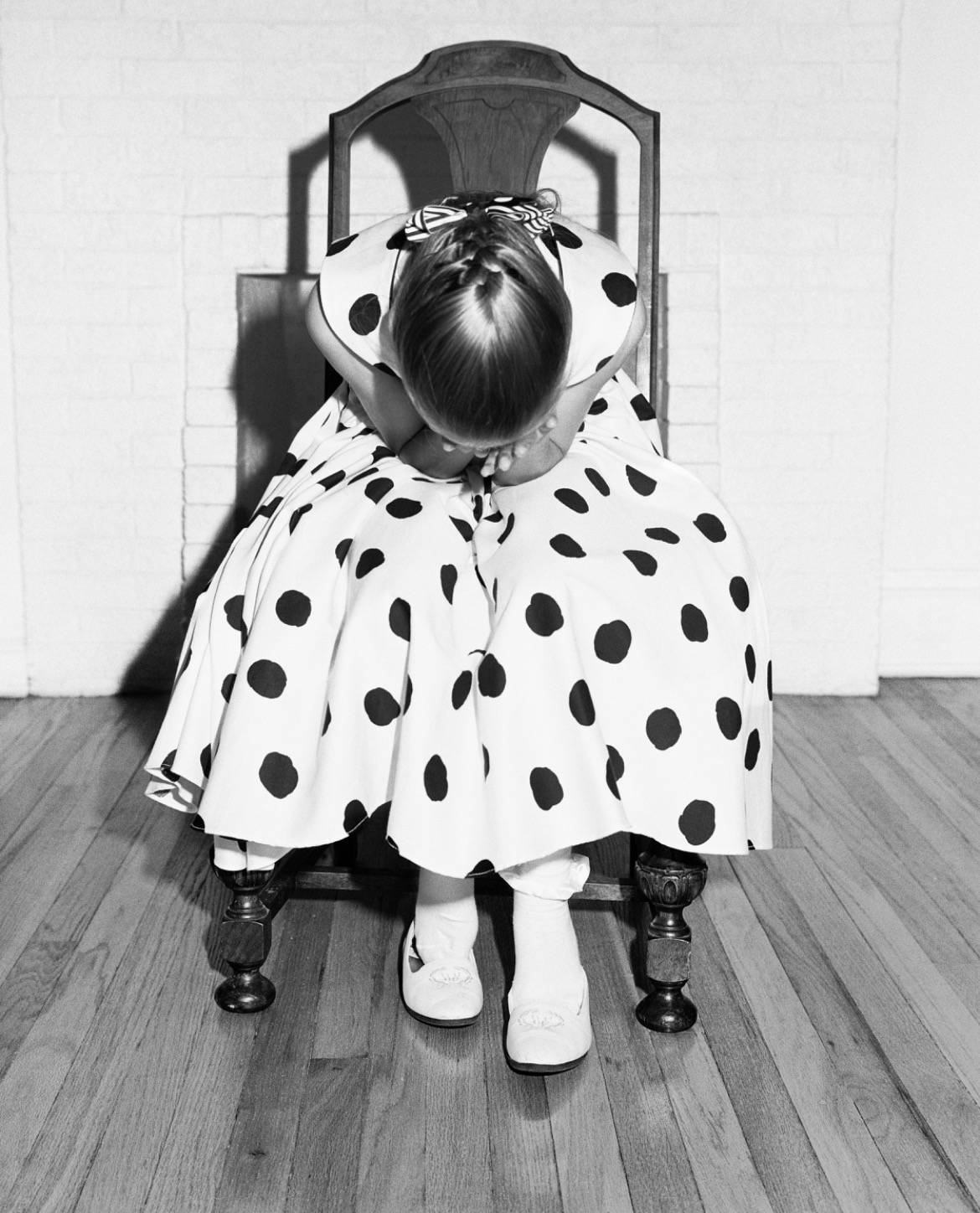
High Museum is featuring the “Blazing Light” exhibit, a collection of works by photographer Mimi Plumb. The exhibition will continue until May 10, before touring three other museums.
According to exhibition curator Gregory J. Harris, the artworks collectively explore themes, such as fear and instability, from the 1970s to present day.
“Her work touches on a lot of different themes, but overall, she’s trying to make pictures that are about the sense of anxiety that a lot of people feel living in contemporary America,” Harris said. “That sense of anxiety in [Plumb’s] pictures and experiences is motivated by a fear of climate change, of political instability [and] the threat of nuclear war during the height of the Cold War.”
Harris said the name “Blazing Light” had two primary influences.
“The pictures were all made in California, which is very well-known for the intense sunlight,” Harris said. “That is a quality of life that [Plumb is] really drawn to, and that runs through a lot of her pictures, so that there’s really strong, stark, intense lighting in many of the pictures. But also, [Blazing Light] refers to a play by Samuel Beckett called ‘Happy Days,’ and there’s a line in the play that refers to the blazing light. It’s about a woman who’s buried up to her waist in sand. But she is still talking and going about her day as if nothing is unusual or problematic in the fact that she can’t move. It’s an absurd, disconcerting moment, which I think is also a feeling that you get from looking at a lot of [Plumb’s] pictures.”
Harris said he originally discovered Plumb’s work through a book published in 2018 titled “Landfall.” Later on, her work continued to make strides in the photography industry. When the two met in person, he felt captivated by her work and journey as a photographer.
“[Plumb] has an exceptional eye,” Harris said. “The things that she photographs, you recognize it, and yet, there’s also this [sense of] ‘I’ve never seen anything that way [before].’ There’s a familiarity and accessibility to her pictures and yet, the world is rendered wholly new through her camera. I think that she’s able to hone in on particular details or a particular quality of light. A certain gesture that hooks you and gets you, and it just stops you in your tracks. She has a very unique vision of the world.”
Plumb’s photographs span nearly 50 years and are shot in the San Francisco, California Bay Area, where she is based. The collection consists of three works, titled White Sky, Golden City and the most recent, the Reservoir.
“[Blazing Light] spans her earliest plight of working on a most recent body of work, but it’s not a full retrospective because we’re not showing every single project that she’s done,” Harris said. “It’s a trilogy or a cycle of photographs that look at the landscape and the built environment in the second half of the 20th century and into the 21st century, thinking about that sense of anxiety, and of a world kind of spinning off its axis, in the sense of a lack of control and instability.”
Plumb’s earliest work focuses on suburban sprawl and human altered landscapes.
“There’s this sense of the natural world being bulldozed to make way for housing and subdivisions that are bland and cookie cutter,” Harris said. “[It was a] culturally dodgy and stifling environment.”
Later, her work transitions to the impact of political instability and the nature of human consumption.
“Pictures that she made in the 1980s are about alienation and displacement,” Harris said. “In the ’80s, the country took a pretty conservative turn in a lot of ways, but that was not the experience that [Plumb] or a lot of other people had, that wasn’t the values that they held. So, they were trying to exemplify this lifestyle that did not adhere to the norms of the time. Then the most recent work is about the effects of our culture of consumption and extraction, and what that has wrought on the Earth. The landscape is dry, it’s parched, it’s almost uninhabitable.”
Helen Anne Curry, a professor of history and technology at the Georgia Institute of Technology, said developments in the 1950s perpetuated climate change, causing lasting impacts.
“Most research indicates a take-off period for carbon dioxide emissions in the 1950s,” Curry said. “This resulted from many interrelated factors, including population growth, industrial development, increased fossil fuel use and agricultural expansion. Those trends continued through the 1970s — and indeed continue to today — and constitute an unchanging contribution of human development to climate change.”
According to Harris, much of Plumb’s work aims to address the continuous impact of climate change in modern society.
“[Plumb] wanted to respond to [climate change], and so that’s how she started making this ‘the Reservoir,’ which was her most recent body work,” Harris said. “It was all done in an almost completely dry lake bed outside Sacramento. It’s a very sparse, very spare landscape. It almost looks like a desert, but there are these people who are walking through it with inner tubes or coolers, walking to the lake to go have a swim. It looks like this ghost apocalyptic environment. That was the way that she found to look at climate change and make these pictures feel very much like an aftermath of cataclysmic heaven.”
Furthermore, due to events such as the Cuban Missile Crisis, United States history teacher Jason Slaven said threats of nuclear war were increasingly prevalent in the 1960s and 70s.
“The Cuban Missile Crisis made the threat of nuclear warfare at home on American soil very real and palpable for folks in the U.S.,” Slaven said. “Prior to the Cuban Missile Crisis, the Soviets were not able to place nuclear weapons close enough to the continental U.S. to actually threaten Americans at home. That changed in the 1960’s since Cuba is only 90 miles off the coast of Florida. In the Cuban Missile Crisis, the missiles that were discovered were capable of reaching targets in the U.S. in only a few hours.”
According to Slaven, the Cuban Missile Crisis led to fear and uncertainty within United States citizens.
“What do we do in the event of a nuclear attack?” Slaven said. “Why isn’t the government doing more to stop this? These are some of the questions that Americans were asking themselves during the Cuban Missile Crisis. In short, the Cuban Missile Crisis made the threat of nuclear warfare a reality for many Americans.”
Plumb incorporated these themes into her work.
“The threat of nuclear war was very present when she was a child,” Harris said. “She was born in 1953, [and] when she was 9 or 10 years old, the Cuban Missile Crisis happened. That was an event that really shaped her view of the world because her mother told her that there was a chance that there might be nuclear war. That was something [that altered] the way that she saw the world, [because] there was this real ever present sense of instability and danger.”
Harris believes that Plumb’s work continues to be relevant in times of uncertainty, showcasing individuals moving forward and creating change.
“I think that that sense of feeling overwhelmed and helpless in the face of these large global crises is something that is a pretty common and relatable feeling,” Harris said. “These works try to give some sense of that, to give it a shape, to give it a form. In doing so, make it feel somewhat less overwhelming. Still, the pictures are pretty dark in a lot of cases. She does try to evoke that sense of fear, but I think giving it some kind of shape and form makes it feel less overwhelming. It’s no longer this completely abstract thing that you can’t wrap your head around, but it has something in there, grounding in a particular way.”