


Freedom Park, the largest linear park in Atlanta is a haven for picnickers, dogwalkers and bikers, but many who enjoy the peaceful greenspace today may be unaware of the fact that it was almost lost to developers. The park was the center of a decades-long protest against the ‘Stone Mountain Expressway,’ a freeway that was set to cut through the heart of some of Atlanta’s most historic neighborhoods.
Planned in the 1960s, the highway was sponsored by then-Governor Jimmy Carter, but by 1982 had morphed into what became known as Atlanta’s ‘Presidential Parkway,’ a slightly smaller and more environmentally conscious but still major highway. Now, nearly 41 years later, residents reflect on the campaign of civil disobedience that thwarted the plan. Don Bender, an advocate, author and longtime Candler Park resident, recalled his initial reaction to hearing about the road.
“[Jimmy Carter] was going to make that [land] into a four-lane highway, but a ‘soft and warm’ Presidential Parkway,” Bender said. “It was going to have lots of trees and be ‘nice’, but [still] four lanes of asphalt, and we weren’t having that.”
Work on the site began in the 1960s, with large-scale demolition of homes and the removal of many old trees to make way for the proposed highway.
“The ‘warm and fuzzy’ Presidential Parkway was supposed to meet Ponce [de] Leon [Avenue],” Bender said. “There’s a church there, and there were very large old oak trees, many of which are still there, but they started cutting those down and people climbed the trees [to protest].”
Protestor Danny Fieg-Sandoval explains that as the protests progressed, things became more dangerous.
“People climbed up the dogwood trees, and they actually cut the trees down while the people were in the trees,” Feig-Sandoval said. “It was kind of scary.”
Bender was an active participant in the campaign to stop the highway, helping devise plans to stop the construction work in its tracks.
“The plan was that six of us would be arrested, and we would each be in a larger group,” Bender said. “We assumed then that they would come down and ask us to move, five would move, and one would stay.”
Bender and Feig-Sandoval were both arrested during the protests. Bender recalled that community members and trailblazers such as then-Atlanta City Councilor John Lewis helped to bail his group out of jail and charges against them were eventually dropped.
“[At around] two o’clock, John Lewis… and Mary Davis [who] was a representative for our District, came down and they talked to the jailer,” Bender said.
Another Candler Park resident, Chip Miller, moved into the area after the initial land clearance, when work had stalled.
“The road had been cleared, but they had not built any of the road yet, so the road bed was open, but [was full of] Kudzu, rats, raccoons, opossums and homeless people,” Miller said.
Miller said he knew that, if built, the road would have a direct impact on his house, which motivated him to join the campaign against it.
“Our neighbors up the street were part of the group that helped fight the road, and we followed their lead,” Miller said. “We were all just very hopeful, very positive that it was going to work out in our favor, which was never guaranteed.”
Eventually the protests forced the Highway plans back into court, halting construction in its tracks. According to Bender, machinery was abandoned on site for months.
“The equipment just stayed out there and rusted all through the summer,” Bender said. “We went out with our kids, who were students at Mary Lin, and we spray painted a crane with ‘long live the trees.’ Then somebody else graffitied ‘Short-Live the politicians.’”
Miller said he was delighted when he found out his neighborhood would be spared.
“My house is on the Candler Park side of Moreland Avenue, and we had no idea it was not going to cross, and we were just blown away,” Miller said. “We didn’t know what to even think or say.”
In 1991 the area was instead repurposed into Freedom Park, with the support of John Lewis and then Mayor Maynard Jackson, creating the greenspace known today.
“Looking back at it, and looking at what’s there now, looking at the park that’s there, what a difference [it made],” Feig-Sandoval said. “I think if the highway was built, it would have divided the city up into more segments.”
Bender is often reminded of the protests’ legacy, and even joins some of the contemporary demonstrations that use Freedom Park as a base.
“Just today I was down where the parkway dead ends at Moreland,” Bender said. “We were on the other side of Moreland with anti-ICE signs. One of the other people said, ‘Don, did you envision this back when we were protesting the road? Did you envision that this would be the result?’ Yes. It’s still fresh.”









Lori Feig-Sandoval • Mar 17, 2026 at 8:35 am
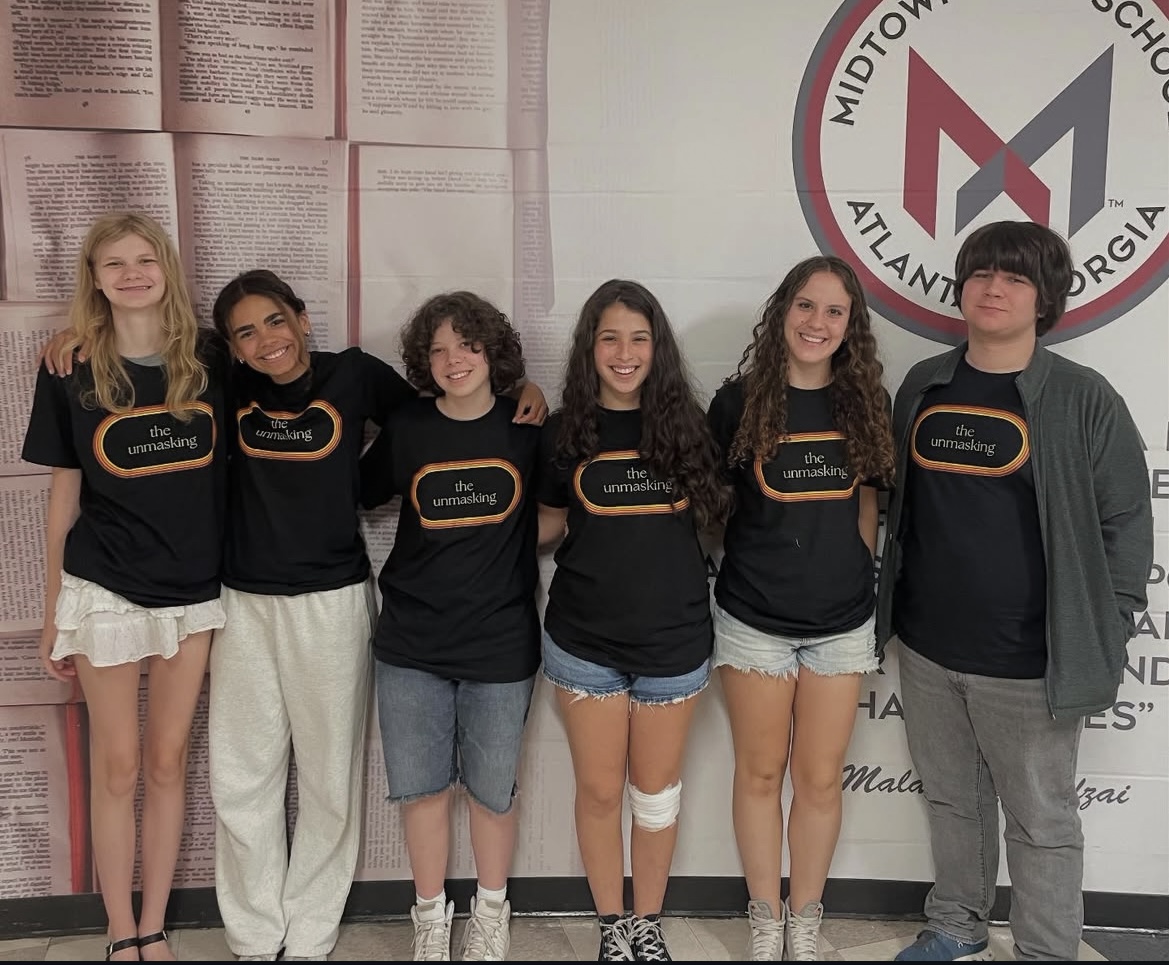
I’m grateful that the younger generations are interested in history and in keeping alive the stories which impacted how our neighborhoods and communities affect us today. Kudos especially to the young journalists involved in running this piece!