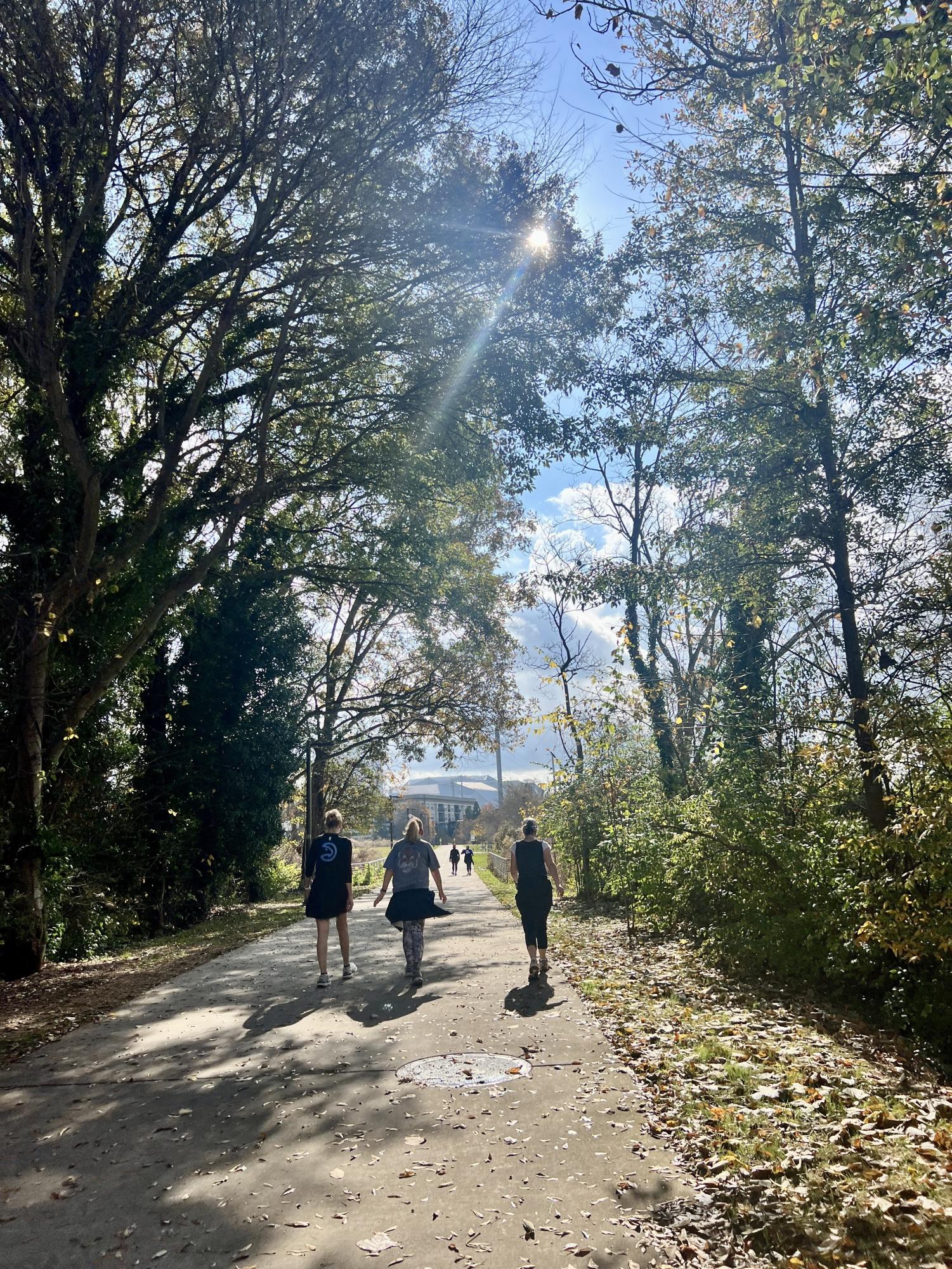
On weekend mornings, clusters of Atlantans gather at trailheads and street corners, tightening shoelaces and adjusting water bottles before they set off on foot.
From Edgewood Avenue to the BeltLine and around the city, small groups of walkers head out to explore Atlanta block by block, joining a growing wave of urban walking tours that explore how neighborhoods have evolved.
“When you walk around a neighborhood, you get to know it way better than you ever would just driving by,” junior Jomar-Pryde Akum said. “People start noticing things they’ve been passing for years without actually paying attention.”
Interest in walking tours has grown as Atlanta’s population has increased. Since 2010, the city has added nearly 80,000 residents, and some areas around the BeltLine have seen population growth of 25% or more. Locations such as the Atlanta Preservation Center, Historic Oakland Cemetery and local neighborhood associations now host regular walks, focusing on topics from the early streetcar routes to the impact of MARTA expansions. Attendance spikes during citywide events such as Atlanta Streets Alive, which is a car-free event where major roads close and thousands of people take to the pavement to walk and bike through the city.
“We’ve walked the city from city limit to city limit, east to west and north to south, and it completely changed how I see Atlanta,” tour participant Shannyn Serfozo said.
On the Westside, tours frequently pass through Vine City, English Avenue and Washington Park — neighborhoods with deep ties to the Civil Rights Movement. Walkers stop at the former homes of leaders, early meeting places and historic churches that once served as centers of national activism. Guides also point out blocks that have undergone redevelopment tied to the Mercedes-Benz Stadium and the Westside Future Fund, explaining how new construction exists alongside longtime community anchors.
“On the Westside, every block tells a story about resilience,” former Atlanta resident Joel Apudo said. “You can’t understand the Civil Rights Movement or modern redevelopment without standing in places where those histories overlap.”
In Midtown and the Old Fourth Ward (O4W), the focus turns to changes in land use and zoning. Groups stop at Ponce City Market and the blocks surrounding North Avenue, where tech companies and mixed-use projects have flourished. Walkers compare current zoning maps to older ones to understand how the area transitioned from industrial corridors to one of Atlanta’s fastest growing and most densely populated residential districts.
“Midtown and the O4W are like actual timelines,” Akum said. “You can literally see where the BeltLine began.”
The BeltLine remains one of the most popular walking routes. Tour guides may follow the Eastside and Westside Trails, pointing out original rail infrastructure, public art installations and redevelopment zones tied to the BeltLine Tax Allocation District. Walkers learn how the project’s 22-mile loop connects 45 neighborhoods and how its growth has influenced property values, small business openings and trail-adjacent housing. Stops along the route show remnants of the original rail bed and offer a glimpse into the city’s history.
“The BeltLine is the thread that ties so many neighborhoods together,” Apudo said. “People are always surprised by how much history is visible if you know where to look.”
Neighborhood-led tours provide a more localized perspective. In Atlanta’s Pittsburgh neighborhood, residents highlight community gardens and the neighborhood’s origins as a 19th-century working-class district. In Edgewood, guides point out early streetcar-suburb architecture and the impact of the Edgewood Retail District. In Cascade Heights, tours showcase Black-owned businesses and mid-century homes that reflect the area’s long history as a hub for Atlanta’s Black professional class. These smaller walks often include personal stories that don’t appear in official histories.
“Local tours matter because residents tell the story differently,” tour organizer Keely Muse said. “They talk about who lived where, who built what and why certain places have survived the years.”
The social aspect of walking tours serves as an appeal for many participants. Walking in groups makes it easier to ask questions, compare notes and share personal connections to the areas being seen. Many newcomers use the tours to learn how Atlanta’s neighborhoods fit together, and residents join to see how familiar streets have changed and to learn about new projects.
“Walking with other people breaks down barriers fast,” Muse said. “You start as strangers, but by the end of the route, you share stories [and] questions, and you get a better sense of the city.”