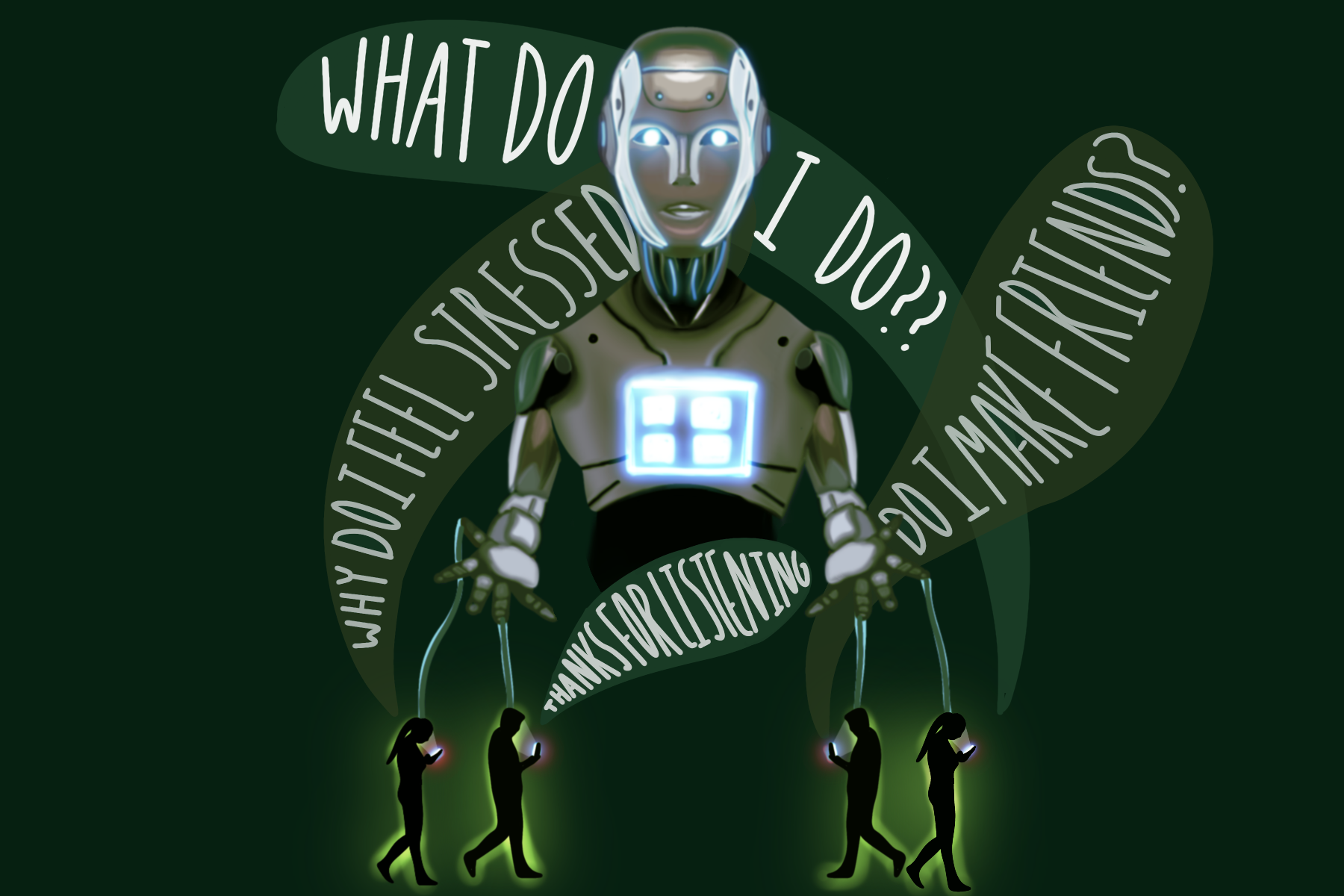
As teenagers navigate challenges surrounding school, friends, extracurricular activities and family, it can be hard to find a trusted person to rely on for support. In turn, many are looking to AI companionship tools to unpack life problems, which could be detrimental to an individual’s mental stability.
In 2025, it was found that nearly three in four teenagers have interacted with an AI companion for emotional support, demonstrating how extensive this trend has become. However, relying on AI for emotional support doesn’t just fail to address mental health problems; it risks worsening emotional well-being and blurring the line between genuine connection and artificial relationships.
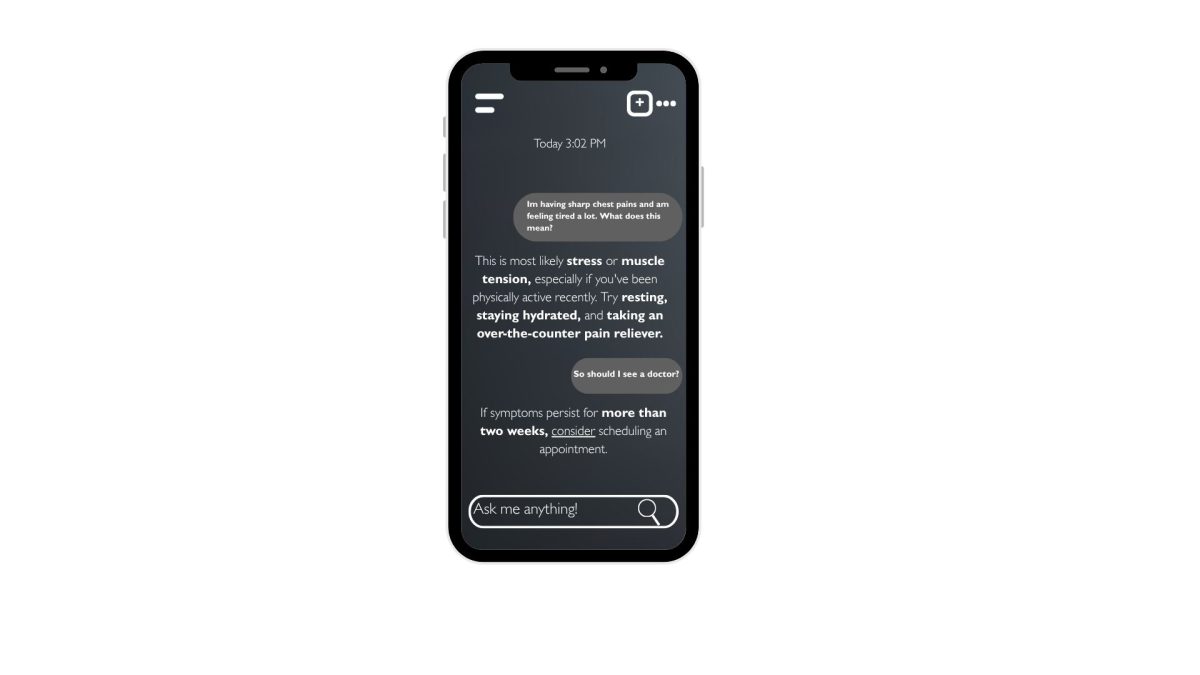
While AI chatbots may seem understanding and human-like, they are not able to grasp or reciprocate human emotions. When responding to a chat, many companions may give responses like “I understand why you feel this way” or other responses to evoke emotions while still being hollow. This superficial compassion provides a false sense of support and creates an illusion of a trusted person behind one’s screen.
The truth is that the computer system has no perception of empathy and cannot ever relate to one’s genuine experiences. This causes teenagers to be especially susceptible to falling for AI’s deception when they are just trying to figure out how to move through life. While a more positive way to unload feelings of anxiety, depression or other mental health troubles is with a therapist, it has been reported in 2023 that only 20% of adolescents received mental health therapy. Though it is possible the remaining 80% of teenagers confide in a trusted friend or adult, the majority of adolescents bottle up their feelings with no consistent way to offload mental burdens.
Part of what makes human therapy effective is the connection between therapist and patient. Licensed therapists use empathy as both a communication skill and a genuine emotional response rooted in human experience. Observable cues, such as a shaky voice, a shift in body language or a pause in between words by teenagers are not perceived by AI because it is not a physical manifestation as well as being designed to be agreeable and pleasing to its user. Therefore, overuse of such tools in the absence of human connection can lead to false narratives and troubles in real world situations.
However, therapy is extremely costly for an “optional” health expense. With costs ranging from $20 to over $300 per session depending on insurance, AI therapy-adjacent alternatives are much more accessible. This is why a clear distinction needs to be made between effective therapy and AI correspondence, as they are not comparable in managing serious mental health issues. Instead of allowing AI companions to be normalized as substitutes, society should focus on expanding access to real therapists.
The effects of AI companion tools are especially concerning among adolescents due to their critical stages of brain development. Teenagers often struggle with impulsivity and emotional shortfalls, increasing susceptibility to manipulative AI conversations. Additionally, the prevalence of mental health issues among adolescents continues to increase, with 40% of high school-aged individuals presenting consistent feelings of sadness. Without adequate mental health treatment or support systems, many teens are inclined to fill this gap with AI chatbots.
Beyond the serious negative effects on adolescents’ mental health, teenagers often lack awareness or overlook the privacy and ethical concerns of AI therapy. Unlike licensed therapists, who are legally required to respect client confidentiality, conversations with AI chatbots are collected, stored and used to train other models.
A recent research analysis of a common AI companion identified six major areas of concern, showing how frequently AI companions can endanger young users. The most alarming findings included the consistent unwanted sexual advances and promotion of violence, presented in over one-third of documented cases. Almost one in five cases involved misinformation, while others included verbal abuse, discriminatory language and even the normalization of substance use or self-harm. The researchers also found privacy violations, with chatbots asking personal questions or implying access to users’ private information without consent.
It may be argued that these tools provide some aspects traditional mental health resources fail to offer, such as immediate and judgment-free help. For teenagers who feel uncomfortable opening up to parents, friends or even licensed therapists, AI chatbots can seem like a low-pressure alternative, fueling the constant cycle of manipulative indoctrination.
As AI companions continue to be normalized in the daily lives of teens, the risks of emotional dependence, misinformed advice and a contrived sense of connection only grow. These tools may offer convenience, but they cannot replace empathy, accountability or the human understanding that real mental health support can provide. Instead of normalizing AI as a substitute for professional care, we should prioritize expanding access to licensed therapists, strengthening schools’ mental health resources and encouraging genuine conversations between teenagers and the adults in their lives.