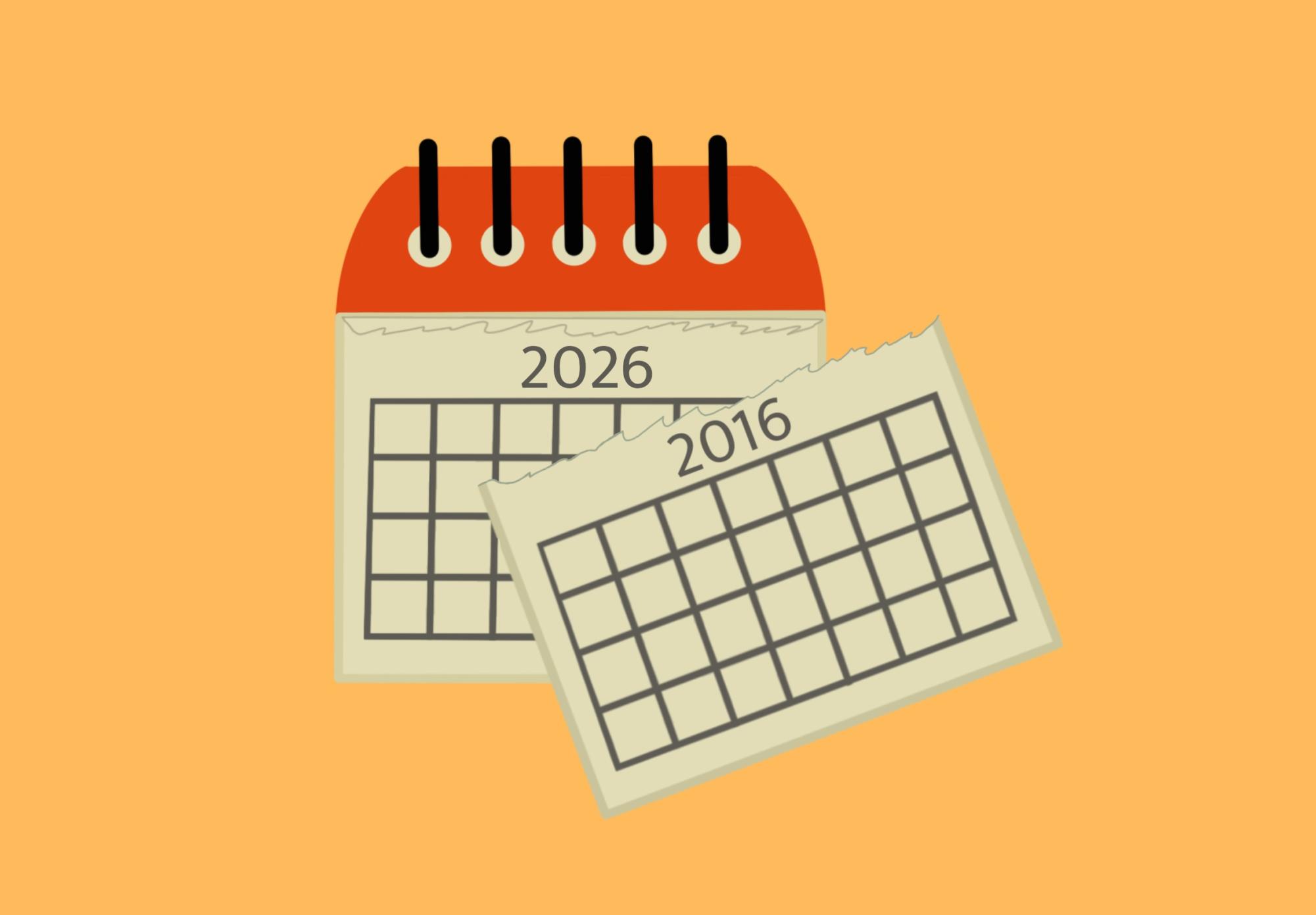
Since the beginning of the new year, old trends have resurfaced, leading to a comparison between 2016 and 2026. Across multiple social media platforms, users have been posting photos from 2016 and replicating style trends from that era. In 2026, many current events portrayed in the news are concerning for audiences. Being able to reminisce on a past time, one that people may wish to return to, can help create certainty in the present.
Like trends in 2026, trends in 2016 were heavily characterized by social media content. At the time, apps such as Musical.ly, now TikTok, had not yet reached their peak popularity. Additionally, Facebook was the most highly used platform for social networking. However, other apps such as Instagram, Snapchat and Youtube were also popular. Specifically, Snapchat was frequently used as a platform for communication, and was the most downloaded free app that year. Today, many of these commonalities remain, with Instagram, YouTube and Facebook having one billion users and Snapchat having over 900 million. Diverging from 2016, TikTok has also emerged as a leading social media platform, with over one billion users.
As is evident in the digital era, trends are largely influenced by social media. Because of this, social media platforms have a large influence on pop culture and other areas. Trends can circulate through posts as well as through promotional content, allowing them to disseminate rapidly online. This pattern allows for online algorithms to dictate what is considered to be the most popular, relevant and the newest trend. This gives social media platforms the ability to manipulate what is popular among its users, ultimately giving these platforms the ability to censor certain media.
Of the trends that have resurfaced, music is a prevalent one. As a powerful tool of expression, music can encapsulate a period in one’s life, impact and help individuals connect with others. Some of the songs released over a decade ago have reached their peak streams recently. For example, the song “Lush Life” by Zara Larsson, despite first being released in 2015, reached number 36 on the Billboard Hot 100 in February, marking its highest ever ranking.
On social media, it is likely that users will encounter microtrends, which are defined as short-lasting trends that obtain popularity very quickly. These trends can range from specific moments in style to music and pop culture. Regarding social media, revisiting 2016’s trends has led people to reembrace popular music, clothing and media from that era. This has allowed many users to look back on that time in their lives, often focusing on the positive aspects of the time while negatives have faded from memory.
Like these throwback trends, a person can experience nostalgia when they reminisce on a time in their life. Furthermore, the recent wave of 2016 trends has allowed people to relive moments from their past, ultimately triggering feelings of nostalgia. This nostalgia, while it overly idealizes the 2016 era, can help people to overcome issues in the present, a time where constant changes can feel overwhelming.
In addition, content in the news can be heavily disturbing for audiences. Because of that, positivity that is spread through the sharing of old photos and resurfacing of old trends can be a form of escapism for social media users. Being able to reminisce on a positive period of one’s life can help them to feel more comforted in the present. For example, users on platforms such as Instagram have taken part in the 2016 trend, sharing their own photos and memories from a decade in the past.
Furthermore, escapism and feelings of nostalgia in a time that can be heavily disturbing has the potential to help social media audiences. Recently, headlines have frequently included unsettling content such as violence, death and political conflicts. Because of these conditions, being able to dissociate from current events can help social media users to cope with what is occuring. This dissociation can help countless social media users, as it can give them a positive focus amongst constant negativity.
Nonetheless, social media has the capability to cause harm to its users. It facilitates the spread of misinformation and allows users to share false depictions of their lives. The consumption of this false information from social media can be very harmful towards its users. Additionally, mental health issues can also stem from social media use. Notably, social media can be a source of anxiety, depression, FOMO (fear of missing out), and can cause loneliness. Social media can undoubtedly be used for purposes that negatively impact its users. That said, it is vital that social media users also find ways to positively interact with others across these platforms.
As 2016 trends resurface across the world, social media users can interact with content that allows them to reminisce, as well as use this content as a means of escapism from current day issues. In a time where social media has just as much capability to harm as to help, positive trends, such as the 2016 reflections, highlight the ways that online communities can come together and create a safe space. Ultimately, revisiting old trends allows social media users to experience nostalgia and encounter positivity in a time filled with media that is constantly negative.