With the Georgia High School Association reclassifying schools every two years, Midtown athletics will move from Class 4A to Class 6A beginning with the 2026-27 school year.
Prior to 2024, GHSA consisted of seven classifications organized by school size. In 2024, GHSA removed Class 7A, which impacted school placement, and moved the Knights from 5A to 4A. For the 2026-28 school years, GHSA has decided to transition Class 1A Division II to Class 1A and Class 1A Division I to Class 2A. These changes have reintroduced Class 7A and rapid population growth has boosted Midtown into Class 6A. Amid these recent changes, the Knights are expected to face intense competition next school year. However, Athletic Director Blair Barksdale said the jump isn’t as big of a change as most perceive it as.
“It doesn’t sound as bad as everybody took it to begin with,” Barksdale said. “Insead of having Class 1 and Class 1A, they turned 1A into 2A. So, if you think about it, that moves everyone up one [classification]. So, that puts us at 5A going into reclassification. And we are growing so fast, so that moves us out of 5A and into 6A.”
When GHSA goes through the reclassification process, schools have the option to appeal. Barksdale said the decision to accept going into Class 6A was carefully thought through, considering different aspects of the change. Midtown will be in Region 4-AAAAAA, consisting of Alcovy, Chamblee, Decatur, Dunwoody, Heritage, Lakeside, Meadowcreek and Shiloh.
“Dr. Bockman, [Athletic Director] Hill and I decided it was best to stay [in Class 6A],” Barksdale said. “There’s only one private school, Woodward. So then it came down to who do we think our region will be? When you look at all the sports, we determined we think we’ll have good success. Some sports have competition in the region, and some sports will have to make the schedule outside of the region really hard for more preparation looking to get through the playoffs longer. Now this allows all teams to have a better playing field.”
Whereas some sports have had minimal exposure to teams they will face in the coming season, other sports, such as soccer, have already had exposure to some of these teams and this level of competition, due to coaches scheduling games outside of the region.
“We already play higher level teams anyway,” junior soccer player Oliver Bell said. “So, we’ll consistently be able to play those teams. Our coach might want us to prepare some more, but since we’ve already played some of these teams, it’s not going to be that different.”
Barksdale said she is anticipating more overall success among Midtown athletics.
“I think this will allow us to grow the program,” Barksdale said. “It will give us an opportunity to give those sports that maybe have inched into the playoffs or haven’t made the playoffs more of an opportunity, which also leads to us building a bigger athletic program. Those programs that may not have as many kids in them, like football and girls basketball, will be affected. We’re going to end up with success, and we’re going to be able to build these programs and make them like soccer, baseball and lacrosse.”
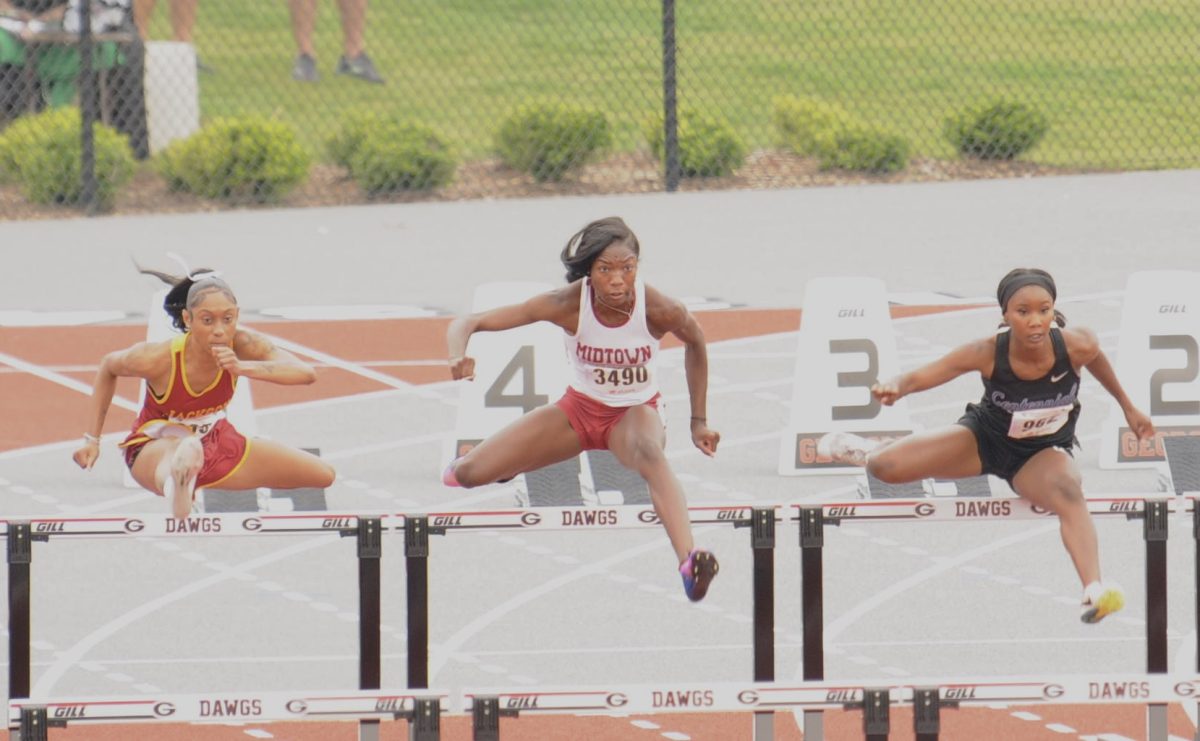
Girls track coach Joshua Washington said this change was unexpected to him.
“I was a bit shocked when I saw Midtown was going up to be a 6A school,” Washington said. “From a size perspective, I’m not surprised, but from an athletics perspective, I’m surprised. Typically the larger schools in 6A and 7A have the larger populations, but they also have the larger populations of kids that play sports. Midtown is not one of those schools where the majority of the kids or students play sports. Although number-wise, we have a large total enrollment, the percentage of those kids that actually play sports is not that large.”
Despite Washington’s initial reaction, he doesn’t think much will change with the track program.
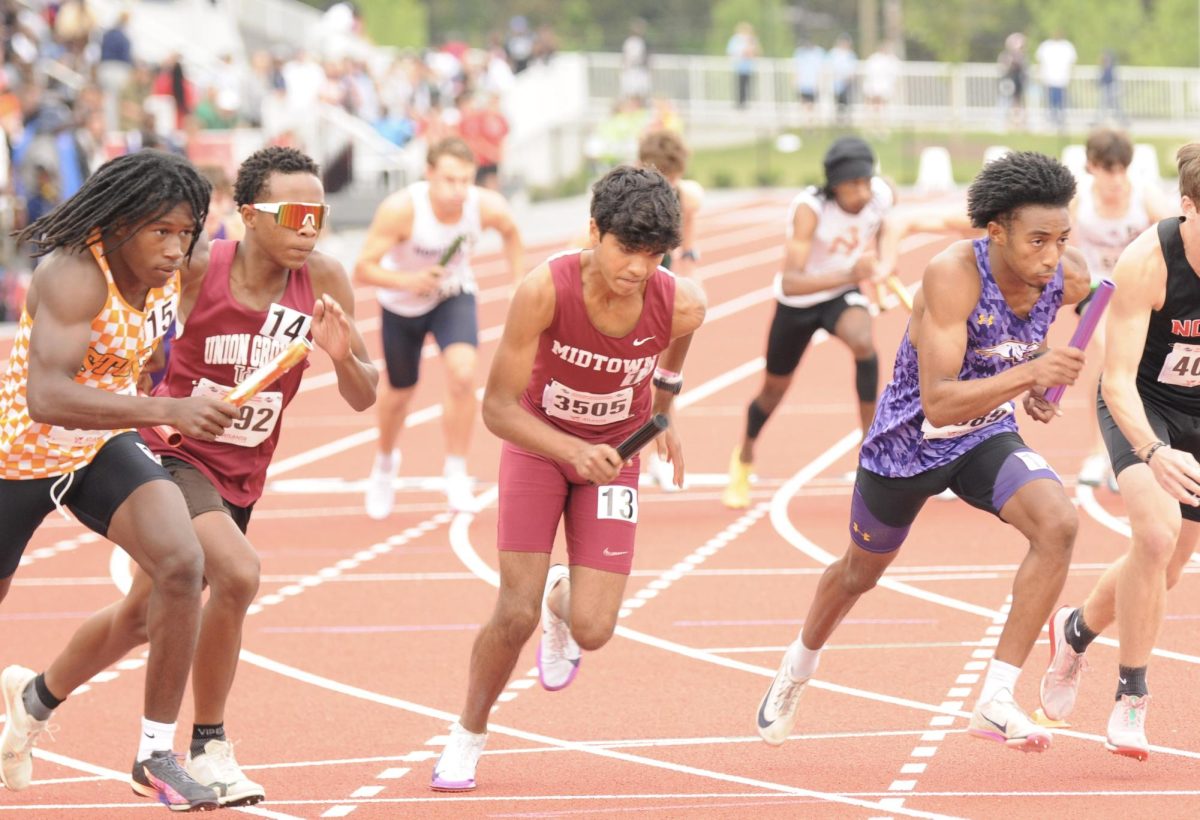
“When we have major invitationals; there can be anywhere between 15-30 schools, and all of those schools are different classifications,” Washington said. “So, we spend the majority of our season anyway competing with schools that are larger and smaller than us, so there won’t be much of an impact. We’ll fit right into [region competition] because in a way, we spend our whole season preparing for schools like those.”
Because of the wider population at larger schools, there is a wider selection of athletes, meaning athletics typically get more competitive as the class increases. Junior volleyball player Nora Goodman said she expects the unfamiliar competition to affect her personal development.
“We’ve already played Decatur and Chamblee, so I think we have a pretty good sense of them,” Goodman said. “It will definitely be interesting watching film or preparing for other teams we’re going to play because I haven’t even heard of some of the schools we’ll play next year. I feel like it will introduce some new, fun competition that I’ve never seen before, and really make me have to adjust my skill set or develop more in specific areas to kind of go against that new competition. So, I’m excited to see what the change will bring to my personal growth, as well as the team’s [growth].”
Barksdale emphasizes that Midtown should define success through the growth of the school’s athletic program rather than overall performance.
“It’s not all about wins and losses,” Barksdale said. “It’s about growing. I think we’ll see other traditional sports start getting more wins and better placement. All of our sports are in good places, but I think that we’ll get more notoriety, more exposure. It’ll also be a new classification for coaches to see how we are, too. I think that is also a good test.”